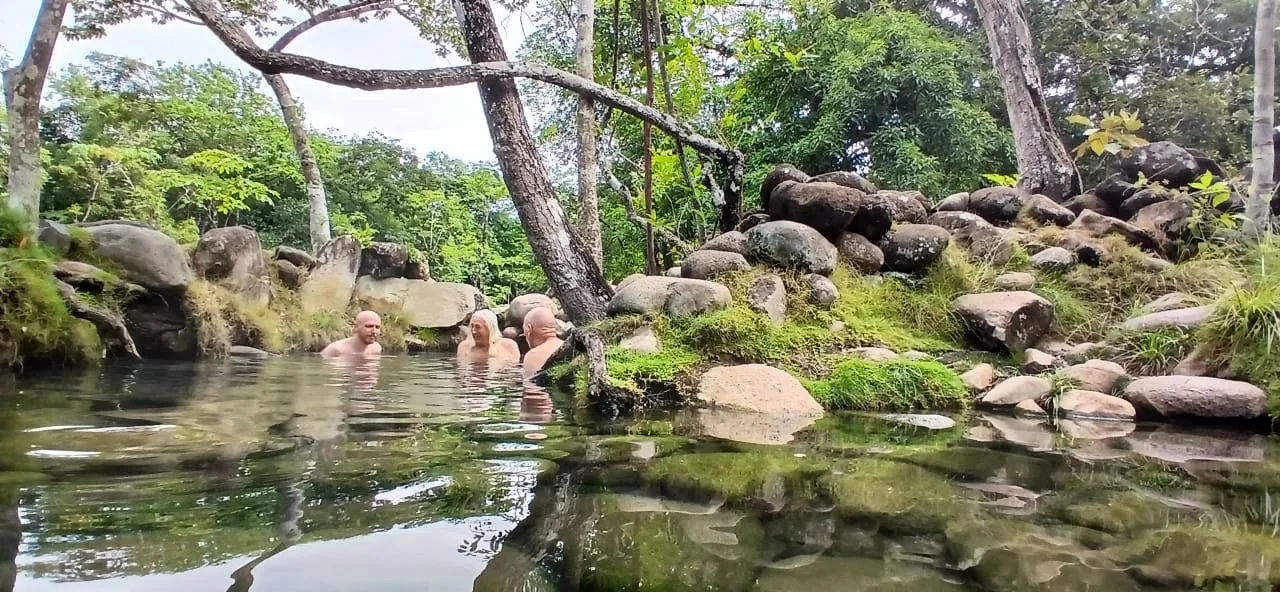
A Geological Phenomenon: The Breath of Volcán Barú
Volcán Barú is Panama’s only volcano and its highest point, at 3,475 metres. It’s an active stratovolcano — dormant, not extinct — and part of the Central American Volcanic Arc, the chain of volcanoes produced by the Cocos Plate subducting beneath the Caribbean Plate. Its last confirmed eruption dates to around the year 1550 — a far more modest explosive episode than the colossal debris avalanche, somewhere between 20 and 30 cubic kilometres of material, that carved out its horseshoe-shaped summit crater tens of thousands of years earlier, the largest event of its kind ever documented in Central America. Since that 1550 eruption, the volcano has stayed quiet, its only signs of life a handful of seismic swarms recorded in 1930, 1965, 1985, and 2006.
It’s that same volcanic system, rooted deep beneath the valley, that supplies the heat for the springs at Caldera, roughly 30 kilometres from the summit.
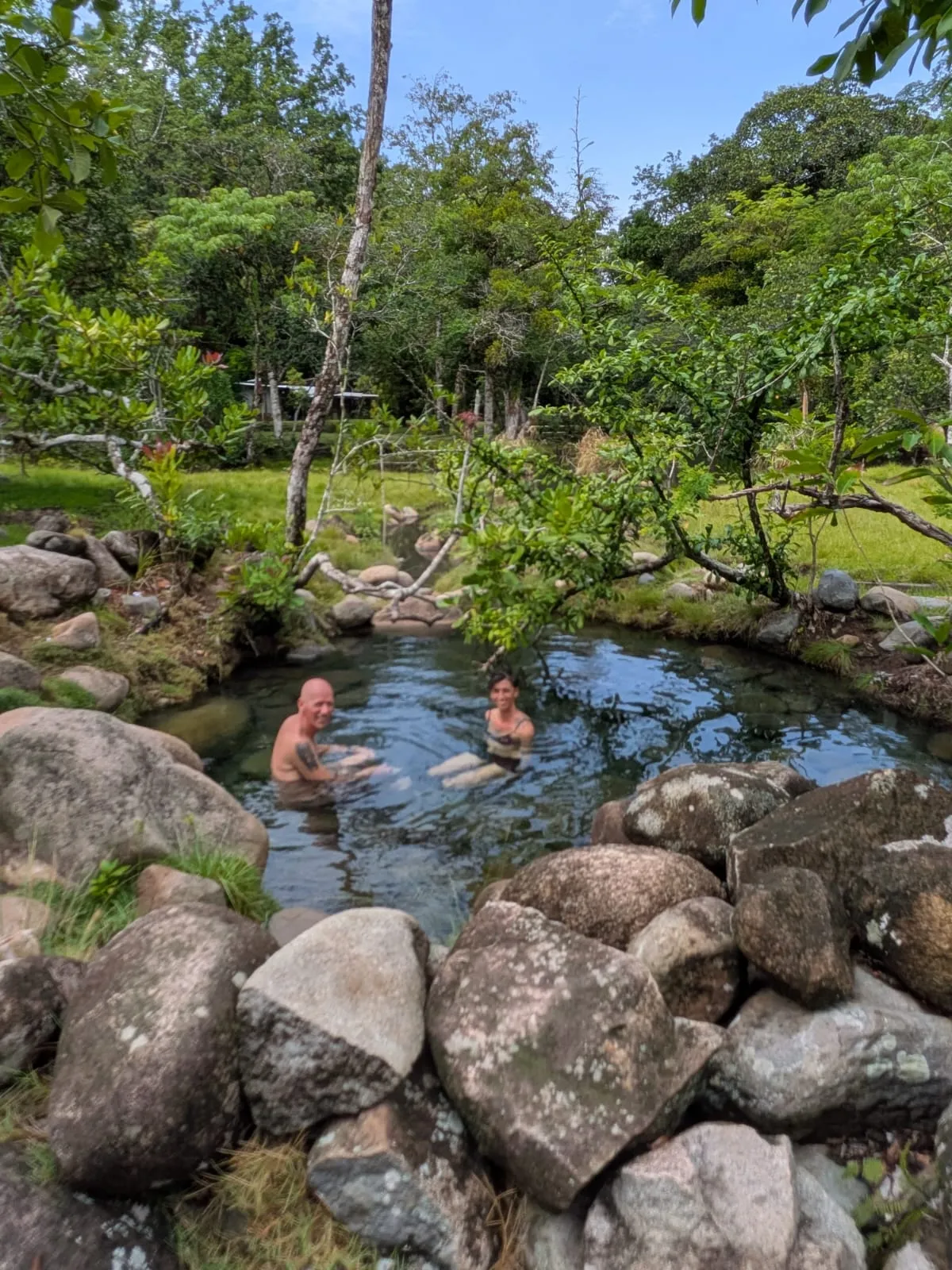
One quick note on the name: caldera means “cauldron” in Spanish — a fairly direct nod to these steaming waters. It isn’t a caldera in the geological sense, though — the vast collapsed crater that forms after a major eruption. The village takes its name from the pools, not from a crater.
Where Does the Hot Water Come From?
Nothing here comes into direct contact with magma. The water in Caldera’s pools starts out as ordinary rain falling on Barú’s slopes. It soaks into the ground, works its way down through kilometres of fractured volcanic rock, and eventually reaches depths where residual heat from the volcano’s magmatic system warms it slowly. Pushed by pressure, it finds its way back toward the surface along faults and fractures, resurfacing — years, sometimes decades later — as a hot spring beside the Río Chiriquí. It’s the classic mechanism behind most non-magmatic volcanic hot springs: a vast underground circuit, rather than direct contact with molten rock.
Temperature and the Water’s Properties
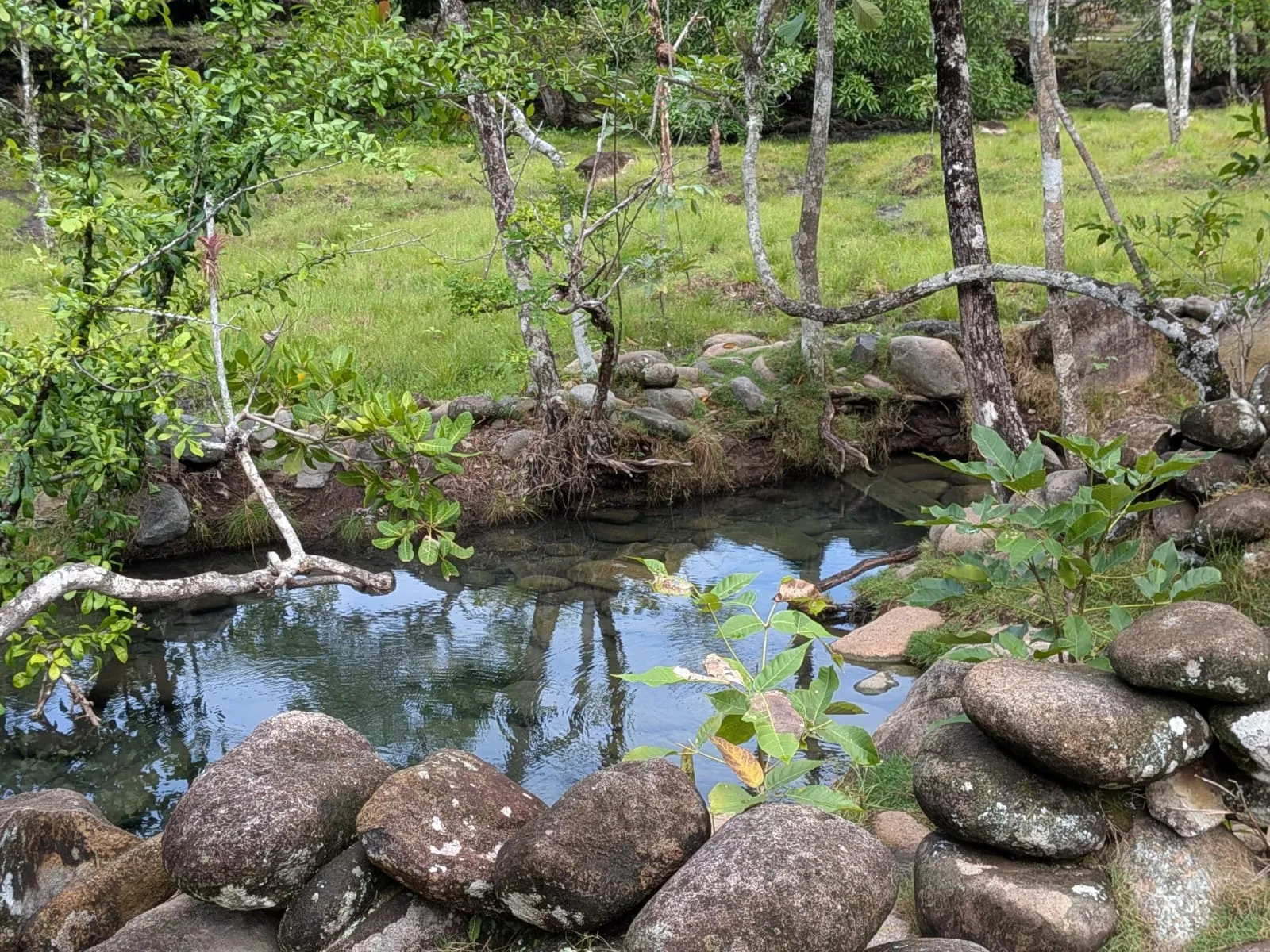
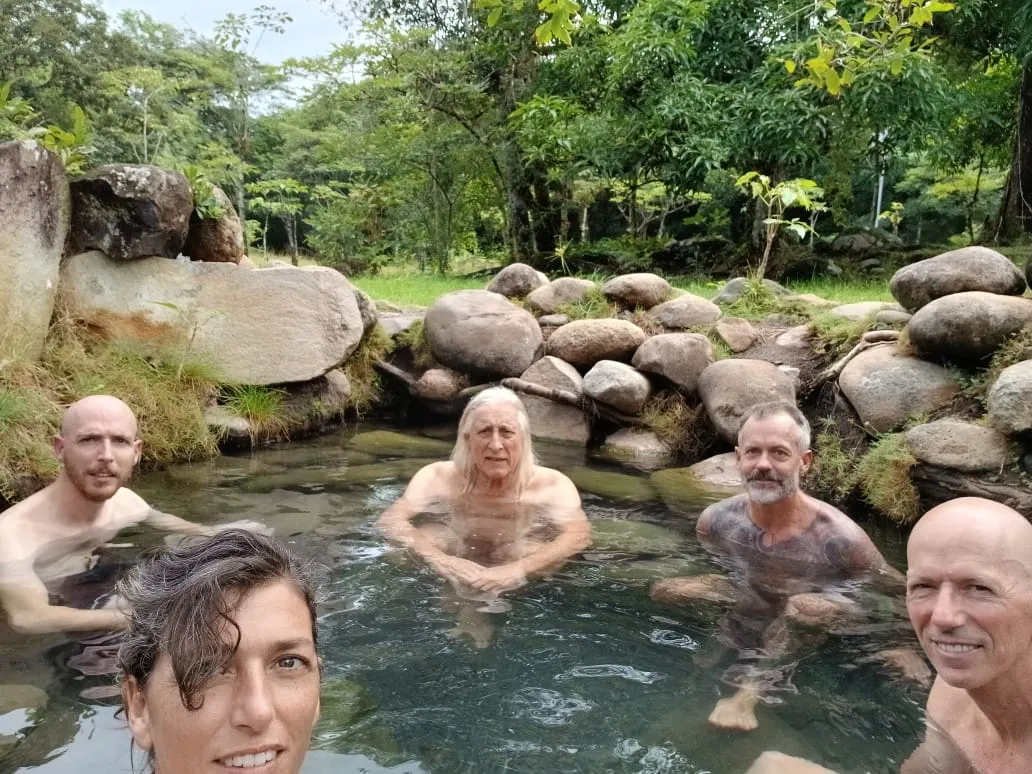
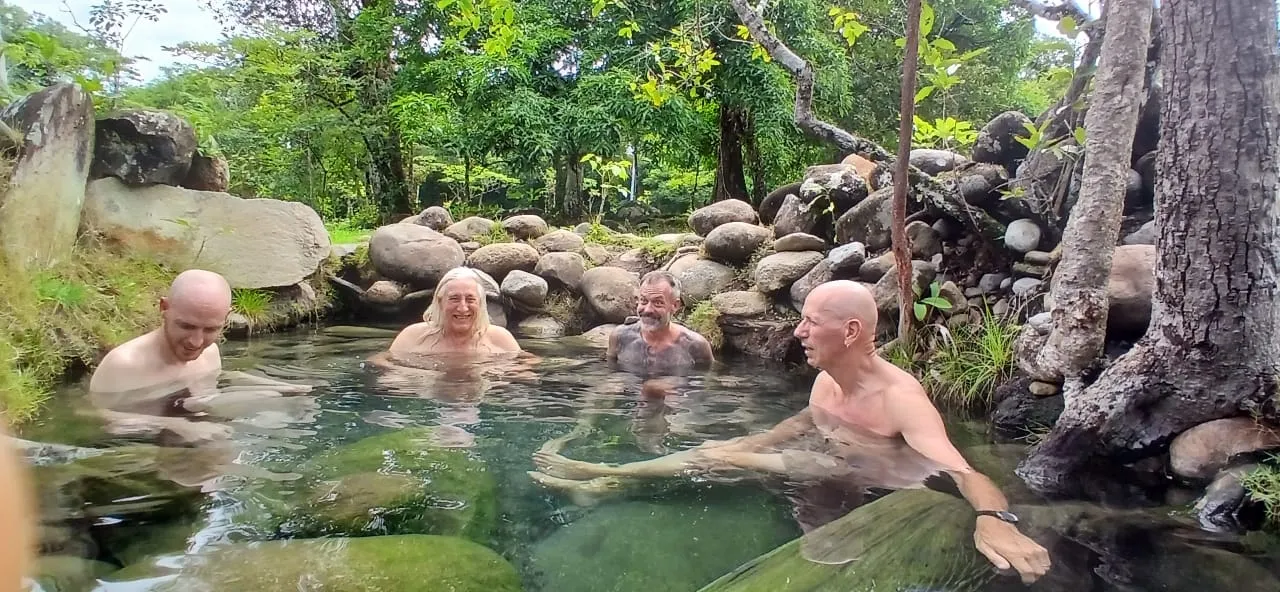
The site has four pools, cut straight into the rock and riverbank. Their temperature varies noticeably from one to the next — somewhere between 34°C and 50°C, depending on the pool and the season — depending on how close each one sits to the source and how much it mixes with the cold water of the nearby river. The largest pool holds close to ten people, in water that usually sits around waist height.
This is mineral water, charged by its long underground journey through volcanic rock. The exact composition hasn’t been publicly documented for Caldera itself, but the thermal springs of the Chiriquí region are known for being rich in sulfur, calcium, and magnesium — minerals typical of volcanic hydrothermal systems.
A Tradition of Soaking, 4,000 Years Old
Bathing in hot mineral water for its own sake is nothing new — the practice traces back to ancient India, Italy, and Greece, with evidence dating as far back as 2000 BC. Caldera fits into that same tradition on a local scale: visitors and residents alike have come here for generations for the muscle relief, the soothing heat, and the setting itself — the forest, the sound of the river, the steam lifting off the water.
No clinical studies have been carried out on Caldera’s waters specifically, and these
benefits come mostly from tradition and personal experience rather than a proven medical
protocol. As with any thermal water, caution is advised during pregnancy or with high blood
pressure or heart conditions — check with a doctor if in doubt.
A Site With History Long Before the First Bathers
Caldera wasn’t waiting for hot-spring tourism to become inhabited. A few minutes from the pools sits Piedra Pintada, a massive boulder carved with pre-Columbian petroglyphs — animals, geometric shapes, human figures. Its exact age is disputed: some researchers date it to 8,000 years old, others attribute it to the Coclé or Dorasque peoples, sometime between 450 and 900 AD. No one knows for certain who carved it or why — the leading theory is that it served as a kind of agricultural calendar, marking the harvest seasons.
Today, Chiriquí province is still home to most of the Comarca Ngäbe-Buglé, Panama’s largest indigenous territory. For the Ngäbe, moving water — springs and waterfalls especially — is traditionally considered a place inhabited by the spirits of one’s ancestors, a point of contact with the natural and spiritual world.
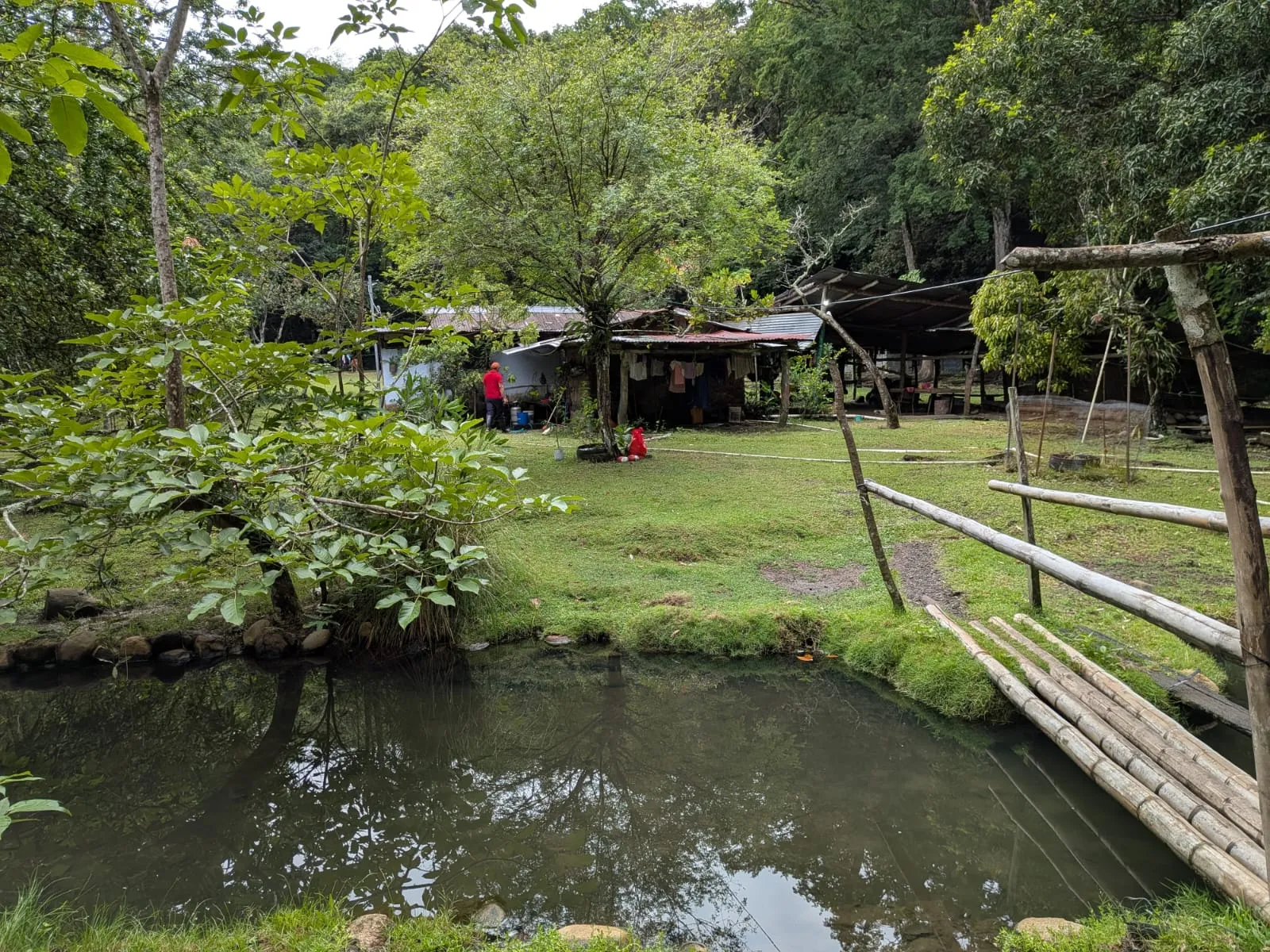
The pools at Caldera themselves are a more recent addition, touristically speaking: four pools built on private land, about 2.6 km from the village centre at the end of a dirt track — a site that’s stayed largely informal, without much infrastructure, which is honestly a good part of its charm.
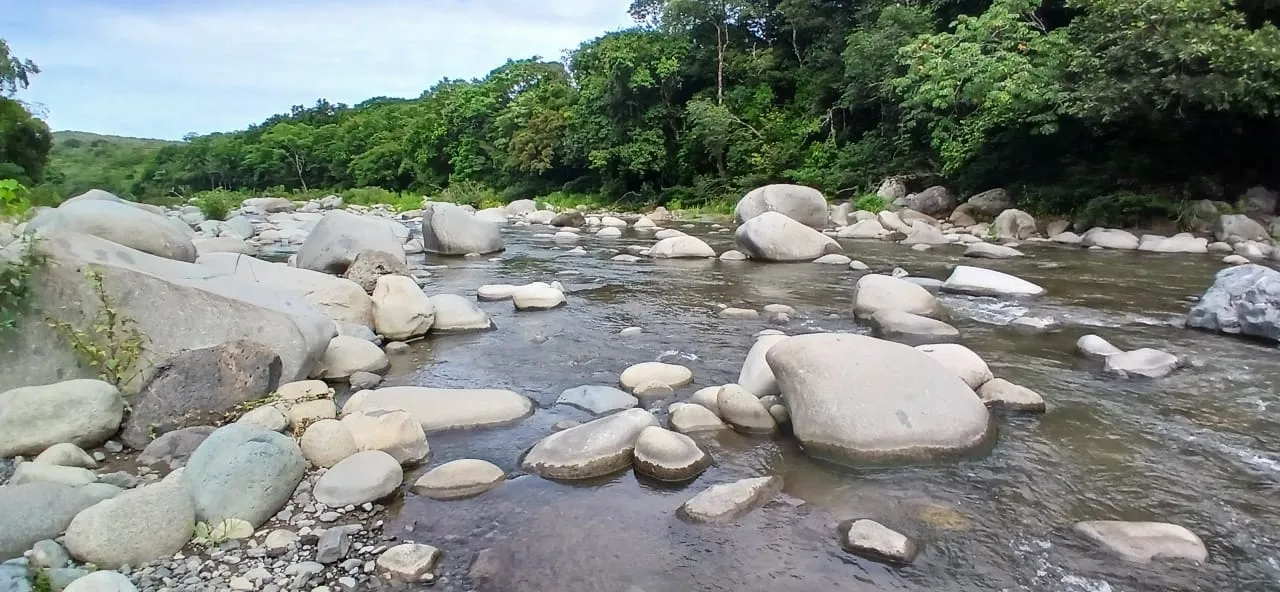
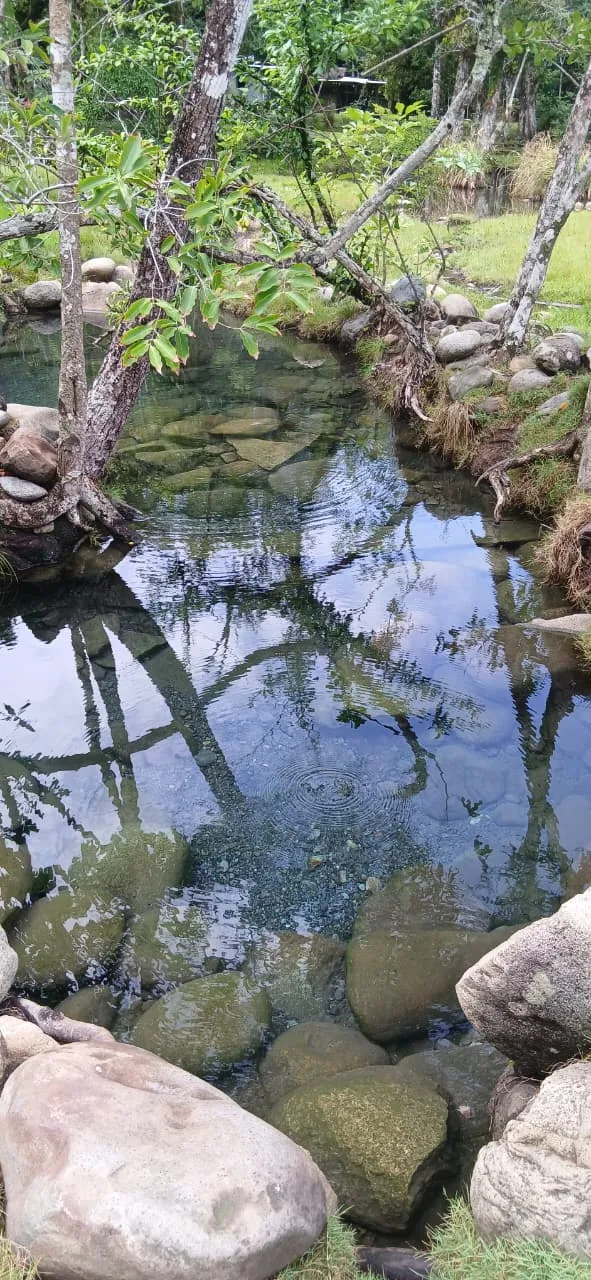
Right alongside the springs runs the Río Chiriquí itself — wide, rocky, and cold, a natural counterpoint to the heat of the pools. Most visitors go back and forth between the two: a soak in the hot water, then a plunge into the river to cool off, and back again.
What to Know Before You Go
- Where: the village of Caldera, in the Boquete district — about a 30-minute drive from Boquete.
- Access: a secondary dirt road, roughly 2.6 km from the village’s main street.
- Four pools, ranging from 34°C to 50°C depending on the spot.
- Private land: a modest entry fee is usually charged on site.
- Pair it with a dip in the nearby Río Chiriquí, to alternate hot and cold.
This article is © Wild on the Farm, Boquete Cloud Forest Lodge. All rights reserved — it may not be reproduced, republished, or redistributed without prior written permission. Read our full legal notice →