Our History
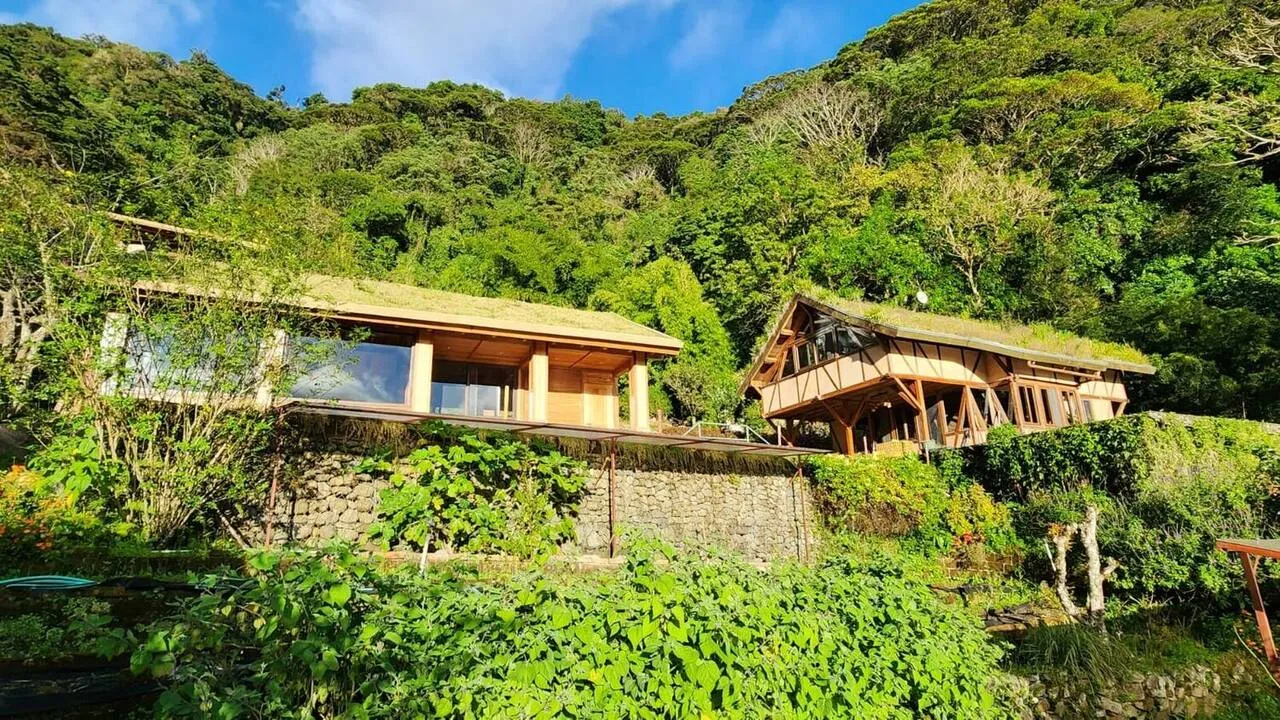
Wild on the Farm was born from a deep journey through Panama's wildest places. After years of exploration, the founder discovered this untouched land — and saw in it the perfect setting for a self-sustaining haven, where peace, nature and the art of living harmonise.
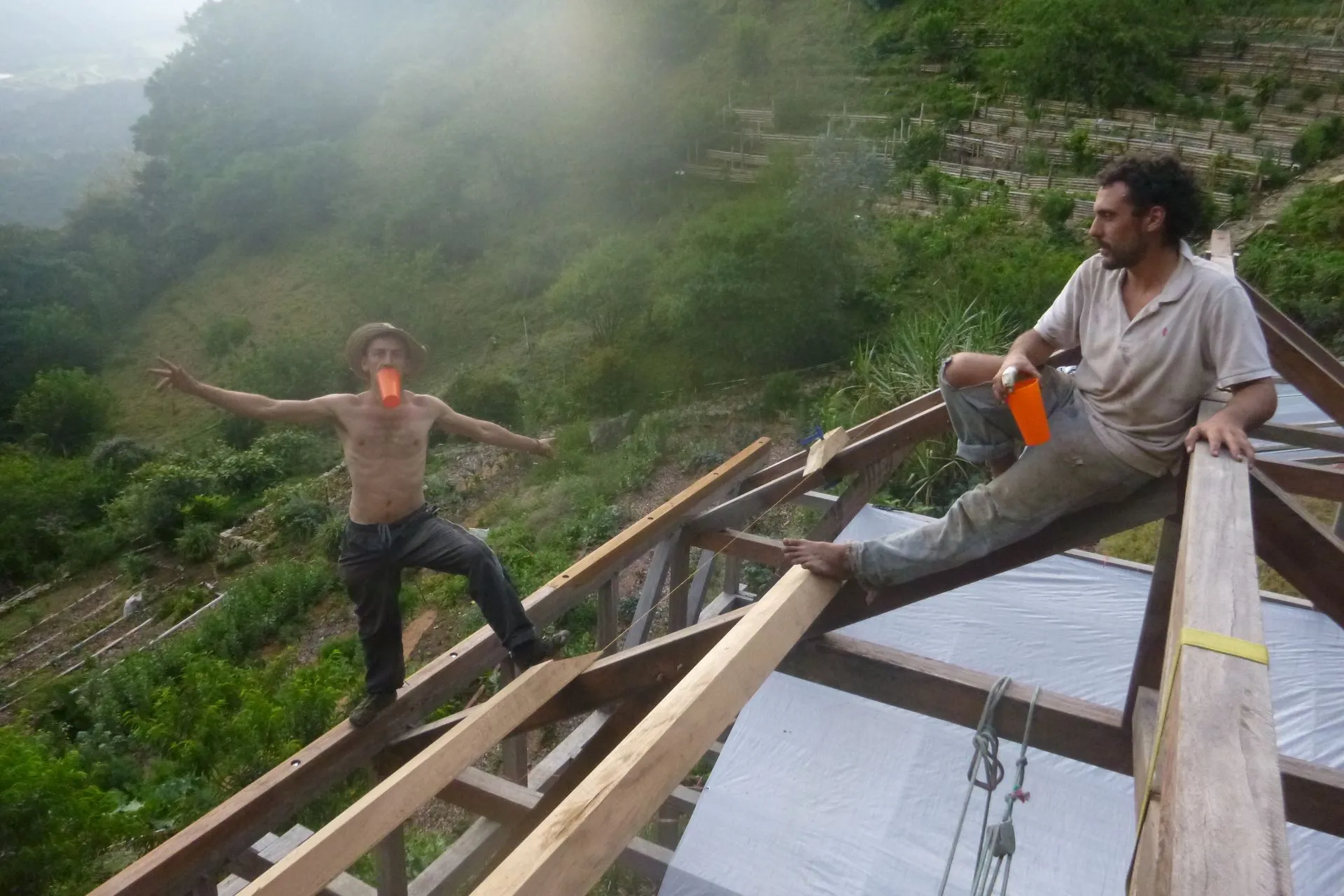
Born from a lost compass, built with passion and vision.
Twenty years ago, I spent three years roaming the jungles and mountains of Panama. My daily life? A hammock, national parks, and the firm intention of losing myself on purpose. After roaming the wild corners of the globe on my own migratory legs, I finally arrived there — home…
Coming out of the cloud forest, after a full week lost in La Amistad National Park, I stumbled upon this land, abandoned for eight years. Where others would have seen brambles, I saw my masterpiece: the perfect place to finally settle down and create a self-sufficient refuge in complete synergy with the wild.
What fascinated me right away? The microclimate. An almost monastic calm, wrapped in jungle, that still offered a grandiose spectacle: a sweeping view over the Volcán Barú and the ceaseless ballet of the clouds. The land was untouched, and my mind was ready to experiment with a new way of living.
I had time ahead of me, the funds I needed since I'd just sold my small hotel and dive shop in Roatán, and a wild urge to redefine the art of living at the summit.
— The Founder, Wild on the Farm
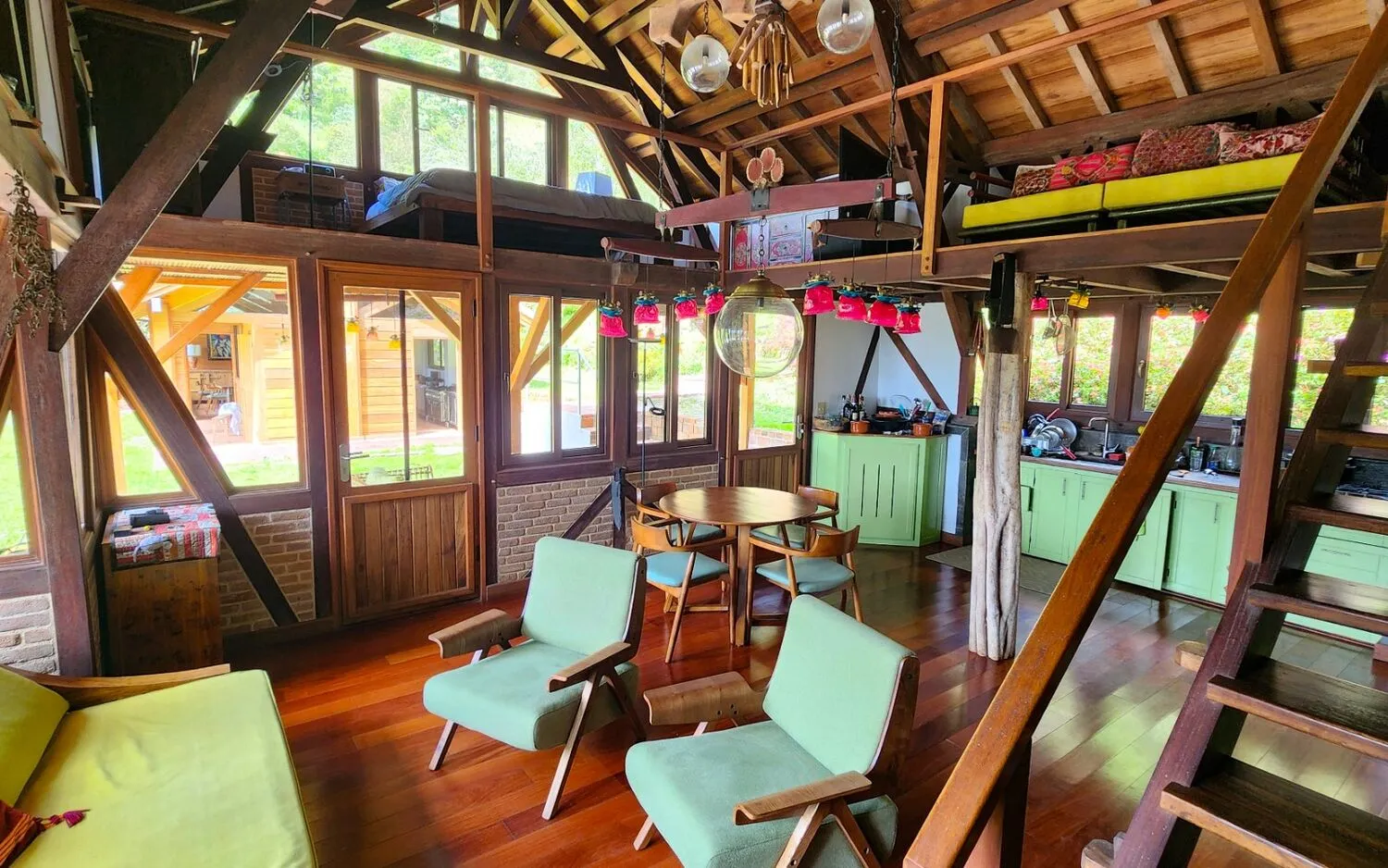
Living in the tropics is a trade. And after a few decades of practice, I think I can say I've earned my diploma.
My first lesson began in the seventies, in Africa. Three years among hunter-gatherers, wearing down my youth in traditional huts under a heat fierce enough to melt good sense itself. Ejected from that continent for excessive adaptation to primitivism, I found myself thrown back on the road, racing all the way from Chicoutimi in northern Canada to the far reaches of Patagonia. It was a Latin America living on borrowed time, torn apart by civil wars and dictatorships, still untouched by tourists but vibrant with its preserved traditions and Indigenous cultures.
I spent years digging into every wound and every beauty of that continent. I lived on deserted beaches in Mexico; I shared the daily life of the Lacandon and the Shuar in the Ecuadorian Amazon. It was there, on the Río Napo in 1981, that I was arrested for espionage on the Peruvian border, caught in the middle of an absurd local war fought over a few drops of oil. Then came the years of art and craft, marked by forays onto the Peruvian altiplano while the Shining Path bled the country dry; I traveled then hidden beneath the tarps of cargo trucks to reach San Pedro de Cajas. I crossed Patagonia alone, loaded down with water, without a compass, and I collected my share of dangerous foolishness racing off to romantic rendezvous in Pinochet's Chile. Later, I settled by Lake Atitlán, captivated by the wonderful culture of the Kaqchikel people of Guatemala. I became passionate about their weavers and their huipiles, those traditional garments every community once wore with pride, before Western charity's cast-off clothing came to ruin that thousand-year-old craft.
My world tour of the tropics taught me one fundamental truth: to truly appreciate them, you have to gain some elevation. The tropics only become perfect in the coolness of altitude. Today, faced with the cultural hegemony of a world grown too accessible and deadly dull, I chose to retreat into a fold of the earth that's difficult to reach. The bumpy track that leads up here may look like a Disney World attraction, but it's the only road to isolation, to putting a lifetime of gathered knowledge to use, and to generating a little harmony at the culmination of an unchained existence…
Welcome to my ultimate paradise.
— The Founder, Wild on the Farm
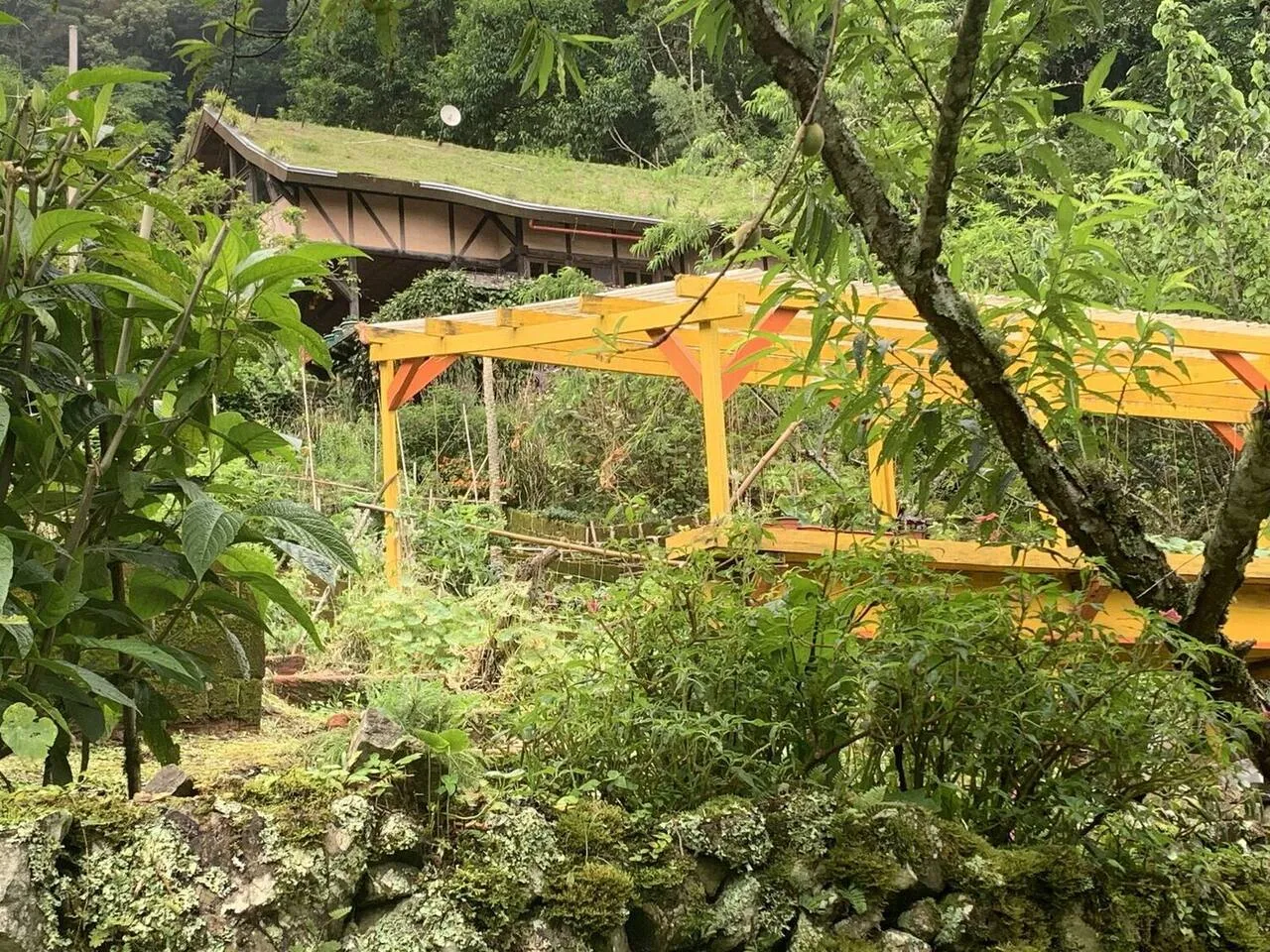
What followed wasn't a renovation. It was the birth of a landscape, shaped one terrace at a time.
Planting trees knowing full well that time will pass is to receive the most beautiful of lessons: that of perseverance. Immediate profit is only the emptiness of a fleeting age, a race with no substance and no joy that produces nothing but people stripped of meaning. At a time of climate breakdown and its foretold catastrophes, I chose to bet on slowness. I would rather sculpt the beauty of a landscape with the years, bring forth healthy food by first nourishing the earth, and cultivate harmony with this wild world with which I share the secret of life. That is exactly the philosophy I hold up like a mirror to those who choose, for the length of a stay, to withdraw from the world with us.
Here, the solar panels were installed long before there was anyone to light. The macadamias were planted in the ground with the certainty that they wouldn't bear a single fruit for fifteen years. Sheep and hens took possession of the land to work the soil, years before there was even one guest table to feed. This is the work of a farmer's lifetime, the legacy of knowledge and experience patiently ripened.
It wasn't until 2025, eighteen years after the very first strike of the pickaxe, that our three handcrafted cabins finally opened their doors. Clinging to the hillside, they were built with the same stubborn patience as everything else here: in complicity with time, rather than the urgency of a deadline.
— The Founder, Wild on the Farm
"I didn't want to build a place that looked like it belonged on this mountain. I wanted to build one that actually did — and that meant letting the farm come first, guests second."— Pascal, Founder