Long Before the Settlers
Boquete didn’t begin with coffee. At Casita de Piedra, a rock shelter near the valley, archaeological excavations have revealed human occupation dating back more than 9,000 years. In 2007, archaeologist Ruth Dickau (Smithsonian Tropical Research Institute) uncovered a cache of twelve stones there — quartz, pyrite, chalcedony, a worked dacite cylinder — dated to roughly 4,800 years ago, considered the oldest known physical evidence of shamanic practice in Lower Central America.
Later, between 300 BC and 600 AD, the highlands around the Barú were home to the region’s first stratified agricultural societies — the so-called Barriles culture, known for its stone statues with conical helmets and its monumental grinding stones, discovered by chance in 1947 by a farm owner who kept finding cylindrical stones shaped like barrels there. During the Spanish colonial period, Boquete’s rugged terrain later served as a refuge for the Ngäbe people, who preserved their traditions there, out of reach of colonial administration.
The name “Boquete” itself comes from this history: it means “gap” or “opening” — the breach through which the earliest cattle drivers, and later gold prospectors, crossed the cordillera toward the Pacific.
Settling the Valley
Non-Indigenous settlement really begins in the second half of the 19th century. The first settlers came from neighboring districts — Bugaba, Gualaca, David, Dolega — before being joined by a small but lastingly influential wave of European immigration: French, German, and Swiss families, along with North Americans. By 1907, the valley already counted seven hamlets: Lino, Bajo Boquete, Quiel, Bajo Mono, Los Naranjos, Jaramillo, and Palos Bobos (today Palmira) — all still administratively part of the district of David.
What drew these settlers: fertile volcanic soil, a cool climate that stood in sharp contrast to the heat of the coast, and a strategic passage between the Caribbean and the Pacific.
The Founding of the District — April 11, 1911
Law 20 of January 17, 1911, sanctioned by President Pablo Arosemena, established Boquete as a district of the province of Chiriquí. Municipal authorities were officially installed on April 11, 1911 — the date still marked today as the town’s anniversary. That very first administration brought together Felipe González as mayor, Máximo Santamaría as municipal judge, Camilo Castillo as council president, Domingo Turner as secretary, and Paulino Ruiz as treasurer.
A curious detail: the district’s legal capital was not Bajo Boquete (today’s town center), but Lino — a mismatch between the law and reality on the ground that wasn’t officially corrected until 1941, thirty years later.
Opening Up: Rails, Hotels, and Electricity
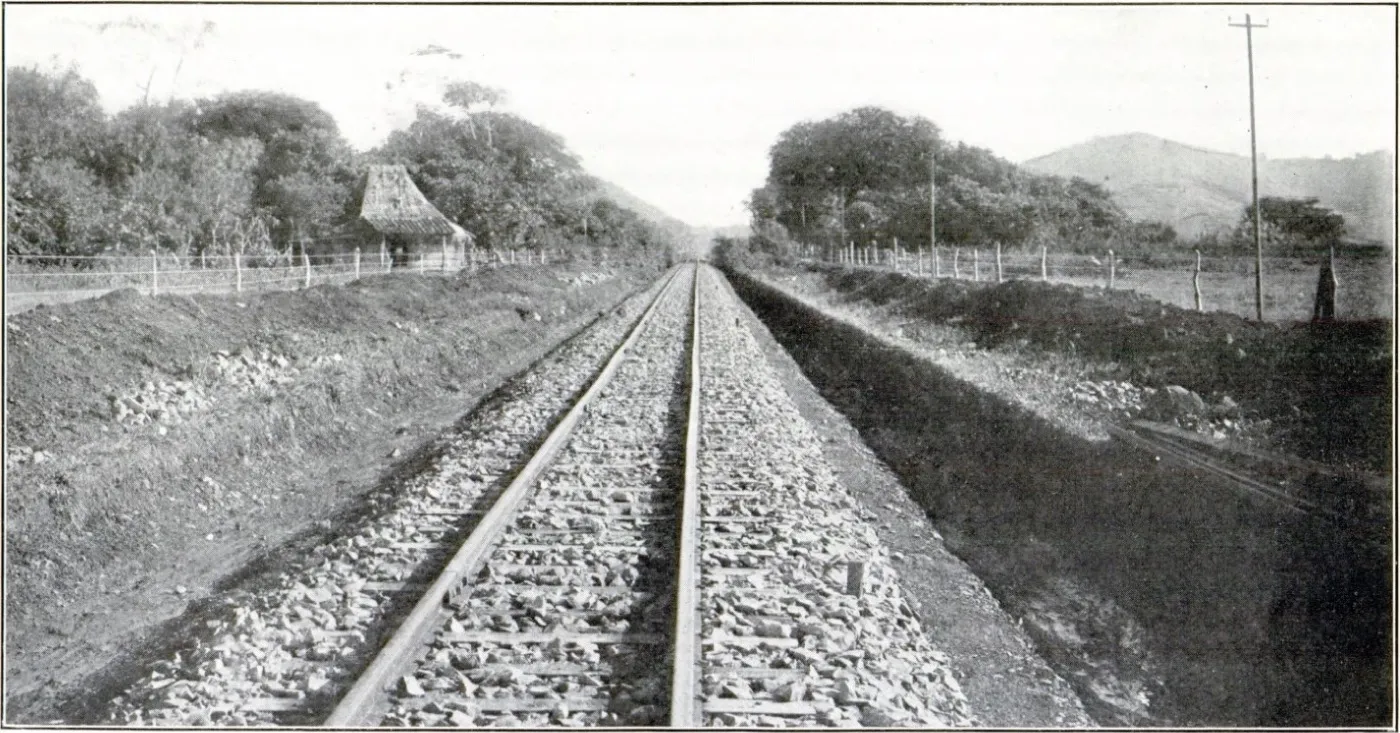
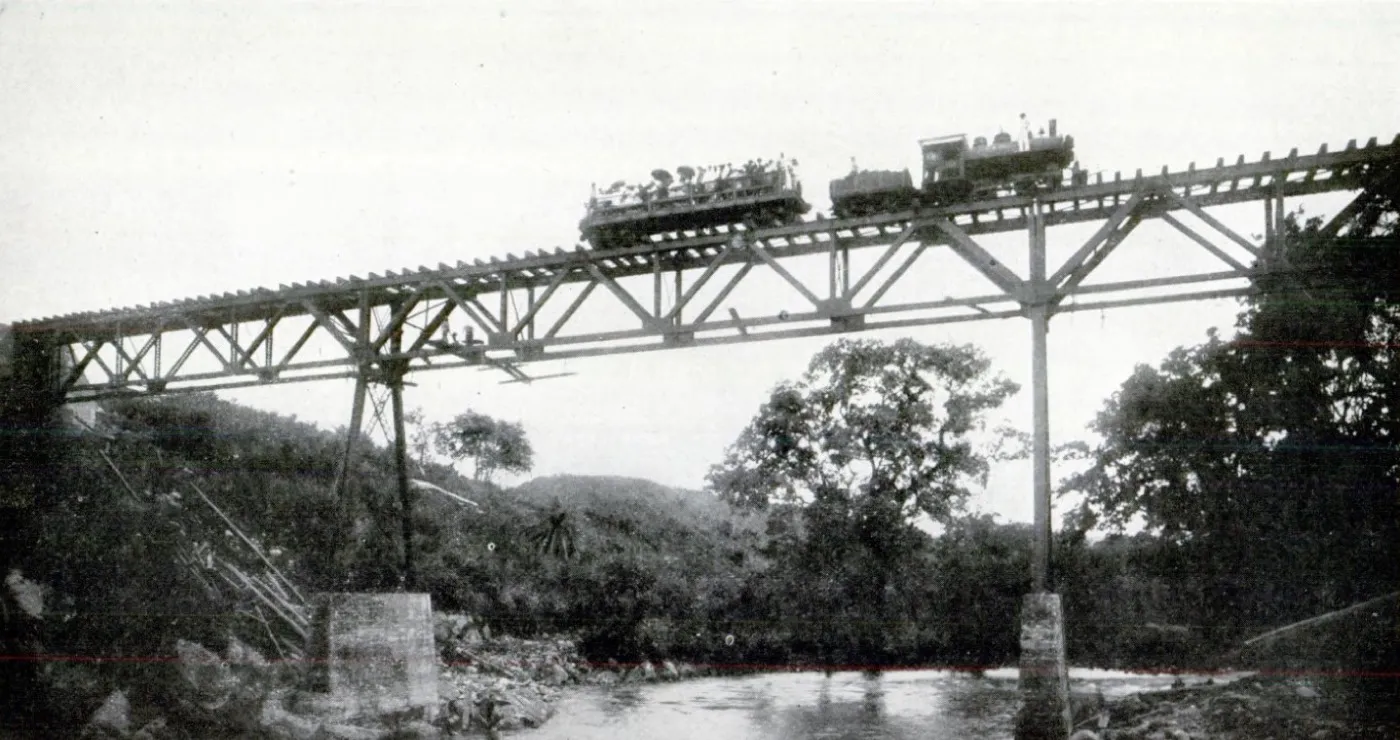
Boquete opened up to the world within just a few years. In 1913, Kotowa farm — today one of the oldest coffee operations still in production — was founded by a North American immigrant. In 1914, the town’s very first hotel opened, a five-room guesthouse run by American Joseph “Pop” Wright, for travelers who at the time arrived from David by horse, ox cart, or on foot — no road existed yet. That same year, construction began on the National Railroad of Chiriquí, linking David to Boquete and then Concepción, inaugurated on either April 22 or 23, 1916, depending on the source.
On January 3, 1927, Boquete’s first power plant went into service, serving Bajo Boquete and Lino — lighting billed “to the customer’s satisfaction,” one gold dollar per 30-watt bulb. Two years later, in 1929, residents proposed a local hydroelectric plant to the government for lighting, coffee-processing machinery — and the cinema: a telling detail about the ambitions of modernity in a small town that still had no drivable road.
The People Who Shaped the Valley
A handful of figures keep recurring in Boquete’s history. Blasina Samudio, great-great-grandmother of the current owner of Finca Don Pachi, settled on the slopes of the Barú as early as 1873: she holds Boquete’s oldest land title, issued under Gran Colombia — three decades before the Republic of Panama was even born in 1903 — and she was the first woman to hold one in the region.
Norwegian engineer Tollef Bache Mönniche, who helped design the Panama Canal’s emergency locks under General Goethals, retired in 1924 and settled with his wife Julia on the 365 hectares that would become Finca Lérida. In 1929, their coffee harvest became the very first Panamanian export to Europe — sold at three times the going price. Mönniche also invented a coffee cherry sorter, the “Sifón,” and documented over 500 local bird species, whose records were later donated to the Field Museum in Chicago.
In 1946, the Swedish Elliot family — journalist Vera J. Elliot, her husband Captain Hans Elliot, and Vera’s brother, Carl Janson — bought “Pop” Wright’s original hotel and turned it into a boutique hotel under the name Hotel Panamonte, a then-unheard-of concept in the region. Over the following decades, “Doña Vera” hosted Admiral Richard E. Byrd (said to have finished his Antarctic memoirs there), aviator Charles Lindbergh, members of the Rockefeller family, Vice President Richard Nixon in 1957, actress Ingrid Bergman in 1959 and again in 1967 — and later, under the direction of her daughter Inga Collins, regarded as a pioneer of ecotourism in Panama, the Shah of Iran Mohammad Reza Pahlavi and Farah Diba, as well as Sean Connery.
A small town with no road, but no shortage of stars. It’s worth picturing the contrast: in the 1940s–60s, a mountain village reachable only by train or on horseback, entirely agricultural, was nonetheless hosting some of the most famous names of its era — a sign that Boquete’s charm and cool climate were already at work, long before organized tourism arrived.
The Flood That Gave Birth to the Feria
In 1950, Luis Quiel, of the founding family of the Alto Quiel hamlet, created Boquete’s first coffee festival. The event stayed irregular, held only in 1950, 1957, 1961, and 1969. Then, on April 9, 1970, a major flood of the Río Caldera struck a third of the population and killed eight people; the Hotel Dos Ríos was damaged, and the young festival was suspended.
The community bounced back as early as 1973, relaunching it in an expanded, now-annual form: the Feria de las Flores y del Café, one of the town’s most defining events today — born, directly, from a disaster it had to overcome.
From Farming District to World Destination
The tourism turn is more recent than most people imagine. It wasn’t until around the year 2000 that Boquete began appearing in retire-abroad trade press as a destination of choice — a trend that accelerated markedly through the 2000s and 2010s. In 1998, the district, until then made up of three corregimientos (Bajo Boquete, Caldera, Palmira), was reorganized into six, with the creation of Alto Boquete, Jaramillo, and Los Naranjos — an administrative acknowledgment of the valley’s growth. Today, Boquete is home to several thousand permanent foreign residents from more than thirty countries — a story of its own, one we tell in another article.
This article is © Wild on the Farm, Boquete Cloud Forest Lodge. All rights reserved — it may not be reproduced, republished, or redistributed without prior written permission. Read our full legal notice →