Nutritional Properties & Benefits
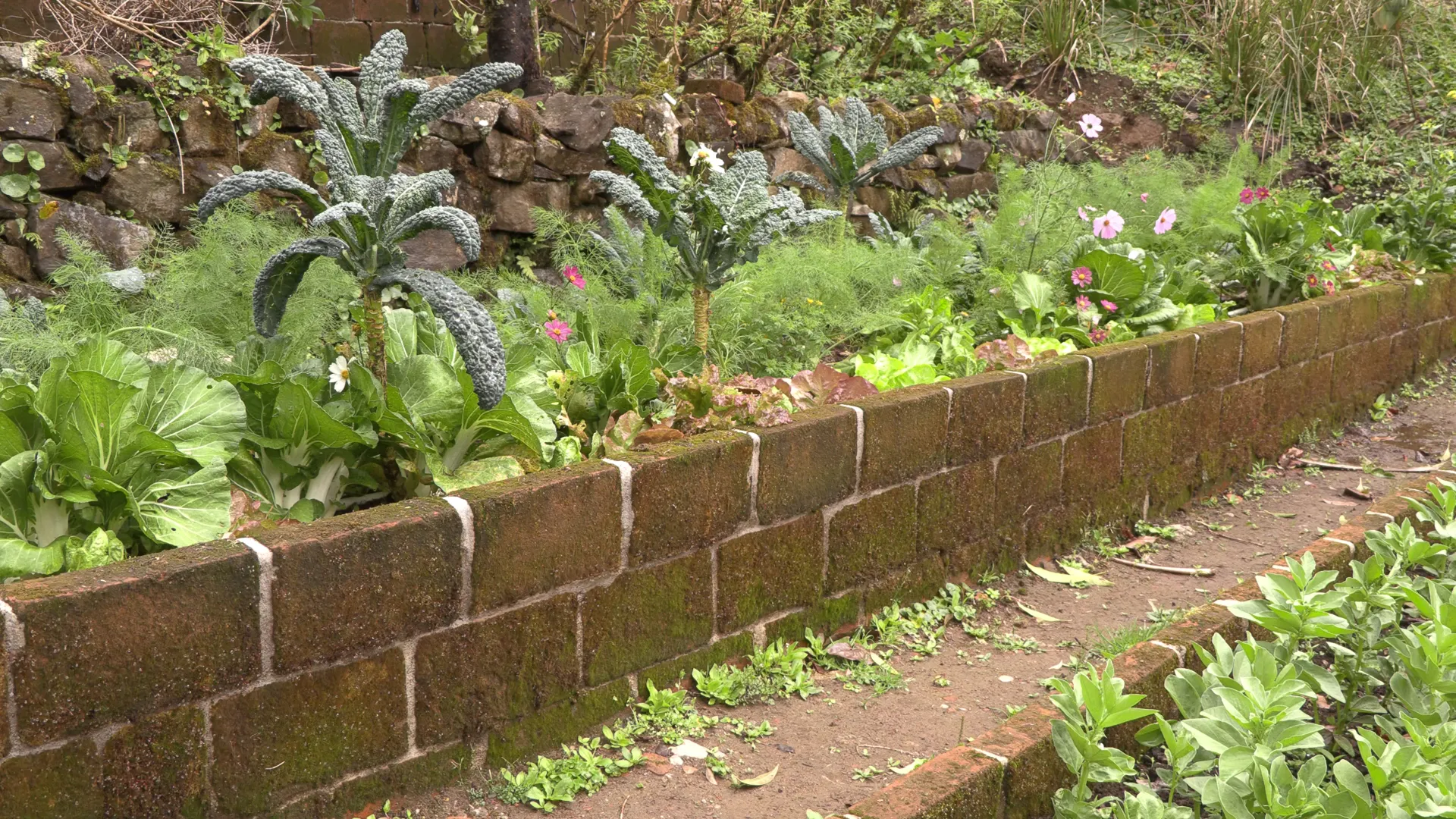
Kale (Brassica oleracea var. sabellica, also classified under acephala depending on the source) is one of the most nutrient-dense leafy greens there is: a cup of raw leaves provides around 68% of the daily requirement for vitamin K and more than 20% for vitamin C, plus a good dose of beta-carotene (a precursor of vitamin A) and plant-based calcium. It owes its deep color and part of its benefits to lutein and zeaxanthin, two carotenoids associated with eye health, as well as to glucosinolates which, once the leaf is cut or chewed, turn into compounds such as sulforaphane — molecules studied for their antioxidant and anti-inflammatory properties. Its variety name, acephala, comes from the Greek for “headless”: unlike head cabbage, kale never forms a compact ball, staying an open rosette of leaves all its life. A useful note: like most brassicas, it also contains goitrogenic compounds that can, in very large amounts over a long period, interfere with thyroid function — a non-issue at normal dietary levels, but worth keeping in mind for anyone on thyroid treatment.
This information is for educational purposes only and reflects traditional and commonly documented uses of this plant. It is not medical advice and does not replace the guidance of a qualified healthcare professional. Always consult your doctor before using any plant medicinally, especially if pregnant, nursing, or taking medication.
How to Eat It
Raw kale can be downright tough, but vigorously massaging the leaves with a little olive oil and lemon juice for a few minutes softens the texture remarkably and tames its bitterness — a simple trick that changes everything for salads. It also cooks beautifully: quickly sautéed with garlic, added toward the end of cooking to soups and stews (Portuguese caldo verde being the most iconic example), or turned into crisp oven chips with a drizzle of oil and a pinch of salt. It slips easily into a smoothie raw, its firm texture blending well, and its central ribs — often removed because they’re more fibrous than the leaf blade — can be chopped finely and cooked a little longer than the leaves themselves. It’s a green that holds up to long cooking without falling apart completely, unlike more tender leaves such as spinach.
How to Grow It Organically
Kale is one of the most forgiving crops in the organic vegetable garden: undemanding, hardy, and surprisingly tolerant of beginner mistakes.
- Easy to sow, direct or in pots. Seeds germinate in one to two weeks at moderate temperatures, and unlike parsley or carrots, young kale plants transplant very well.
- A cool-climate plant that dislikes excessive heat. Like lettuce, kale tends to bolt and turn bitter under prolonged heat — it’s a crop that does its best in cool conditions, never in the height of a tropical summer.
- A heavy feeder. Kale grows fast and produces a lot of foliage over a long period; soil enriched with compost at planting, followed by regular additions of organic matter, supports continuous production without exhausting the soil.
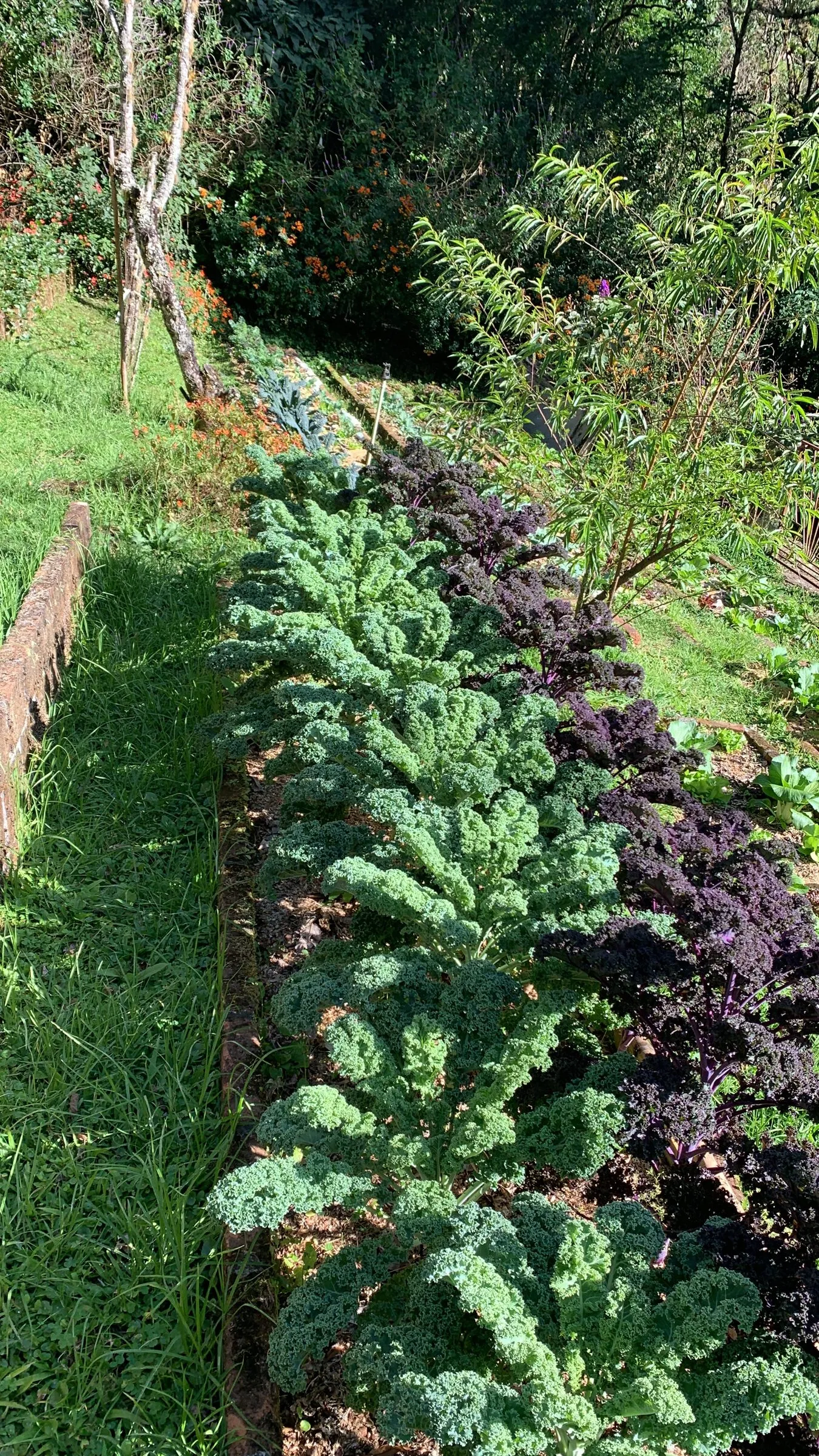
- Harvest by the leaf, never all at once. Pick the outer leaves — the largest and oldest — and leave the heart of the plant to keep producing. This continuous-harvest method can stretch over several months, even a whole season.
- Regular, deep watering. Soil that dries out completely between waterings stresses the plant and hastens its tendency to flower early; a layer of mulch helps keep moisture more even.
- The classic brassica pests — cabbage white caterpillars, flea beetles, aphids — remain the main challenge in organic growing; insect netting laid over the bed at planting is still one of the simplest and most effective protections.
Kale in Our Garden
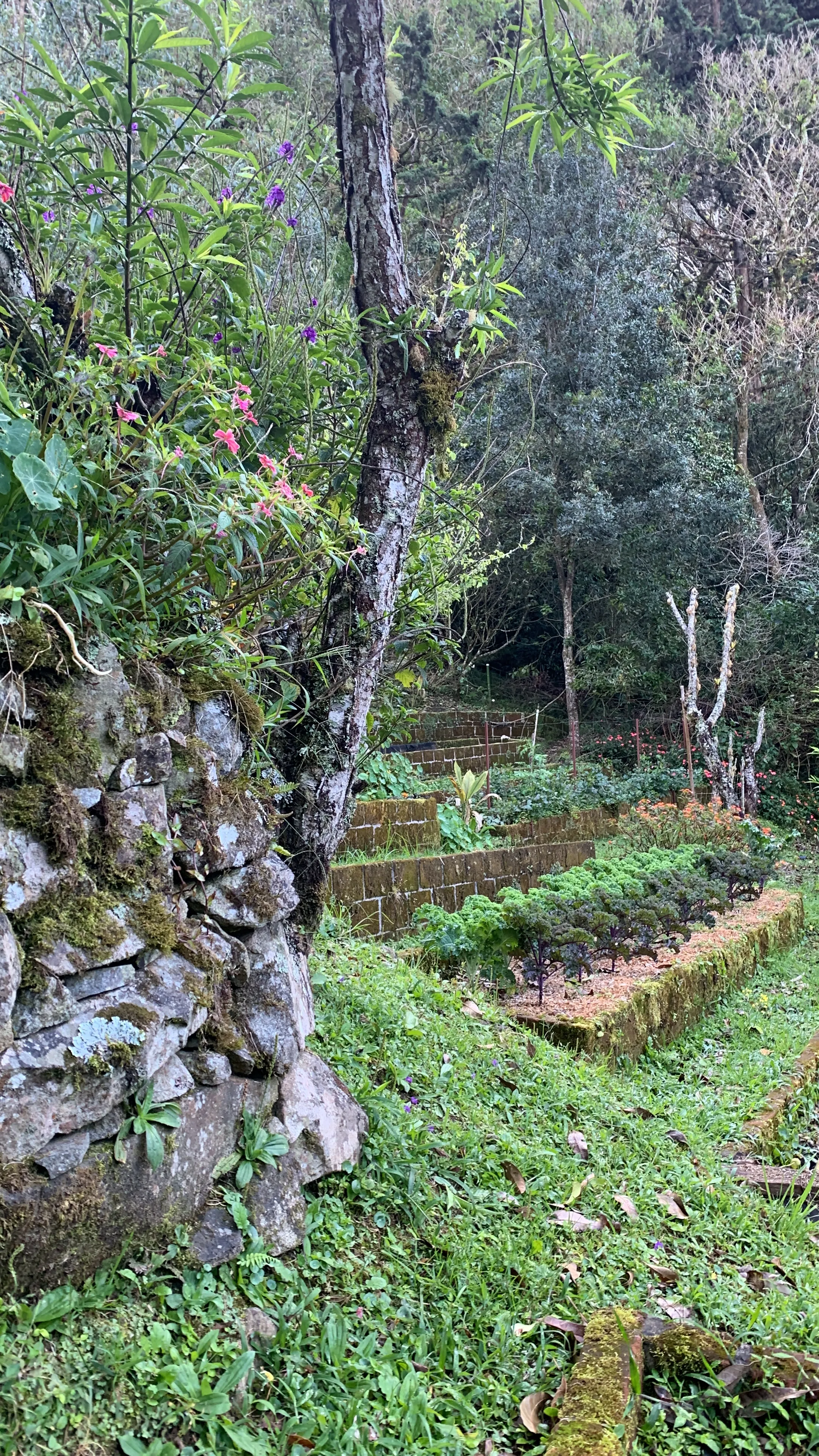
Kale finds near-ideal conditions in the cool, stable climate of the Horqueta cloud forest. Across most of the tropics it survives only in the cool season before flowering and turning bitter at the first sustained heat, whereas here the altitude gives it moderate temperatures almost all year round, without the forced pause that heat imposes in the lowlands. (A fun detail for gardeners from temperate climates: elsewhere, a light autumn frost makes kale even tastier, as the cold triggers the conversion of its starch into sugars — something that, with no frost in Boquete, will never happen here, but which the cool climate more than makes up for with long, steady growth rather than a short burst.) The region’s volcanic soils, rich in organic matter, suit its heavy-feeding appetite perfectly, and the fact that it can be harvested leaf by leaf for months makes it an especially generous crop for a farm that sells directly to local customers.
Good Companions
- Alliums — onion, garlic, chives. Their smell effectively confuses several kale pests, notably flea beetles and some aphids, by making the host plant harder to locate.
- Aromatic herbs like dill and cilantro. They attract beneficial insects — hoverflies and parasitic wasps above all — that help keep aphid populations in check.
- Legumes (beans, peas). By fixing atmospheric nitrogen in the soil, they naturally enrich the ground for kale, a heavy nitrogen user.
- Marigolds and nasturtiums. Two reliable allies in the organic garden: they attract aphid-eating hoverflies, and nasturtium even works as a trap crop, drawing certain pests away from the kale.
- Tomato. A lesser-known but interesting pairing: some studies suggest that growing it nearby may reduce infestations of the diamondback moth, whose caterpillars feed on kale foliage.
Plants to Avoid
- Other brassicas (cabbage, broccoli, cauliflower). The plants themselves aren’t the problem — it’s that they share the same pests and diseases; grouping them too densely helps those spread from plant to plant.
- Strawberries, sometimes cited by gardeners as a poor neighbor for cabbages in general, although scientific evidence for this incompatibility is limited and comes mostly from observation rather than controlled studies.
- Sunflowers, whose roots release compounds that can slow the germination and growth of several neighboring vegetables, kale included if planted too close.
Good to Know
- Kale, head cabbage, broccoli, cauliflower, and Brussels sprouts are, strictly speaking, the same species. All descend from Brassica oleracea, a wild cabbage of the Mediterranean coast, which centuries of human selection pushed in different directions — emphasizing the leaves, the flower buds, or the side buds — an impressive diversity from a single ancestral plant.
- Its botanical name literally means “headless.” Acephala, from the Greek, neatly describes what sets kale apart from its cousin the head cabbage: it never forms a compact ball and stays an open rosette of leaves all its life.
- It’s one of the oldest cultivated cabbages. Traces of it go back to ancient Greece and Rome, long before selection produced the head cabbages we know today — so kale isn’t a recent fad but one of the oldest forms of domesticated cabbage.
- It was a staple of rural cooking long before it was trendy. From Portuguese caldo verde to the traditional kale dishes of Northern Europe, this headless variety was long a subsistence vegetable valued for its cold hardiness, well before it became a symbol of healthy eating in the 2010s.
This article is © Wild on the Farm, Boquete Cloud Forest Lodge. All rights reserved — it may not be reproduced, republished, or redistributed without prior written permission. Read our full legal notice →