Medicinal & Therapeutic Properties
Rosemary has one of the longest folk-medicine pedigrees of any Mediterranean herb, historically nicknamed “the herb of remembrance.” In traditional and modern herbal practice, it’s commonly used as a morning tonic — taken as a light infusion to support mental clarity, focus, and memory, which is exactly why it earns its place alongside jiaogulan and nettle in our morning tea blend. Herbalists have long valued rosemary as a mild circulatory stimulant, traditionally used to encourage blood flow toward the head and extremities, and its slightly bitter, aromatic character has made it a traditional digestive “bitter,” commonly used to support healthy liver function and ease sluggish digestion after heavy meals. It’s also prized in folk tradition as a gentle, non-caffeinated pick-me-up and general tonic during periods of fatigue or mental strain, and its aromatic oils are noted in herbal literature for their antioxidant richness — one reason rosemary shows up as often in traditional skin and hair care as it does in the teacup.
This information is for educational purposes only and reflects traditional and commonly documented uses of this plant. It is not medical advice and does not replace the guidance of a qualified healthcare professional. Always consult your doctor before using any plant medicinally, especially if pregnant, nursing, or taking medication.
Culinary Interest
Rosemary is one of the most recognizable culinary herbs of Mediterranean cooking, prized for its resinous, pine-and-citrus aroma and warm, slightly bitter bite. Fresh sprigs are milder and a touch sweeter than dried rosemary. Its sturdy needle-like leaves hold up beautifully to high heat and long cooking, making it a natural match for roasted meats, roasted root vegetables, and hearty breads. Whole sprigs are often tossed onto coals or steeped into olive oil, and it pairs naturally with garlic, lemon, and thyme. Beyond savory cooking, rosemary makes a fragrant, invigorating herbal tea on its own — a simple hot-water infusion is enough to draw out its full flavor, which is why it anchors our morning blend alongside jiaogulan and nettle.
Where to Find It in Panama
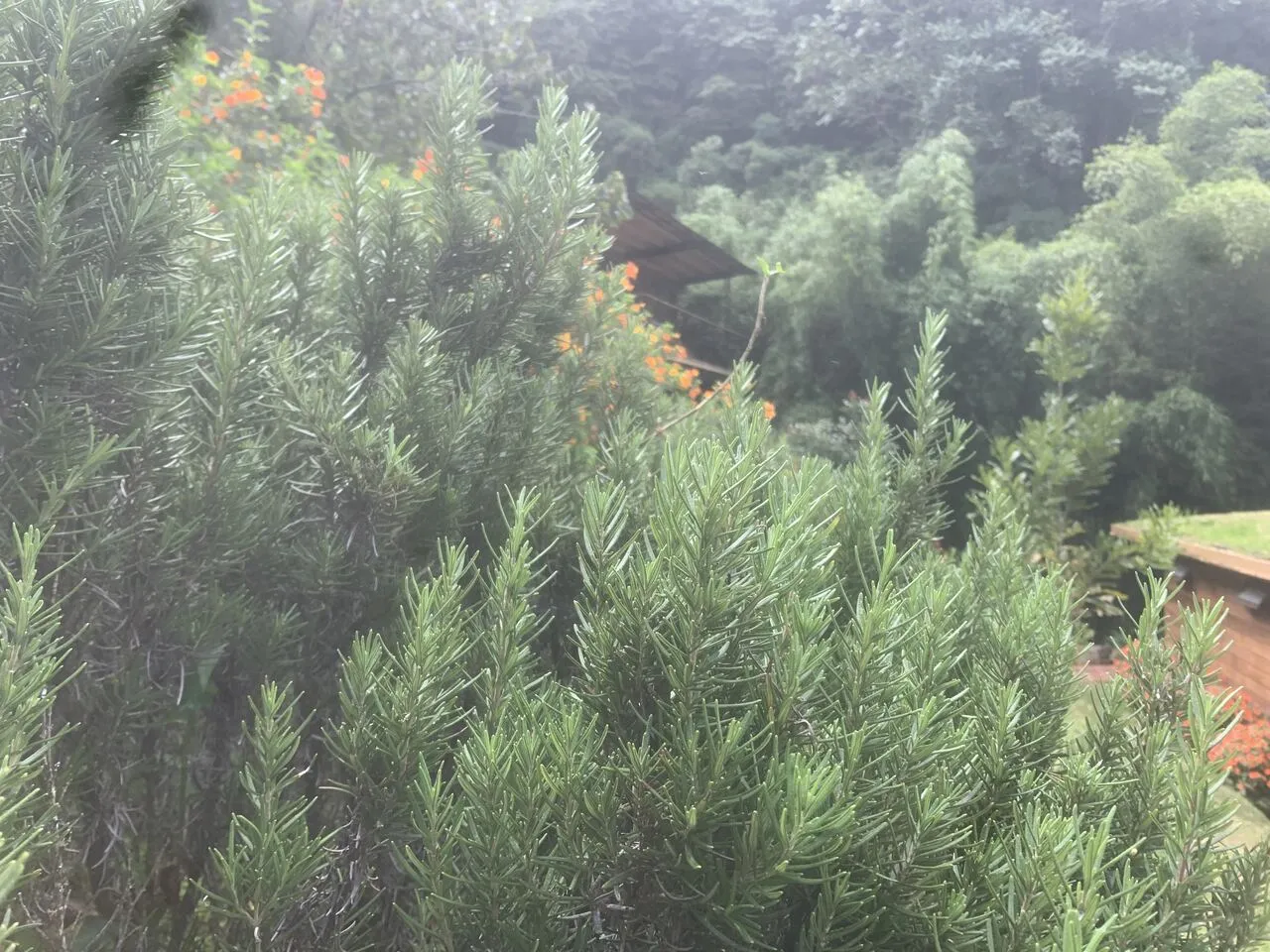
Rosemary is a Mediterranean shrub, and it’s genuinely hard to find growing well anywhere in tropical Panama — most of the country is simply too hot and humid for a plant bred for dry Mediterranean sun. It thrives at Wild on the Farm, Boquete Cloud Forest Lodge, thanks to our cloud forest’s unusually cool microclimate at 1,800m, which stays mild year-round — one of the few conditions in Panama able to support it at all. We grow it in the sunniest, most open and breeze-exposed corner of the property, right alongside our thyme, in the stone herb bed.
This article is © Wild on the Farm, Boquete Cloud Forest Lodge. All rights reserved — it may not be reproduced, republished, or redistributed without prior written permission. Read our full legal notice →