Nutritional Properties & Benefits
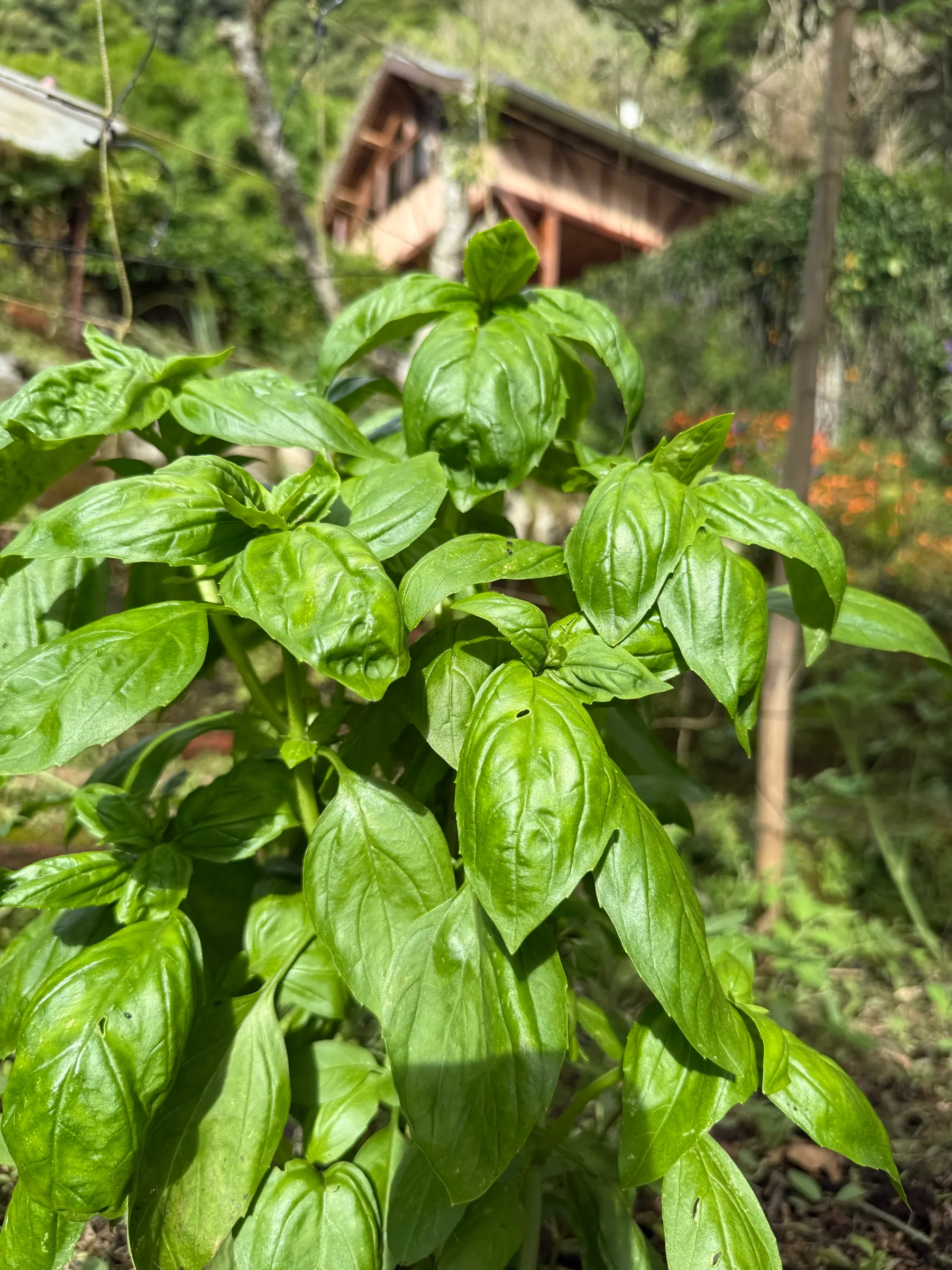
Basil (Ocimum basilicum) is one of those herbs eaten in small amounts, but every leaf is packed with active compounds. A tablespoon of fresh basil already provides around 13% of the daily requirement for vitamin K (much more once dried, as dehydration concentrates the nutrients), along with small amounts of vitamin A, manganese, and iron. It’s above all its essential oils — eugenol, linalool, estragole depending on the variety — that give it the antioxidant and anti-inflammatory properties studied in the lab, with promising results that are still largely limited to in vitro or animal studies; whether they carry over to humans still needs more clinical research. Its botanical name is intriguing: Ocimum is thought to come from the ancient Greek for “to smell,” while basilicum derives from basilikón, “royal” — basil was literally considered the “herb of kings.” Its square stems, typical of the mint family (Lamiaceae, which also includes sage), are a good identification clue in the field.
This information is for educational purposes only and reflects traditional and commonly documented uses of this plant. It is not medical advice and does not replace the guidance of a qualified healthcare professional. Always consult your doctor before using any plant medicinally, especially if pregnant, nursing, or taking medication.
How to Eat It
Basil is at its best raw or barely warmed, never cooked for long — prolonged heat quickly destroys its volatile aromatic oils. Pesto genovese, made from basil pounded with pine nuts, garlic, parmesan, and olive oil, is its most famous use, but caprese salad (tomato, mozzarella, fresh basil) shows just as well how naturally it complements tomato. Add it at the end of cooking to sauces, soups, or stir-fries, never at the start, to preserve its fragrance. It infuses oils and vinegars remarkably well, and its flowers — edible and slightly milder than the leaves — make a pretty garnish. For storage, freezing (as pesto, or chopped in ice-cube trays with a little oil) preserves its aroma far better than drying, which drives off much of its aromatic compounds.
How to Grow It Organically
Basil isn’t difficult in itself, but it’s a decidedly cold-sensitive plant, which changes a great deal depending on the climate you grow it in.
- A seed that needs warmth to germinate. Soil around 20–25°C is needed for fast, even sprouting; below that, germination is slow and patchy.
- Cold is enemy number one. Basil suffers as soon as temperatures drop below 10–13°C, and prolonged exposure to cold — let alone frost — blackens its leaves and stops its growth. It’s a plant that wants direct sun and heat, without interruption.
- Regular pinching is the key to a bushy plant. Pinching the main stem just above a pair of leaves once the plant reaches 15–20 cm encourages branching and delays flowering, after which the leaves turn more bitter.
- Harvesting stimulates production. The more regularly you pick (cutting just above a leaf node), the more new shoots the plant produces — unlike many herbs, basil likes being cut often.
- Regular watering but well-drained soil. Basil likes neither drought stress nor constantly soggy roots, which encourage downy mildew and other fungal diseases, especially in humid climates.
- Watch for aphids and slugs, its two main nuisances in organic growing; light mulching and good air circulation between plants markedly reduce fungal problems.
Basil in Our Garden
Let’s be honest: basil isn’t the most obvious crop in the constant coolness of the Horqueta cloud forest. At heart it’s a tropical lowland plant that wants sustained heat and direct sun — two things the cool nights of the high-altitude cloud forest don’t always offer generously. The strategy that works best here is to reserve the warmest, sunniest spot in the garden for it — a corner sheltered from the wind, ideally in full midday sun, or even against a wall or stones that store the day’s heat and release it at night — and to favor the dry season, when the sky is clearer and the sunshine more direct, over the rainy season, which is cooler and more conducive to fungal diseases on its sensitive foliage.
Good Companions
- Tomato. The most famous pairing in the vegetable garden: basil is said to improve the vigor and flavor of tomatoes while repelling aphids and tomato hornworms — and the two meet naturally on the plate.
- Sweet pepper and chili. Same logic as with tomato: basil helps keep aphids, thrips, and whiteflies at a distance, to mutual benefit.
- Garlic. A traditional pairing reputed to be effective against mites, aphids, and whiteflies, with two plants that need fairly similar growing conditions.
- Marigolds (tagetes/calendula). A classic of the organic garden: their roots and scent repel several pests, aphids, beetles, and nematodes first among them.
- Oregano and parsley. Good general neighbors — these herbs enjoy similar growing conditions and also attract useful beneficial insects.
Plants to Avoid
- Rue, traditionally considered a poor neighbor for basil — its bitterness and compounds are said to be antagonistic, although this is more an empirical observation than a rigorous scientific demonstration.
- Fennel, known for releasing compounds that inhibit the growth of many neighboring plants, basil included — better to isolate it in a corner of its own.
- Sage and thyme — not because of any chemical incompatibility, but simply because they’re dry-soil plants, whereas basil wants more regular watering; growing them side by side means short-changing one of the two.
Good to Know
- It’s revered in India in a related form, tulsi (holy basil). Although it’s a distinct species (Ocimum tenuiflorum), this botanical kinship sheds light on the almost sacred status basil long held in South Asia, where it was credited with protective virtues.
- Europe, by contrast, was long wary of it. Some folk traditions oddly linked basil with scorpions or bad luck, while other regions of Italy made it a symbol of love instead — a pot of basil on the windowsill traditionally signaled that a suitor was welcome.
- There are more than sixty cultivated varieties, with very diverse flavors: lemon basil, cinnamon basil, purple (“opal”) basil, not to mention Thai basil — with Genovese, the most common, remaining the benchmark for classic pesto.
- Freezing preserves its fragrance far better than drying. Unlike many herbs, basil loses much of its volatile oils when dried; frozen, raw or as pesto, it keeps a freshness much closer to the fresh leaf.
This article is © Wild on the Farm, Boquete Cloud Forest Lodge. All rights reserved — it may not be reproduced, republished, or redistributed without prior written permission. Read our full legal notice →