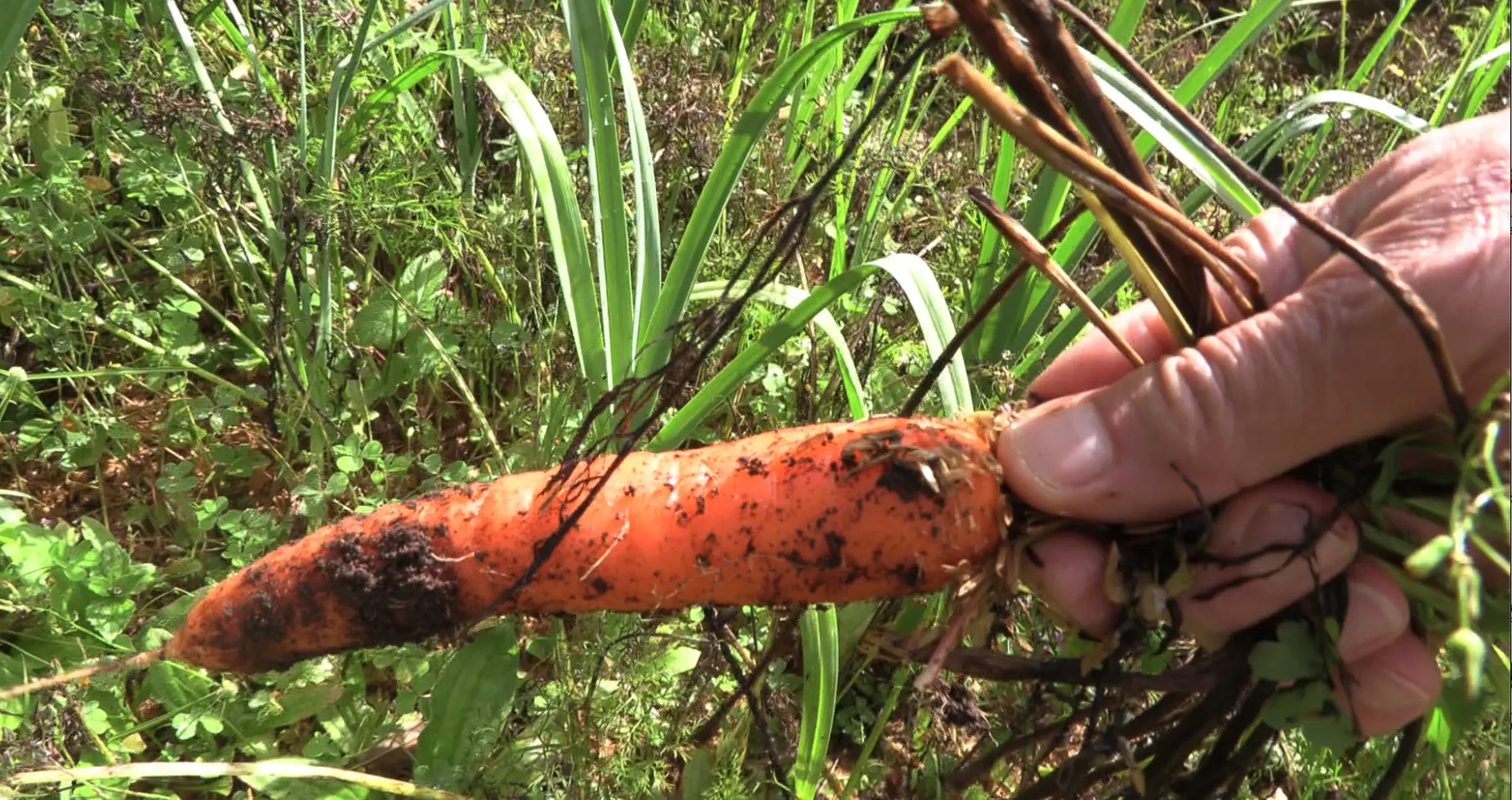
Nutritional Properties & Benefits
The carrot (Daucus carota) owes its orange color to a pigment, beta-carotene, which the body converts into vitamin A — with a well-documented role in maintaining normal vision, especially adaptation to night vision, as well as in skin and immune health. A single medium carrot covers a good share of the daily vitamin A requirement in this precursor form. It also provides a notable amount of vitamin K1, useful for blood clotting, plus potassium, small amounts of vitamin C and biotin, and soluble fiber (including pectin) that feeds the gut microbiome and supports regular digestion. Low in calories and rich in water, it’s also a worthwhile source of carotenoid antioxidants, including alpha-carotene and lutein depending on the variety — an interest that extends to the older purple and yellow carrots, which contain different compounds (anthocyanins in the purple ones) whose antioxidant properties are also being studied.
This information is for educational purposes only and reflects traditional and commonly documented uses of this plant. It is not medical advice and does not replace the guidance of a qualified healthcare professional. Always consult your doctor before using any plant medicinally, especially if pregnant, nursing, or taking medication.
How to Eat It
Carrots lend themselves to almost every kind of preparation. Raw, grated or cut into sticks, they keep their crunch and most of their heat-sensitive vitamin C — the basis of the classic French grated-carrot salad with lemon and parsley. Cooked — steamed, oven-roasted, or glazed with butter and honey — they become easier to digest and release their beta-carotene better: unlike vitamin C, it’s actually better absorbed after cooking and in the presence of a little fat, which helps it cross the intestinal wall. They’re also excellent for lacto-fermentation — in fact, carrots are one of the vegetables that most often end up in our Garden Kimchi, depending on what the garden gives us that week. Not to mention soup, velouté, fresh juice, or simply nibbled as they are: few vegetables are as versatile and as undemanding to prepare.
How to Grow It Organically
Carrots have a reputation for being fussy in the garden, but almost all their whims come down to a single requirement: soil that’s loose, deep, and free of obstacles. It’s a taproot — it grows straight down — and the slightest stone, compacted clod, or poorly rotted fresh manure is enough to make it fork or twist. Sandy or finely loosened soil to a depth of 25 to 30 cm, with no stones or coarse, freshly added organic matter, is the foundation of everything.
- Direct sowing, never transplanting. The taproot doesn’t tolerate transplanting — moving it damages the tip and causes forked or stunted roots. So always sow in place, in shallow rows (about 1 cm), keeping the soil constantly moist until the seedlings emerge — germination is slow (2 to 3 weeks) and the soil must never crust over or dry out during that time.
- Thinning is non-negotiable. The tiny seeds always come up too densely. Thin early — first when the young plants have 2–3 true leaves, then a second time to leave 4 to 5 cm between carrots — otherwise they stay puny and deform each other.
- Regular watering, never in fits and starts. Soil that alternates between drought and heavy watering makes roots split or turn bitter and fibrous. Light mulching helps keep moisture constant.
- No fresh manure. Uncomposted manure — rich in nitrogen and uneven — is the number-one cause of forked carrots. Apply it to the previous crop instead, and feed carrots with well-matured, sifted compost.
- Protection against carrot fly. This small fly lays its eggs near the crown, and its larvae tunnel into the root. Insect netting laid at sowing is the most reliable organic protection; pairing with alliums (see below) also helps scramble its sense of smell.
- Staggered harvest. Harvest as needed, as soon as the diameter of the crown, visible at the surface, looks big enough — no need to wait for maximum size, as the flesh stays more tender when picked a little young.
Carrots in Our Garden
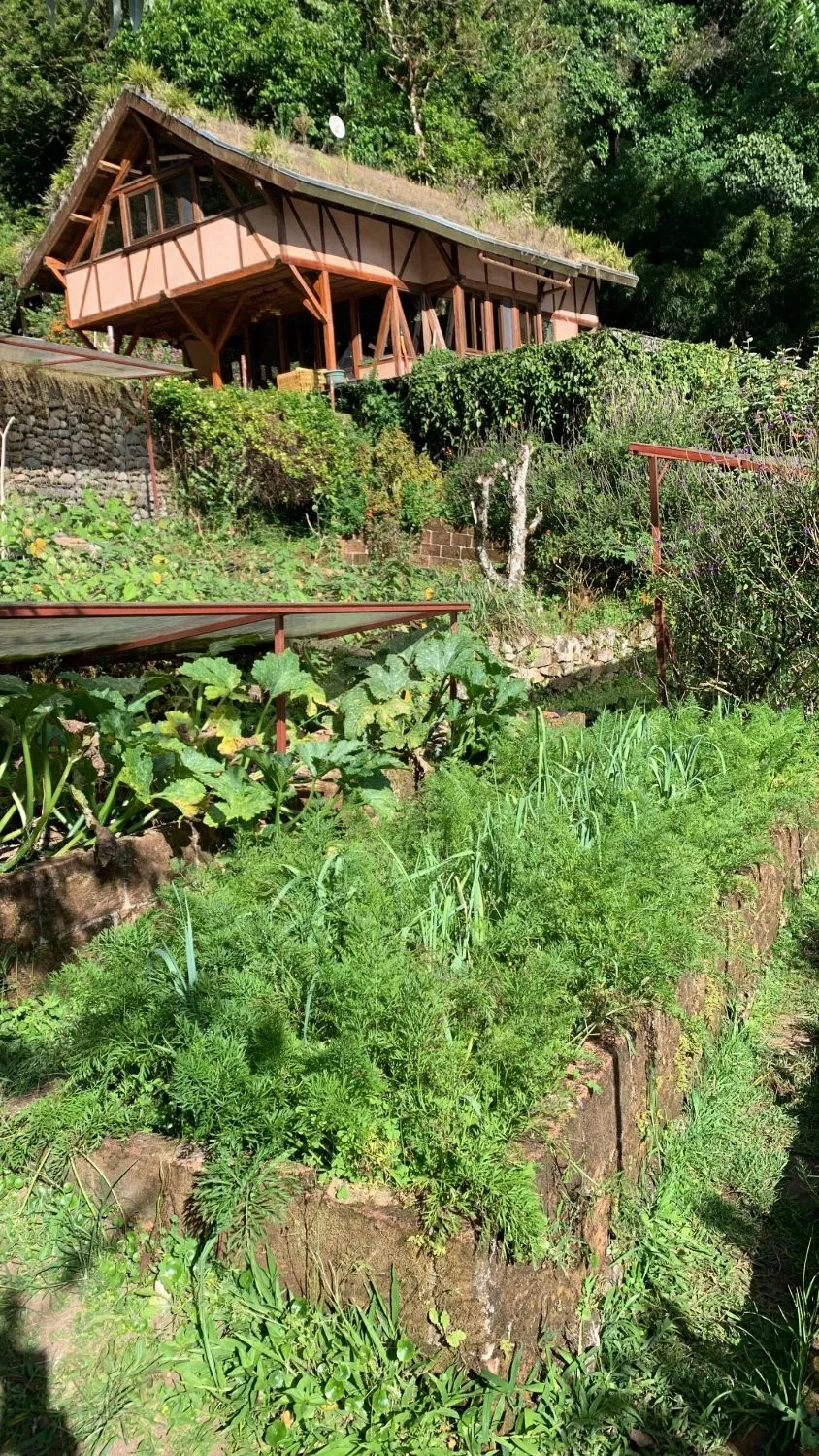
At 1,800 meters, a cloud forest climate is actually a clear advantage for carrots: it’s a cool-climate crop that prefers temperatures between 15 and 20°C and which, in lowland tropical heat, would tend to bolt prematurely or develop more fibrous flesh. Deep, well-drained volcanic soils on garden terraces also suit its taproot very well, provided they’re finely loosened before sowing. The main difficulty, then, isn’t heat but moisture: at the height of the rainy season, you have to make sure the ridges don’t stay waterlogged, or the crowns will rot — a good reason to grow carrots on raised terraces rather than on flat ground.
Good Companions
- Alliums — onion, leek, garlic, chives. The most classic and most useful pairing: the strong smell of alliums disrupts the carrot fly’s sense of smell — it normally finds its host plant by the scent of its bruised foliage. It works the other way too: carrots help repel the leek moth. A great classic of a well-balanced vegetable garden.
- Lettuce and salad greens. Compact and shallow-rooted, they don’t compete with the carrot’s taproot and can even act as a living mulch, keeping the soil cool between rows.
- Peas and bush beans. Like all legumes, they enrich the soil with nitrogen thanks to the fixing bacteria in their roots — a benefit for the following crop, as long as you don’t overdo it, since excess nitrogen is exactly what encourages forked roots.
- Tomato. A long-standing traditional pairing; tomatoes benefit from the soil loosening carrots cause, and some gardeners credit them with repelling certain insects, although the scientific evidence is thin.
- Rosemary and sage. Like alliums, their aromatic essential oils help mask the smell of carrot foliage from pests.
Plants to Avoid
- Dill, fennel, and parsnip. All three belong to the same botanical family as the carrot, the Apiaceae (umbellifers). This closeness causes two problems: first, they share the same pests and diseases, which helps them spread from plant to plant; second, dill and fennel can cross with carrots if allowed to flower nearby, and fennel is known for its allelopathic effect, inhibiting the growth of many neighboring plants, the carrot included.
- Celery. Also an Apiaceae, with the same risk of shared pests and diseases — best kept away from the carrot bed, like any other umbellifer.
- Potato. Both are underground crops that compete directly for root space and nutrients; they’re generally not paired in the same bed.
Good to Know
- Carrots weren’t always orange. The oldest cultivated carrots, in Central Asia about a thousand years ago, were purple or yellow. The orange variety we know is thought to have appeared in the Netherlands around the 16th–17th centuries — a persistent legend has it that Dutch growers selected it in tribute to the House of Orange-Nassau, although vegetable historians still debate how much of that story is myth.
- It’s a biennial. Left to itself, the carrot only flowers in its second year: the first season is devoted entirely to storing reserves in its root, which is why it’s harvested before it goes to seed.
- It belongs to the family of parsley, dill… and hemlock. The Apiaceae include as many prized edible plants as toxic ones that closely resemble them in the wild (such as poison hemlock) — a good reason never to pick wild carrot without absolute certainty of identification.
- It keeps very well somewhere cool and dark. With their tops removed — which otherwise keep drawing moisture from the root — carrots keep for several months in slightly damp sand at a cool temperature, a traditional storage method far older than the refrigerator.
This article is © Wild on the Farm, Boquete Cloud Forest Lodge. All rights reserved — it may not be reproduced, republished, or redistributed without prior written permission. Read our full legal notice →