Nutritional Properties & Benefits
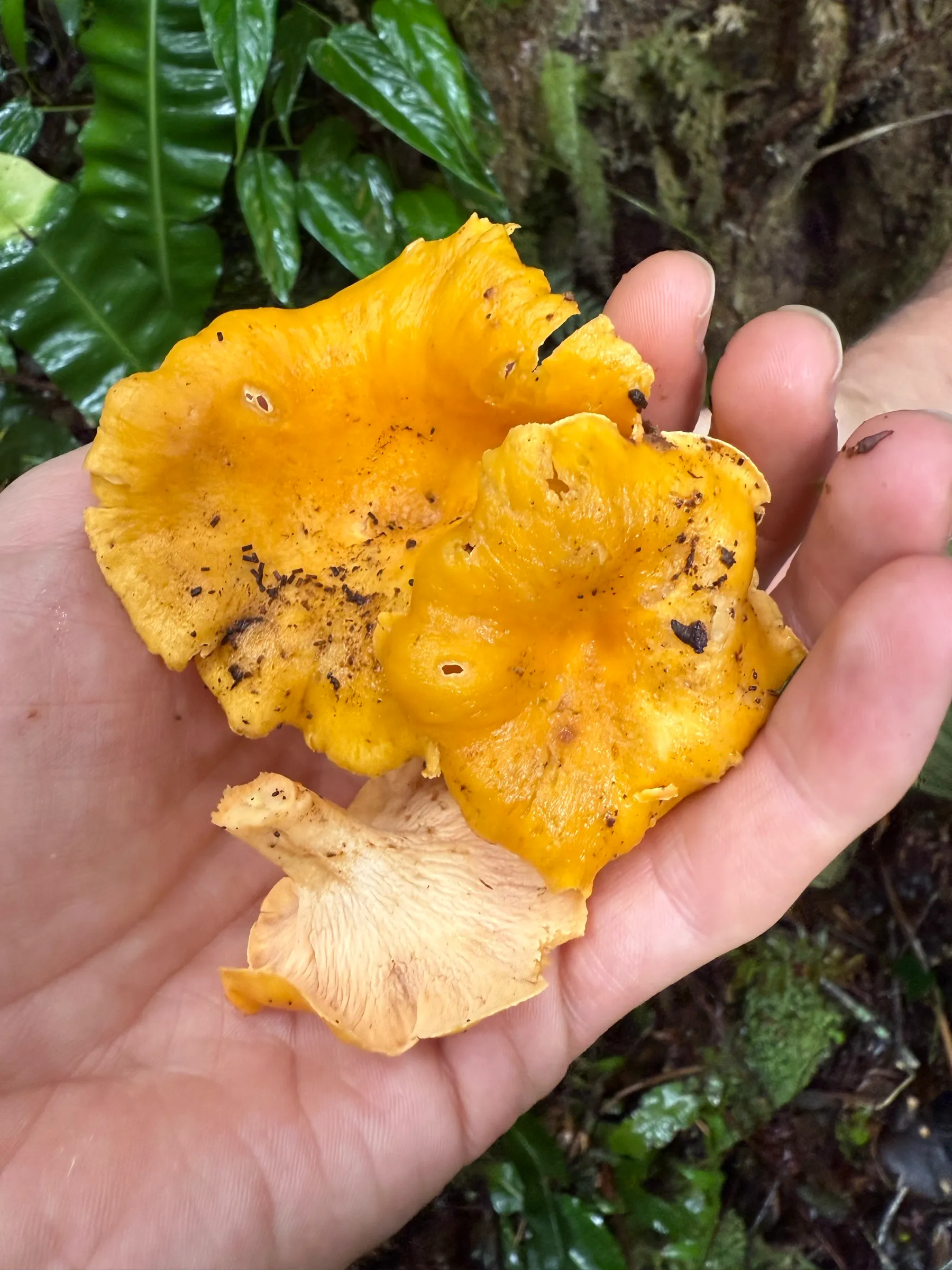
The chanterelle is neither a plant nor a vegetable: it’s a fungus of the genus Cantharellus, of which we see only the “fruit,” the rest living underground, entwined with the roots of trees. Very low in calories, it provides fiber, potassium, copper, iron, and B vitamins, vitamin B3 in particular. Above all, it’s one of the few foods naturally rich in vitamin D, which the mushroom makes in the light, rather as our skin does. Its orange-yellow color comes from carotenoids, the same pigments as in carrots. One standard caution: like most wild mushrooms, the chanterelle is always eaten cooked — raw, it’s indigestible and can cause digestive upset.
And one rule that comes before all the others: never eat a wild mushroom you haven’t identified with certainty, ideally with someone who knows the species of the region. Some orange mushrooms that resemble it are toxic. This article tells the story of our foraging; it is no substitute for an identification guide.
This information is for educational purposes only and reflects traditional and commonly documented uses of this plant. It is not medical advice and does not replace the guidance of a qualified healthcare professional. Always consult your doctor before using any plant medicinally, especially if pregnant, nursing, or taking medication.
How to Eat It
The chanterelle has firm flesh, a delicate, slightly peppery flavor, and that scent of apricot that makes it unique. Don’t wash it under running water — it would soak it up: brush it and scrape the stem with the tip of a knife. In the kitchen, the step that changes everything is to dry-sauté it first in a hot pan, so it gives up its water, before adding butter, shallot or garlic, and then parsley at the last moment. Prepared like this, it needs nothing more than a slice of toast, and goes wonderfully with an omelet, scrambled eggs, roast chicken, fresh pasta, or a risotto; a spoonful of cream turns it into a sauce. It dries less well than other mushrooms, turning leathery: to keep it, better to sauté and then freeze it, or preserve it in vinegar.
How to Recognize and Pick It
The chanterelle can’t be cultivated: it lives in association with the roots of certain trees, and no one has yet managed to produce it like a button mushroom. The whole art, then, lies in recognizing it.
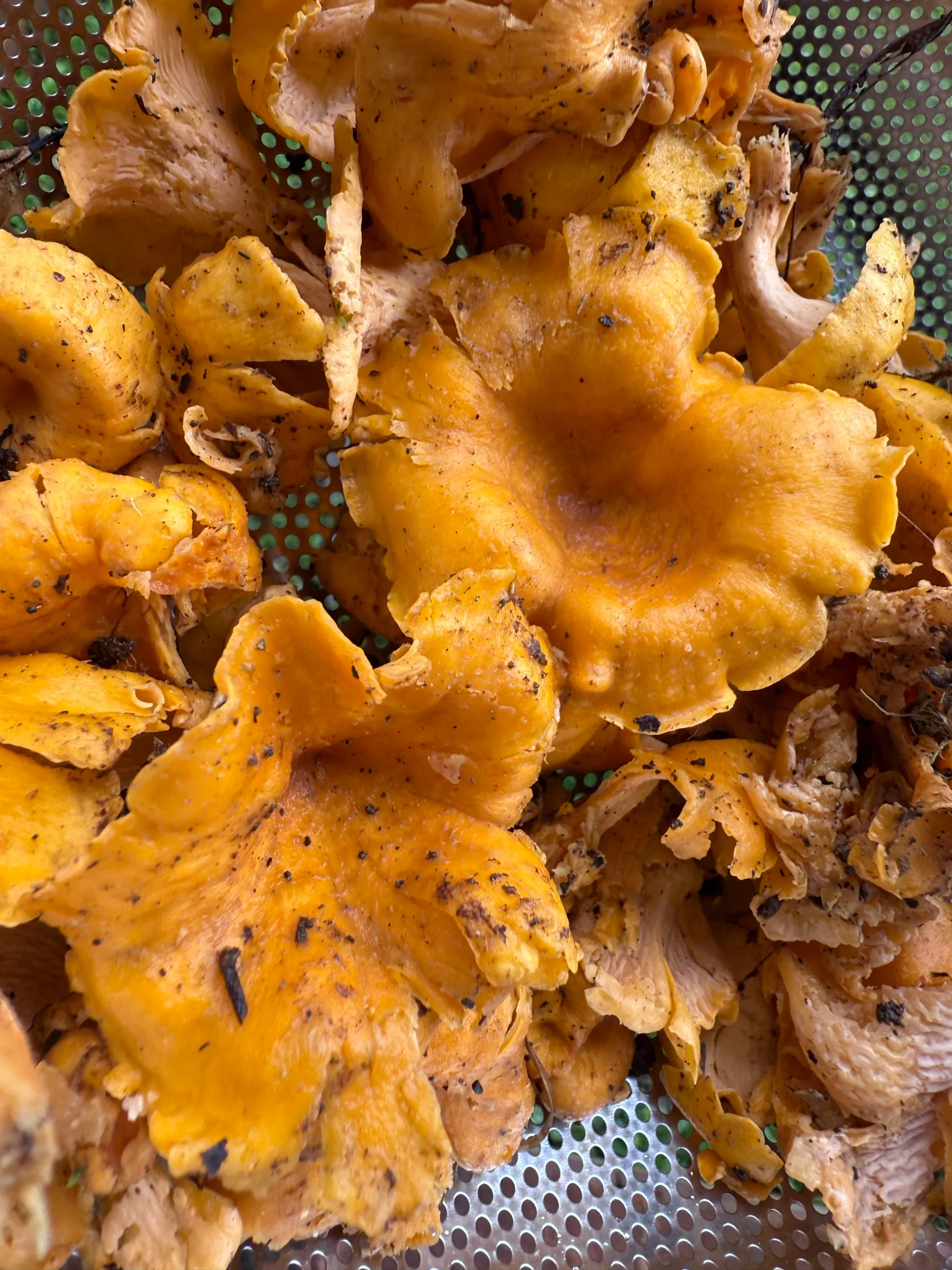
- Ridges, not gills. Under the cap, the chanterelle has no true gills, thin and crowded, but thick ridges, blunt-edged, that fork and run down the stem. This is the most important feature.
- A funnel shape. The cap, domed at first, hollows out with age, with a wavy, irregular edge.
- White, stringy flesh. The stem tears into strands, like string cheese; the inside is pale, not orange.
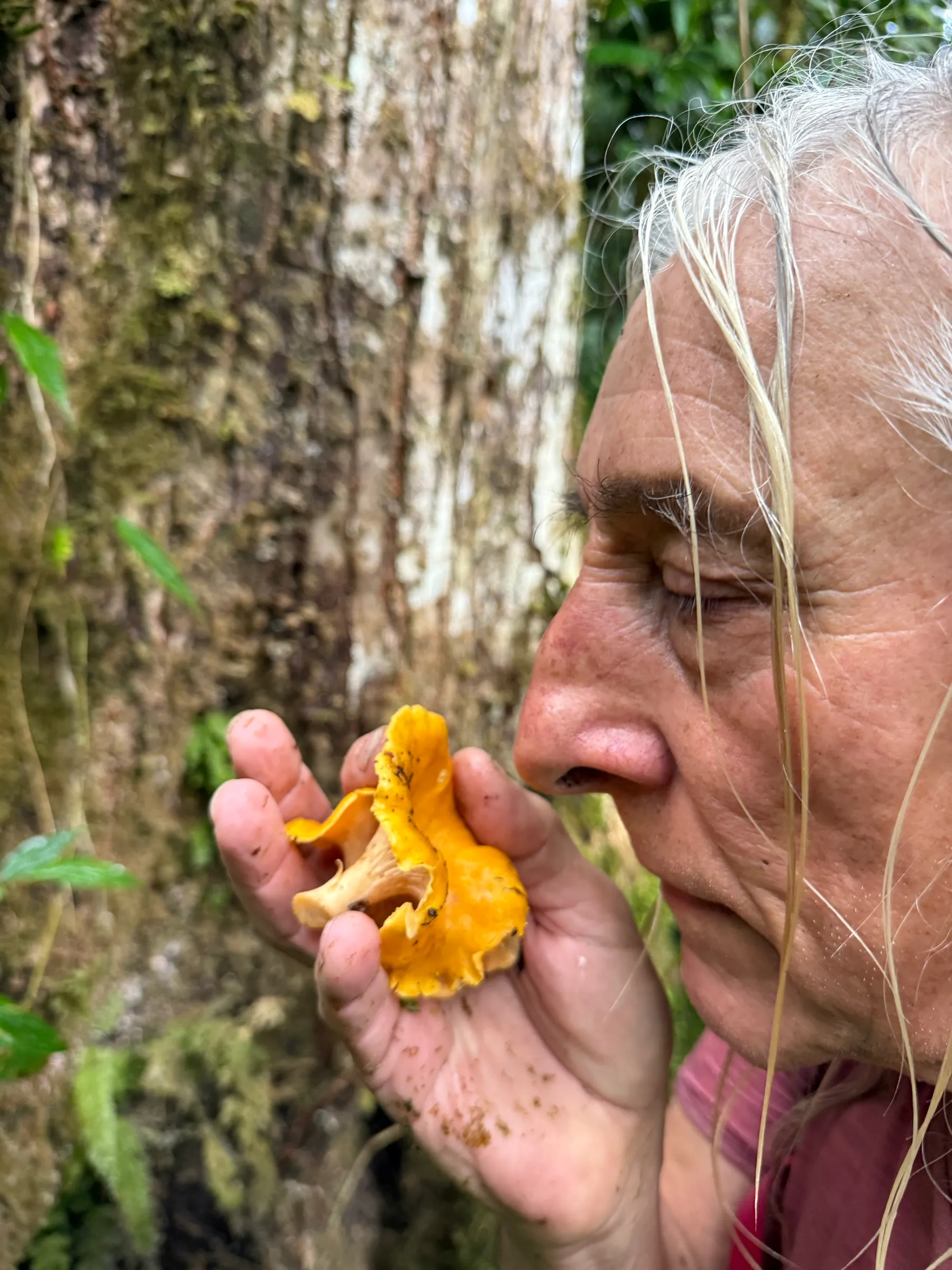
- A scent of apricot. Held to the nose, a fresh chanterelle smells of ripe fruit.
- It grows on the ground, never on wood. Alone or in small scattered groups among moss and leaves, at the foot of trees — not in tight clusters on a stump.
- Pick cleanly. Cut or gently detach the mushroom, clean it on the spot, carry it in a basket rather than a plastic bag, and leave the smallest ones and part of every patch.
Chanterelles in the Cloud Forest
We associate chanterelles with the forests of Europe and North America, but the genus Cantharellus is also present in the mountains of Central America, where several species live in symbiosis with the oaks of the highland forests. Horqueta’s cloud forest — cool, mossy, and watered for a large part of the year — gives them exactly the moisture they look for. We find them in the forest around the farm during the rainy season, a few days after good downpours, often in the same spots from one year to the next: the mushroom we pick is only the fruit of an underground organism that has lived there for a long time. It’s foraging on a walk, never a harvest: a few handfuls are enough for the kitchen, and the forest keeps the rest.
Its Tree Companions
- Oaks. The chanterelle is a mycorrhizal fungus: its filaments wrap the tree’s roots, bring it water and minerals, and receive sugars in return. No tree, no chanterelle.
- Moss and leaf litter. They hold at ground level the constant moisture the fungus needs in order to fruit.
- An old, undisturbed forest. This partnership takes years to establish; it disappears when trees are cut or the soil is compacted.
Lookalikes to Avoid
- Orange mushrooms growing in clusters on wood. Omphalotus species, known as jack-o’-lanterns, have true thin gills and grow in tight bunches on stumps; they are toxic and cause violent digestive upset.
- The false chanterelle (Hygrophoropsis aurantiaca). More orange, softer, with true gills, thin and crowded; of little interest and sometimes indigestible.
- Any mushroom where a single feature doesn’t match. When in doubt, don’t eat it — and never rely on a photo or an app to decide.
Good to Know
- Its French names are girolle and chanterelle. “Chanterelle” comes from the Greek kantharos, a cup, for its shape; the Germans call it Pfifferling, for its peppery edge.
- It’s rarely wormy. Insects leave it alone, which makes it one of the cleanest mushrooms to pick.
- “The” chanterelle is really a large family. Genetic studies have shown that the chanterelles of the Americas are not the same species as Europe’s, but close cousins.
- It grows slowly. A chanterelle can take several weeks to reach its size, where other mushrooms come up overnight.
- It makes vitamin D in the sun. Like our skin, the mushroom produces it under the effect of light.
This article is © Wild on the Farm, Boquete Cloud Forest Lodge. All rights reserved — it may not be reproduced, republished, or redistributed without prior written permission. Read our full legal notice →