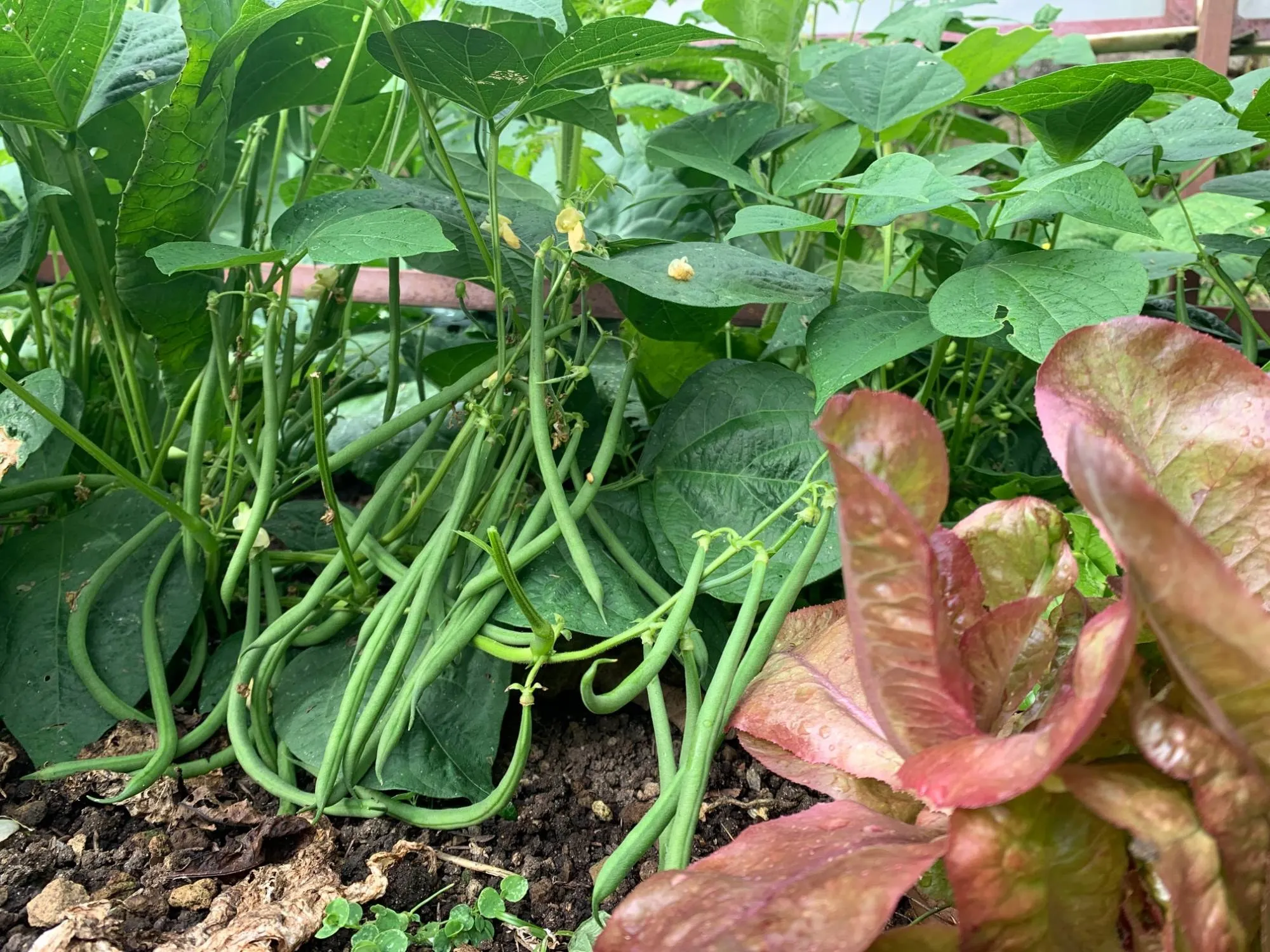
Nutritional Properties & Benefits
The green bean (Phaseolus vulgaris) is the immature pod of the common bean, harvested before the seeds develop. Low in calories, it provides a good dose of fiber, vitamin K, vitamin C, and folate, as well as manganese and a little plant iron. Its bright green color comes from its wealth of chlorophyll, and it also contains carotenoids such as lutein. One important safety point, often overlooked: like all legumes of the genus Phaseolus, the raw bean contains phytohaemagglutinin, a lectin that can cause serious digestive upset in quantity; it is destroyed by sufficient cooking. So green beans are never eaten raw — a few minutes in boiling water is enough to make them perfectly wholesome. Native to Central America and the Andes, where it was domesticated several thousand years ago, the bean was, with corn and squash, part of the founding trio of Mesoamerican agriculture.
This information is for educational purposes only and reflects traditional and commonly documented uses of this plant. It is not medical advice and does not replace the guidance of a qualified healthcare professional. Always consult your doctor before using any plant medicinally, especially if pregnant, nursing, or taking medication.
How to Eat Them
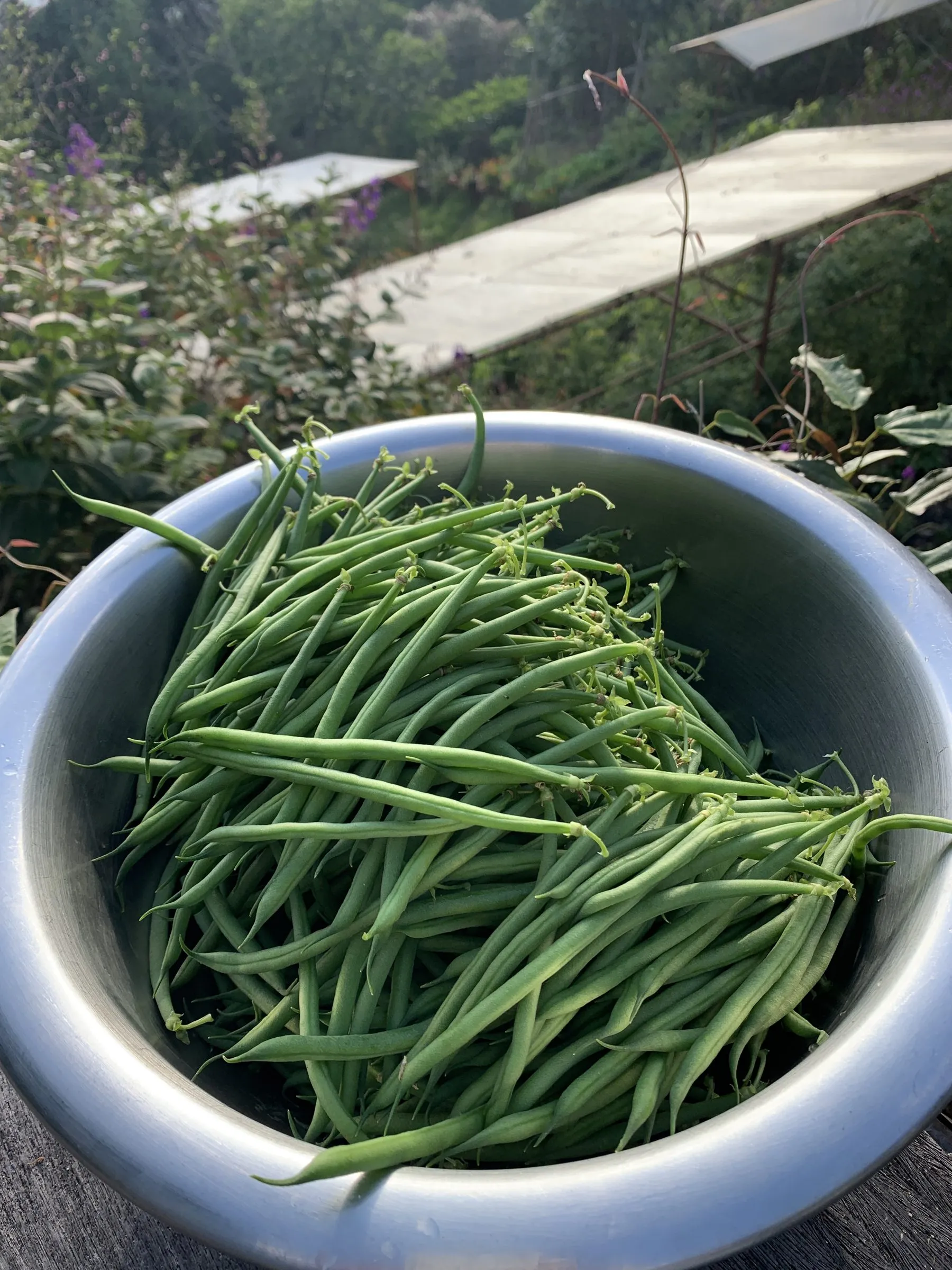
Green beans almost always start out the same way: topped and tailed, then cooked for a few minutes in a large pan of salted boiling water, and plunged at once into iced water to set their color and stop the cooking. That keeps them crisp and brilliantly green. After that, serve them quite simply with butter and garlic, with parsley and garlic, or as a warm salad with shallots, a mustard vinaigrette, and a few toasted almonds. They go into the famous salade niçoise alongside tomatoes, eggs, and olives, are stir-fried in a wok with ginger and soy sauce, or simmer gently in tomato in Mediterranean kitchens. For keeping, they blanch and freeze very well, and can also be bottled, or lacto-fermented with garlic and dill in the manner of pickles.
How to Grow Them Organically
The bean is one of the easiest and most rewarding vegetables in the organic garden — provided you respect its need for warmth at the start.
- Sow directly in place, in warmed soil. The seeds rot in cold, waterlogged earth; wait for soil of at least 12 to 15 °C (54–59 °F), and sow 2–3 cm deep, in stations or in rows.
- Bush or pole, two ways of growing. Bush varieties form low plants that produce in one concentrated flush; pole varieties climb a support up to two meters and produce for longer, on less ground.
- It fixes its own nitrogen. Thanks to the Rhizobium bacteria living in symbiosis in the nodules on its roots, the bean draws nitrogen from the air; so it needs no nitrogen feeding — an excess even pushes it to make leaves at the expense of pods.
- Regular watering at the base during flowering. This is the most sensitive moment: a lack of water makes the flowers drop. Water the soil, never the foliage, to limit disease.
- Frequent picking. The more you pick the pods young, slender, and stringless, the more the plant keeps producing; left too long, they turn fibrous and the plant slows down.
- Rust, anthracnose, and black aphids are the main troubles in a humid climate; a good rotation, well-spaced plants, and pulling out diseased ones limit their spread.
Green Beans in Our Garden
The bean is at home here in the historical sense: it was domesticated in Mesoamerica and the Andes, and has been grown for millennia in the highlands of Central America. In the coolness of Horqueta, it grows a little more slowly than in the lowlands, but without the heat spikes that make the flowers drop. The main challenge is the humidity of the cloud forest, which encourages rust and anthracnose: we give it the airiest beds, space the plants well, bush or pole, so that air moves through the foliage, and avoid handling the plants when they’re wet. In permaculture it’s also a precious ally: after harvest, we cut the plants at soil level and leave the roots in the ground, so that their nitrogen-rich nodules feed the next crop.
Good Companions
- Corn and squash — the “three sisters.” The Native American pairing par excellence: corn serves as a stake for the climbing bean, the bean enriches the soil with nitrogen, and squash covers the ground with its broad leaves.
- Cabbages and other brassicas. Heavy nitrogen feeders, they benefit directly from the nitrogen the bean fixes, grown together or in rotation.
- Carrot and beet (with bush beans). Complementary root systems and good neighbors in general.
- Savory. The traditional European pairing: planted at the foot of the beans, it protects them from black aphids — and turns up again in the pan, where it makes them easier to digest.
- Marigold and nasturtium, to attract beneficial insects and draw aphids away.
Plants to Avoid
- Garlic, onion, leek, and chives. Alliums are reputed to slow the activity of the nitrogen-fixing bacteria in the bean’s nodules — an incompatibility widely observed by gardeners.
- Fennel, whose allelopathic effect slows the bean’s growth.
- Peas right next to them, which share certain diseases with the bean; better to alternate them in rotation than to grow them side by side.
Good to Know
- The origin of the French word haricot is still debated. A popular theory traces it to ayacotl, the Aztec name for the bean; another, older one links it to the Old French harigot, a mutton stew in which broad beans were cooked.
- The “stringless” green bean is a recent invention. Old varieties had a tough string along the pod that had to be removed; 19th-century breeding gave us the stringless varieties we know today.
- Green beans, red beans, and black beans are the same species. It all depends on the stage of harvest and the variety: young, we eat the pod; ripe and dry, we eat the seed.
- It enriches the soil for the next crop. A well-managed bed of beans leaves a reserve of nitrogen in the earth for whatever follows — a green manure you can eat.
This article is © Wild on the Farm, Boquete Cloud Forest Lodge. All rights reserved — it may not be reproduced, republished, or redistributed without prior written permission. Read our full legal notice →