Nutritional Properties & Benefits
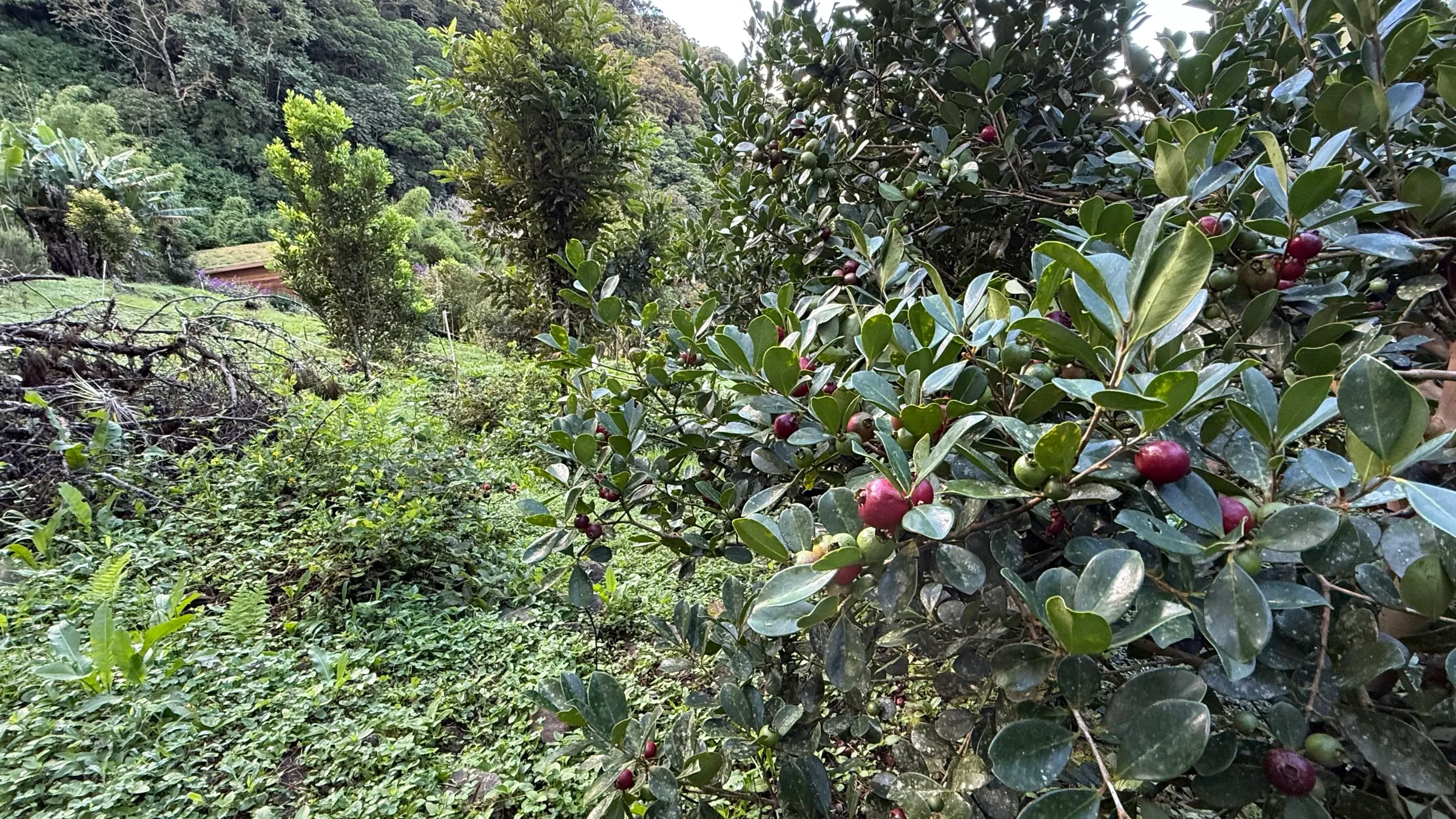
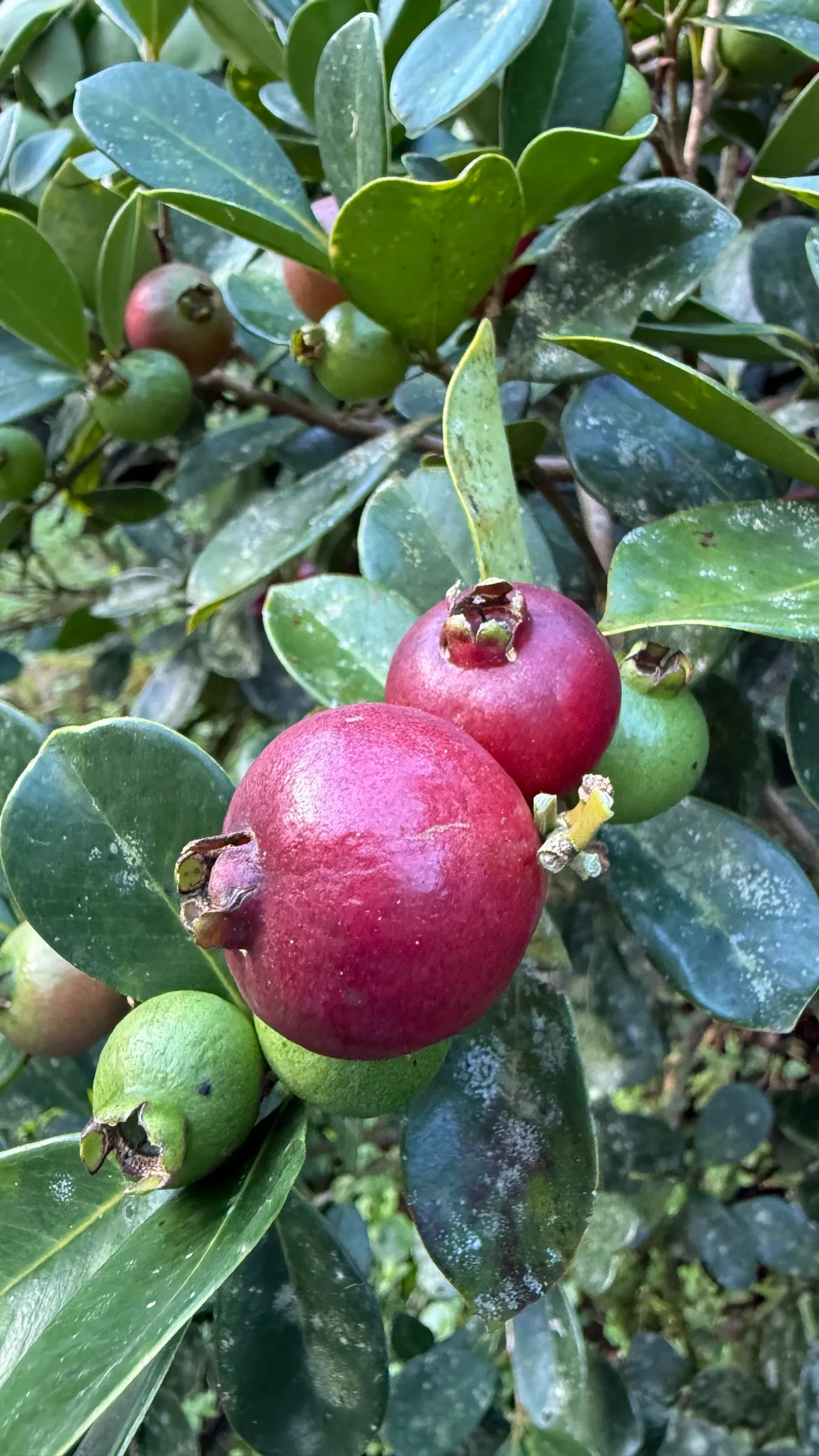
First, a note on identification, because the name “guayabita” refers to several plants depending on the region of Latin America: the one discussed here is the guayabita del Perú (Psidium cattleianum), also called guayabo peruano, strawberry guava, cherry guava, or, in neighboring Costa Rica, güisaro — a small fruiting shrub of the myrtle family, the same as common guava (Psidium guajava), from which it differs by its smoother, glossier leaves, without its big cousin’s pronounced veins. Despite its name, the plant isn’t native to Peru but to Brazil; it owes its scientific epithet cattleianum to William Cattley, a 19th-century British horticulturist who was one of the first to bring it into fruit in Europe — the same name that gave the famous orchid genus Cattleya its name. Nutritionally, its small fruits, barely bigger than a large cherry, are, like most guavas, a very good source of vitamin C, along with fiber and a worthwhile amount of antioxidants concentrated in their thin red or yellow skin, depending on the variety. Its fragrant, slightly tart flesh also contains a good dose of potassium, in a fruit that’s otherwise low in calories.
This information is for educational purposes only and reflects traditional and commonly documented uses of this plant. It is not medical advice and does not replace the guidance of a qualified healthcare professional. Always consult your doctor before using any plant medicinally, especially if pregnant, nursing, or taking medication.
How to Eat It
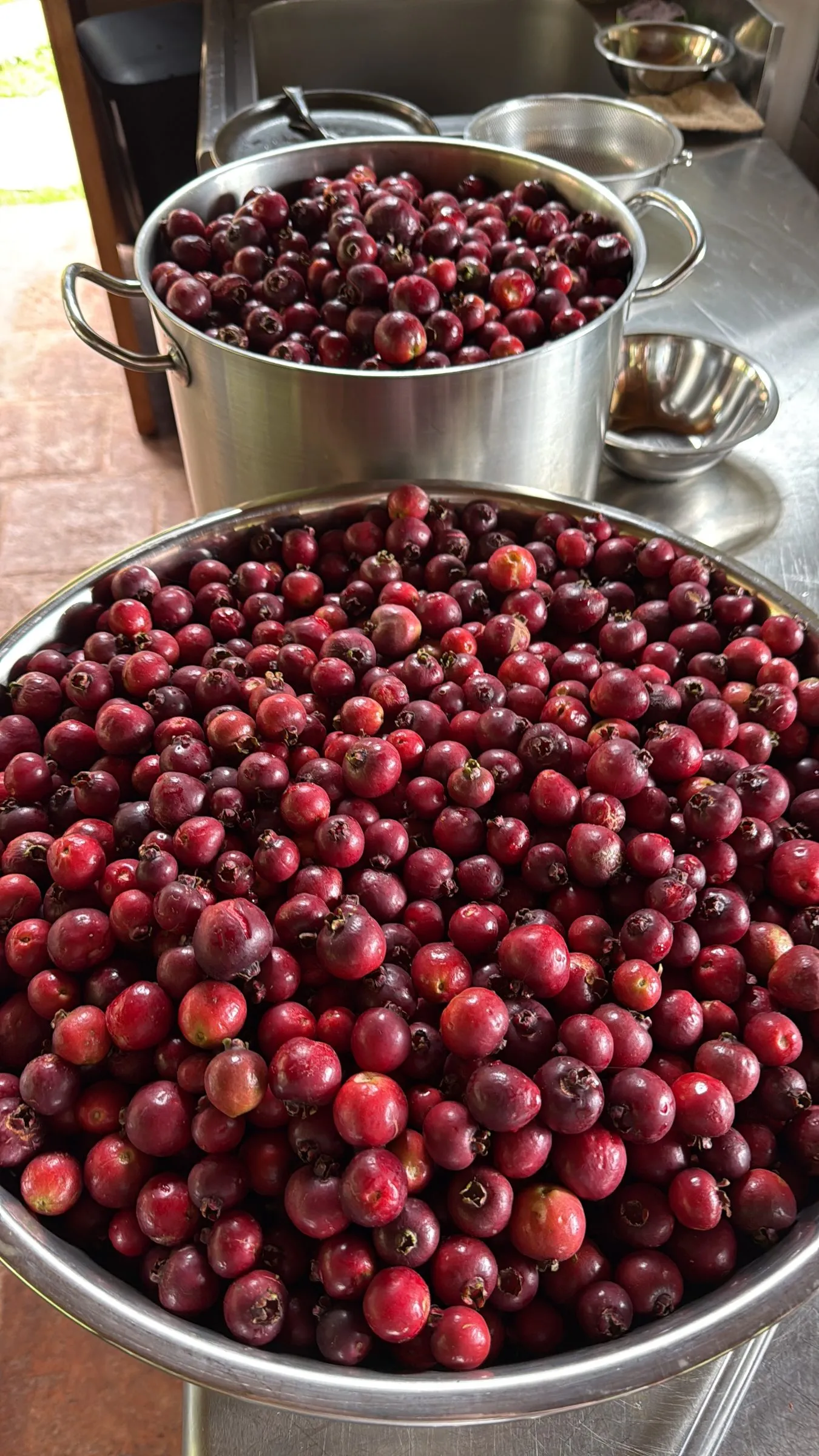
Guayabita is most often eaten fresh, bitten into whole with its thin skin (the small, slightly hard seeds inside can be eaten too without any problem) — a simple pleasure, straight off the shrub, that many Costa Rican and Panamanian households have known since childhood. Its flavor, both sweet and slightly tart with a hint that sometimes recalls strawberry (hence its English name, strawberry guava), lends itself especially well to homemade jams and jellies, where its fragrance concentrates pleasantly during cooking. In Costa Rica, where the fruit is particularly popular under the name güisaro, it’s also made into a traditional atol — a thick hot drink of cooked fruit, milk, and cornstarch — as well as artisanal ice creams that showcase its delicate fragrance, too subtle to survive industrial processing. Its generous production season, with shrubs often bearing more fruit than a family can eat fresh, also makes it an excellent candidate for homemade juices and syrups.
How to Grow It Organically
Guayabita del Perú is probably the simplest of the five plants in this series to grow organically: a hardy, undemanding shrub that mainly asks for patience at the start rather than any particular technical care.
- Easy to grow from fresh seed, taken straight from the ripe fruit, which generally germinates in 3 to 6 weeks without any special treatment; cuttings are possible but less common than for other fruiting shrubs.
- Undemanding about soil type, tolerating rich volcanic soils as well as poorer ground, as long as it stays reasonably well drained — a clear advantage over fussier crops such as naranjilla.
- Good drought tolerance once established, although regular watering during the first year after planting noticeably speeds up the young shrub’s establishment.
- Gradual growth toward a first harvest, usually 2 to 4 years after sowing depending on conditions, followed by abundant, reliable annual production for many years.
- Light pruning, mainly to contain its size and make harvesting easier. Left alone, the shrub can reach 4 to 6 meters; regular pruning after fruiting keeps it at a more practical height for picking.
- Few serious pests in organic growing, apart from the fruit flies common to all guavas — regularly gathering fallen fruit remains, here too, the best prevention without resorting to chemical treatments.
Guayabita in Our Garden
Guayabita del Perú isn’t, strictly speaking, native to high-altitude cloud forests like tree tomato or naranjilla — its Brazilian origin is subtropical rather than strictly Andean. Yet it has long been naturalized in the gardens and forest edges of the Central American highlands, from Costa Rica to the mountainous regions of Panama, where today it grows almost like a local plant, far better suited to cool climates than to the sustained tropical heat common guava demands. The stable, cool climate of Horqueta, combined with its volcanic soils rich in organic matter, therefore suits it very well, without being its original habitat — much like zucchini or tomato, which thrive here by good adaptation rather than native belonging. One point deserves an honest mention: in some tropical regions far from its native range (notably Hawaii and Florida), this species has proved vigorous enough to become invasive in natural forest, its seeds widely spread by birds — a good reason to keep it in a cultivated area of the garden rather than on the edge of native forest.
Good Companions
- Nitrogen-fixing legumes (pigeon pea, other leguminous shrubs), planted nearby to naturally enrich the soil around this shrub, which, while not demanding, benefits from a regular supply of nitrogen as it grows.
- Aromatic herbs as a light understory, which enjoy the partial shade cast by the shrub’s low branches once it’s well developed, without competing with it for water or nutrients.
- Nectar-rich plants nearby, to support the pollination of its white flowers, even though guayabita is largely self-fertile and doesn’t strictly depend on pollinators to set fruit.
Note: unlike more widely studied garden crops such as tomato or lettuce, there’s relatively little rigorous documentation on beneficial pairings specific to this fruiting shrub — so the recommendations above rest more on general permaculture principles (nitrogen fixation, layering) than on a companion-planting tradition specific to the species.
Plants to Avoid
- Common guava (Psidium guajava) planted very close by, since the two species share the same pests (fruit flies) and certain fungal diseases such as guava rust — reasonable spacing limits the risk of spread between the two shrubs.
- Fragile young plants that need constantly moist soil, planted directly under the dense canopy of a mature guayabita, which captures much of the available rainwater with its spreading, shallow root system.
Good to Know
- Its name fools almost everyone: it doesn’t come from Peru. “Guayabita del Perú” is a common name widely used in Central America, with no real link to the plant’s geographic origin, which is Brazilian — one example among many of a common name that traveled faster than botanical accuracy.
- It’s named after a collector of exotic plants, not a field botanist. William Cattley, who gave the species its name, was a wealthy English amateur horticulturist of the 19th century, known for bringing rare tropical plants into fruit in his greenhouses — the same passion that led to the orchid genus Cattleya being named after him.
- It comes in two main colors: a red-skinned form, the most common and most fragrant, and a yellow-skinned form, sometimes sold separately as “lemon guava” for its milder, slightly lemony flavor.
- In Costa Rica it has a completely different name: güisaro. This name, deeply rooted in Costa Rican food culture (atols, jams, ice creams), refers to exactly the same fruit as guayabita del Perú — yet another example of how a single species can carry completely different names from one Central American country to the next.
This article is © Wild on the Farm, Boquete Cloud Forest Lodge. All rights reserved — it may not be reproduced, republished, or redistributed without prior written permission. Read our full legal notice →