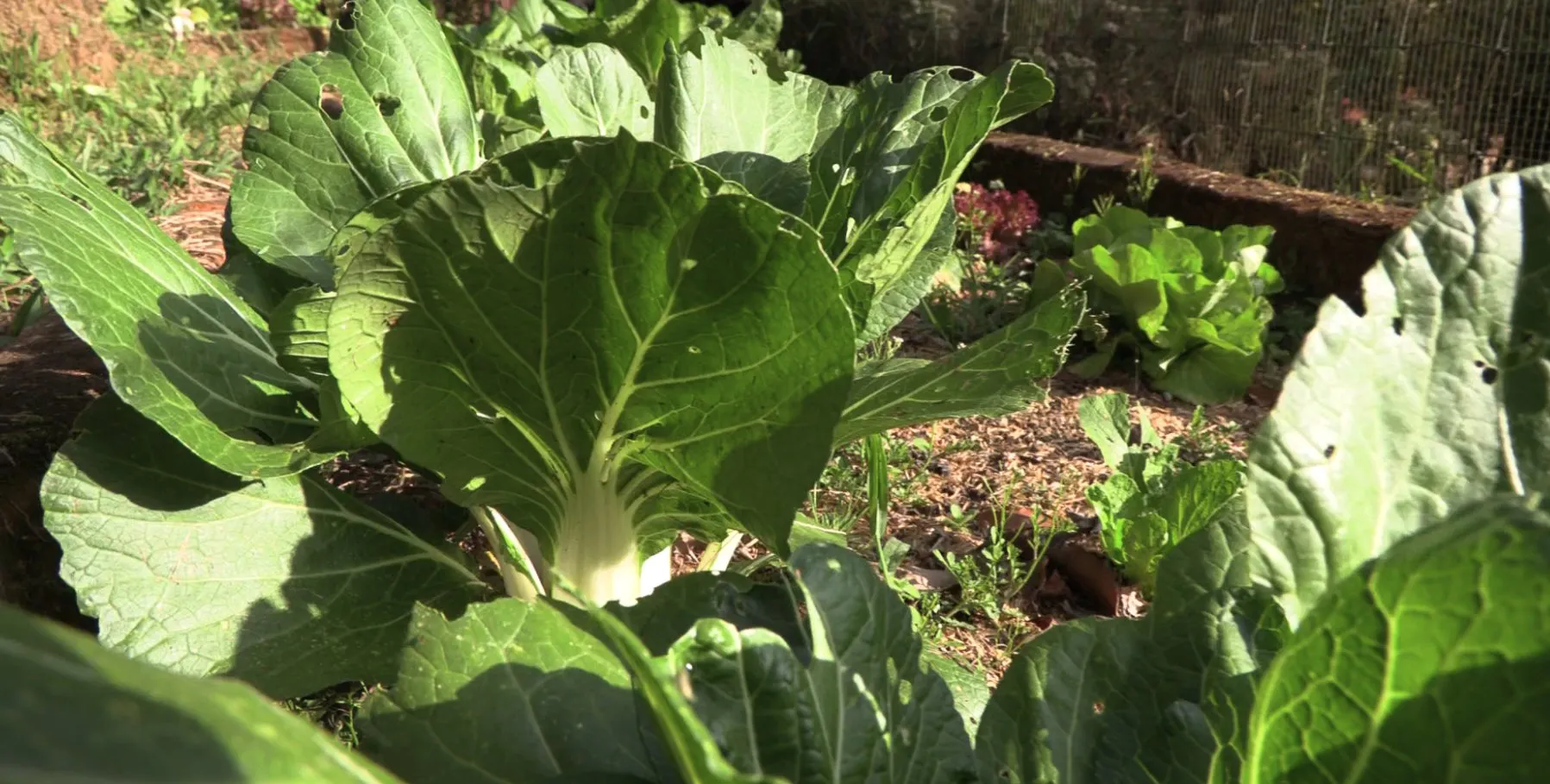
Nutritional Properties & Benefits
Pak choi, or bok choy (Brassica rapa subsp. chinensis, formerly classified by Linnaeus as Brassica chinensis), is a very hydrating leafy green — more than 94% water — and especially low in calories, while remaining a good source of vitamin C and a decent source of folate. Like other brassicas, it contains glucosinolates, sulfur compounds whose breakdown during chewing releases substances with antioxidant properties studied by nutrition researchers. Its Cantonese name, bok choy (白菜), literally means “white vegetable,” a reference to its pale, fleshy leaf stalks — a name British English adapted into pak choi, now the most common spelling outside the United States. It has been grown in China since at least the 5th century AD, and archaeological traces of related cabbage seeds go back several thousand years in the Yellow River valley, making it one of the earliest domesticated leafy greens in Asia. Several types exist today, including Shanghai pak choi, with light green rather than white stalks — a more recent variant but just as common in cooking.
This information is for educational purposes only and reflects traditional and commonly documented uses of this plant. It is not medical advice and does not replace the guidance of a qualified healthcare professional. Always consult your doctor before using any plant medicinally, especially if pregnant, nursing, or taking medication.
How to Eat It
Pak choi is probably one of the quickest vegetables to cook: a few minutes in a wok over high heat, with garlic and a splash of soy sauce, is enough to soften its leaves while keeping its stems crunchy — the most classic preparation and the best way to preserve its texture. Whole young pak choi, often called “baby bok choy,” is just as good braised or steamed, served whole as a side. It fits naturally into Asian soups and hot pots, where its fleshy stalks hold up well to long cooking without falling apart completely. Raw and very finely sliced, it adds crunch to a salad, although that’s a less common use than quick cooking. Finally, its most tender inner leaves slip perfectly into a noodle broth at the very end of cooking, just long enough to wilt them.
How to Grow It Organically
Pak choi is among the fastest and simplest brassicas to grow successfully — an ideal crop for filling the gaps between two longer harvests.
- Direct sowing or early transplanting. Seeds germinate quickly, and young plants transplant well as long as they’re moved early, before the root system grows too much.
- A very short cycle of 30 to 60 days depending on the size you want. You can harvest it as baby pak choi after about a month, or wait for a fuller rosette for a more generous harvest — both are simply different stages of the same plant.
- Prone to bolting in hot weather and long days. Like other members of the species Brassica rapa, pak choi bolts easily in the heat, which makes it a far more reliable crop in cool climates.
- Regular watering and soil rich in organic matter. Its fast growth and tender leaves need constant moisture; water stress quickly shows up as fibrous stems and a more bitter flavor.
- Staggered harvests are easy to organize. Thanks to its short cycle, you can sow a short row every two weeks for a continuous harvest rather than one big wave.
- Flea beetles and caterpillars are the main pests. Insect netting laid at sowing effectively protects young plants, which are particularly vulnerable to flea beetles riddling their young leaves with tiny holes.
Pak Choi in Our Garden
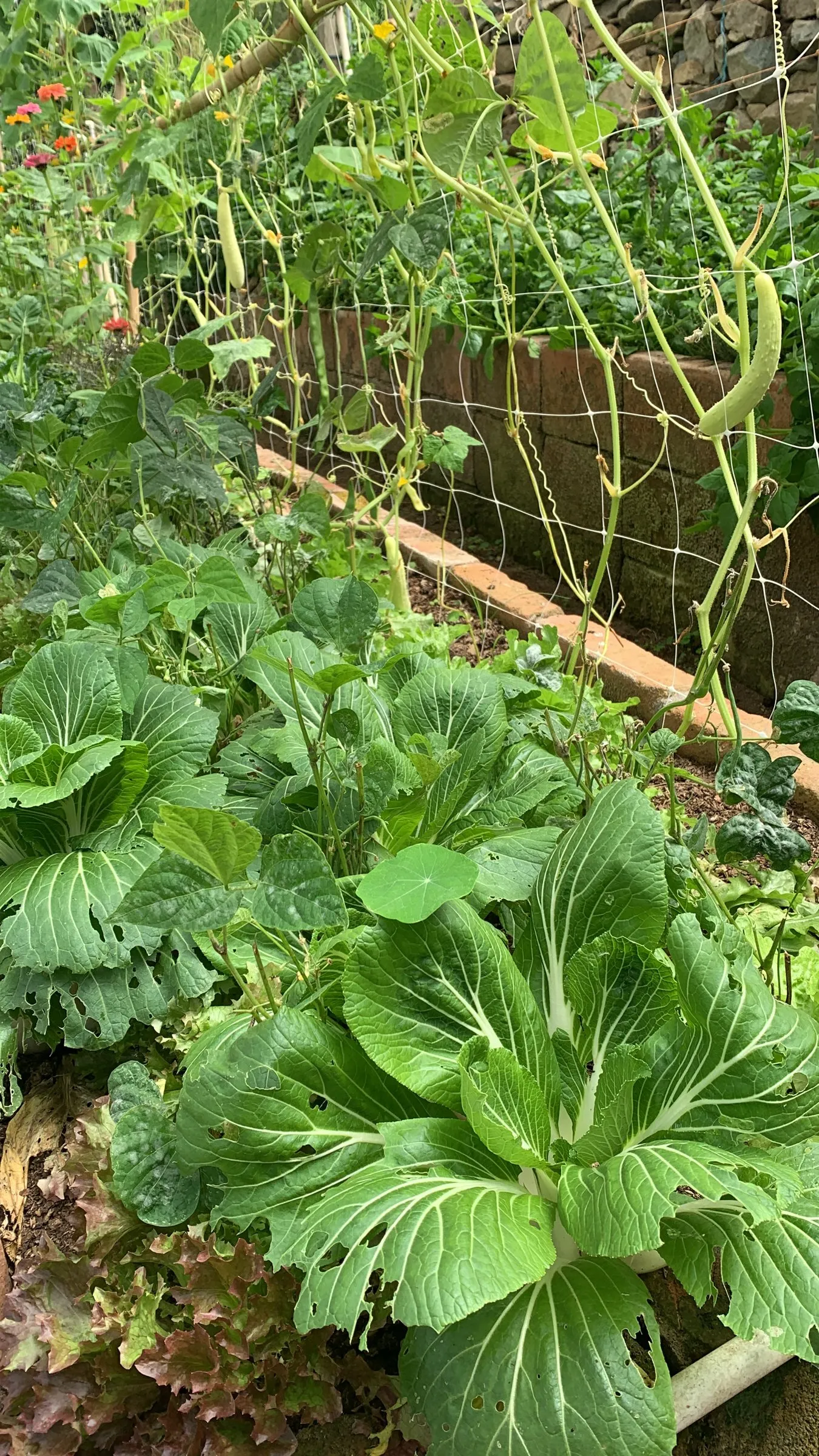
Pak choi is probably one of the brassicas that benefits most clearly from the cool, stable climate of the Horqueta cloud forest, so marked is its tendency to bolt in the heat of the tropical lowlands. The altitude of the Boquete area gives it moderate temperatures almost all year round, allowing repeated sowings without the forced breaks a hot summer would impose elsewhere, and the volcanic soils rich in organic matter support its fast, thirsty growth. Under these conditions, it’s a vegetable especially well suited to continuous, almost year-round cultivation.
Good Companions
- Nasturtium. An effective trap crop for brassicas, it draws aphids and caterpillars away from the pak choi.
- Dill and cilantro. Their scent attracts predatory beneficial insects, useful for keeping pest populations in check without chemical intervention.
- Onion and chives. Their strong smell is thought to help mask the scent of pak choi from flying pests that find it by smell.
- Lettuce and spinach. All these short-cycle crops with similar water needs complement each other well in the same bed, without marked competition.
- Celery. A good traditional neighbor in the organic garden, with no notable competition for resources.
Plants to Avoid
- Tomatoes and other nightshades, a pairing traditionally discouraged for brassicas, although evidence of direct chemical incompatibility remains limited and comes mostly from gardeners’ experience.
- Strawberries, for similar reasons — a caution that’s more traditional than scientifically demonstrated.
- Too many other brassicas in the same bed from one season to the next, which encourages the buildup of the same pests and soil diseases — good rotation remains the best organic prevention.
Good to Know
- “Bok choy” literally means “white vegetable” in Cantonese, after its pale stalks — the green Shanghai variety often goes by a different name in Chinese to tell it apart.
- It belongs to the same species as Chinese cabbage and turnip. Brassica rapa is remarkable for the diversity of forms it has produced under human selection — leaf, root, stem, or head, depending on which part of the plant was favored over the generations.
- It took more than a century to spread in the West. Introduced to Europe in the mid-18th century by Swedish botanists and Jesuit missionaries, it only became truly common in North America in the 20th century, well after it first arrived in the 19th.
- “Baby bok choy” isn’t a separate miniature variety. In most cases, it’s simply the same pak choi harvested at a younger stage — a difference of harvest timing rather than genetics.
This article is © Wild on the Farm, Boquete Cloud Forest Lodge. All rights reserved — it may not be reproduced, republished, or redistributed without prior written permission. Read our full legal notice →