Nutritional Properties & Benefits
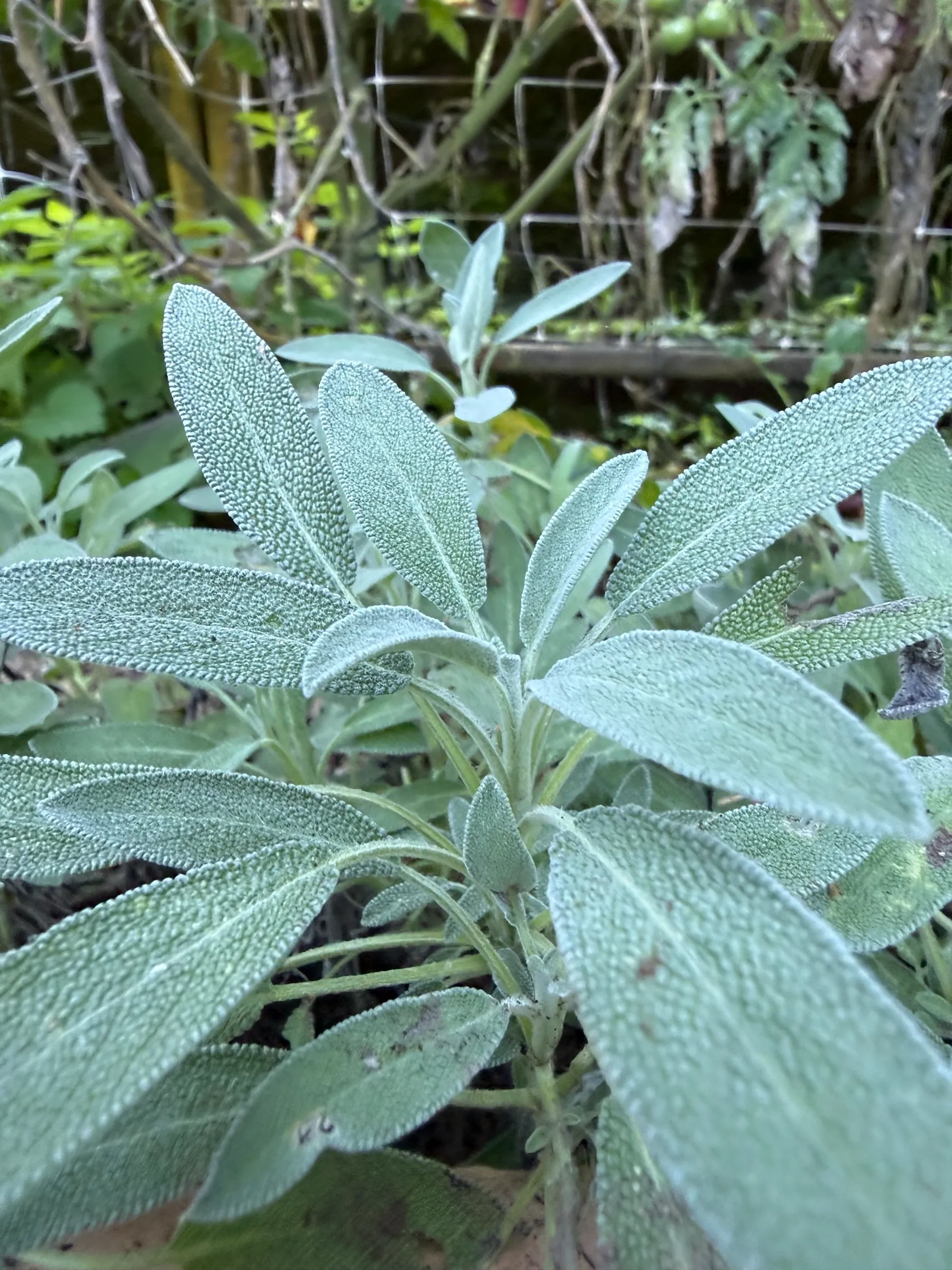
Common sage (Salvia officinalis) belongs to the mint family, Lamiaceae, along with thyme and rosemary. Eaten in small amounts as a seasoning, it mainly provides vitamin K, as well as antioxidant compounds such as rosmarinic acid and carnosic acid, which it shares with rosemary. Its name comes from the Latin salvare, “to save” or “to heal”: sage has held a central place in European herbal medicine since antiquity, and an old medieval saying even asked why a man should die who had sage in his garden. Tradition uses it as an infusion for digestion, as a gargle for sore throats, and to ease sweating and hot flashes — uses for which a few clinical studies show encouraging but still limited results. One important caution: its essential oil contains thujone, a compound that is neurotoxic at high doses. While culinary use is safe, concentrated preparations and the essential oil are not recommended for pregnant or breastfeeding women or for people with epilepsy, and prolonged medicinal use in large amounts should be avoided.
This information is for educational purposes only and reflects traditional and commonly documented uses of this plant. It is not medical advice and does not replace the guidance of a qualified healthcare professional. Always consult your doctor before using any plant medicinally, especially if pregnant, nursing, or taking medication.
How to Eat It
Sage has a powerful taste, slightly camphorous and bitter, that calls for a light hand but transforms a dish. Its most famous use is Italian: whole leaves fried for a few seconds in brown butter until crisp, spooned over ravioli, gnocchi, or squash pasta. It’s essential to saltimbocca alla romana, those veal escalopes rolled with cured ham and a sage leaf, and it traditionally accompanies pork, roast poultry, duck, and holiday stuffings. It pairs especially well with sweet, rich flavors — squash, chestnut, caramelized onion, strong cheeses. Fresh leaves keep for a few days in the fridge and dry very well, concentrating their aroma further. As an infusion, a few leaves in simmering water make a fragrant herbal tea, traditionally drunk after a meal.
How to Grow It Organically
Sage is a sturdy, very undemanding plant — provided you spare it its one real enemy: too much water.
- Cuttings or seed. The fastest method is a semi-woody stem cutting, which roots in a few weeks; sowing works too, but the plant takes longer to establish.
- Poor, very well-drained soil. Native to the dry, rocky hillsides of the Mediterranean, sage rots in heavy, waterlogged ground. Sandy or stony soil, without too much compost, suits it perfectly.
- Full sun. The more direct light it gets, the denser and more fragrant its foliage.
- Little watering once established. It tolerates drought remarkably well; it’s almost always too much water, not too little, that makes it decline.
- Regular pruning. Cutting the plant back by a third after flowering stops it from going bare and woody; plants are generally renewed every four to five years.
- Powdery mildew is the main problem in humid climates, encouraged by poor air circulation; good spacing and a well-ventilated spot are the best prevention.
Sage in Our Garden
Let’s be honest: sage wasn’t born for the cloud forest. It’s a plant of the Mediterranean scrubland, one that loves scorching sun and fast-drying soil, whereas Horqueta offers coolness, mist, and almost permanent humidity. The strategy that works is to recreate a little corner of the Mediterranean for it: the sunniest, best-ventilated spot on the property, on a mound or in a raised bed, with soil lightened with sand and gravel so rainwater drains away immediately. The stone terrace where the thyme and rosemary already grow is the ideal place: the stones soak up the day’s heat, and the drainage there is perfect. In the rainy season, we watch for powdery mildew and open up the base of the plant with a light pruning.
Good Companions
- Rosemary, thyme, and lavender. Mediterranean neighbors with the same needs — sun, dry soil, little watering — which make it possible to group a coherent “dry corner” in the garden.
- Cabbages and other brassicas. The scent of sage is said to keep cabbage white butterflies and flea beetles away.
- Carrot. Its smell is thought to help mask the carrot’s scent from the fly that seeks it out.
- Strawberries, according to a gardening tradition that readily pairs the two.
Plants to Avoid
- Basil, cucumber, and other thirsty plants. Not because of any chemical incompatibility, but because their watering needs are opposite: growing them side by side means drowning the sage or leaving its neighbor thirsty.
- Rue, traditionally considered a poor neighbor for plants of the mint family.
- Very leafy crops that shade it, since sage needs full sun to stay dense and fragrant.
Good to Know
- Its name means “to save.” From the Latin salvare — in the Middle Ages, sage was considered one of the most precious medicinal plants in the garden.
- The genus Salvia counts nearly a thousand species. It’s one of the largest genera in the plant kingdom, with many ornamental and aromatic sages — a good number of them native to Central and South America.
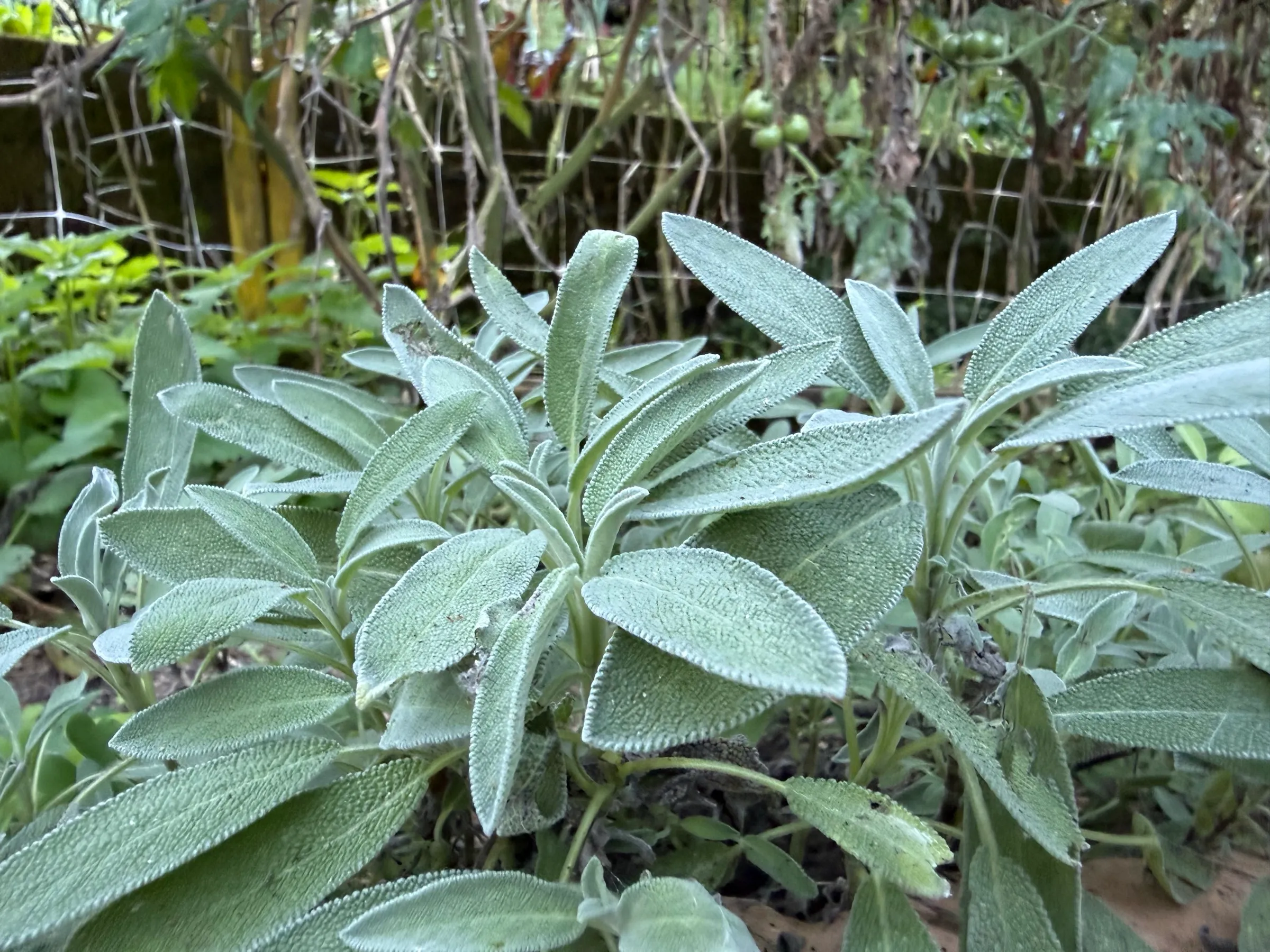
- Its velvety leaves are a form of protection. The silvery down that covers them limits water loss and reflects sunlight, a typical adaptation of dry-climate plants.
- Hummingbirds love certain sages. Ornamental sages with red or purple flowers, widespread in Central America, are among hummingbirds’ favorite plants — an excellent addition for attracting these birds to the garden.
This article is © Wild on the Farm, Boquete Cloud Forest Lodge. All rights reserved — it may not be reproduced, republished, or redistributed without prior written permission. Read our full legal notice →