Nutritional Properties & Benefits
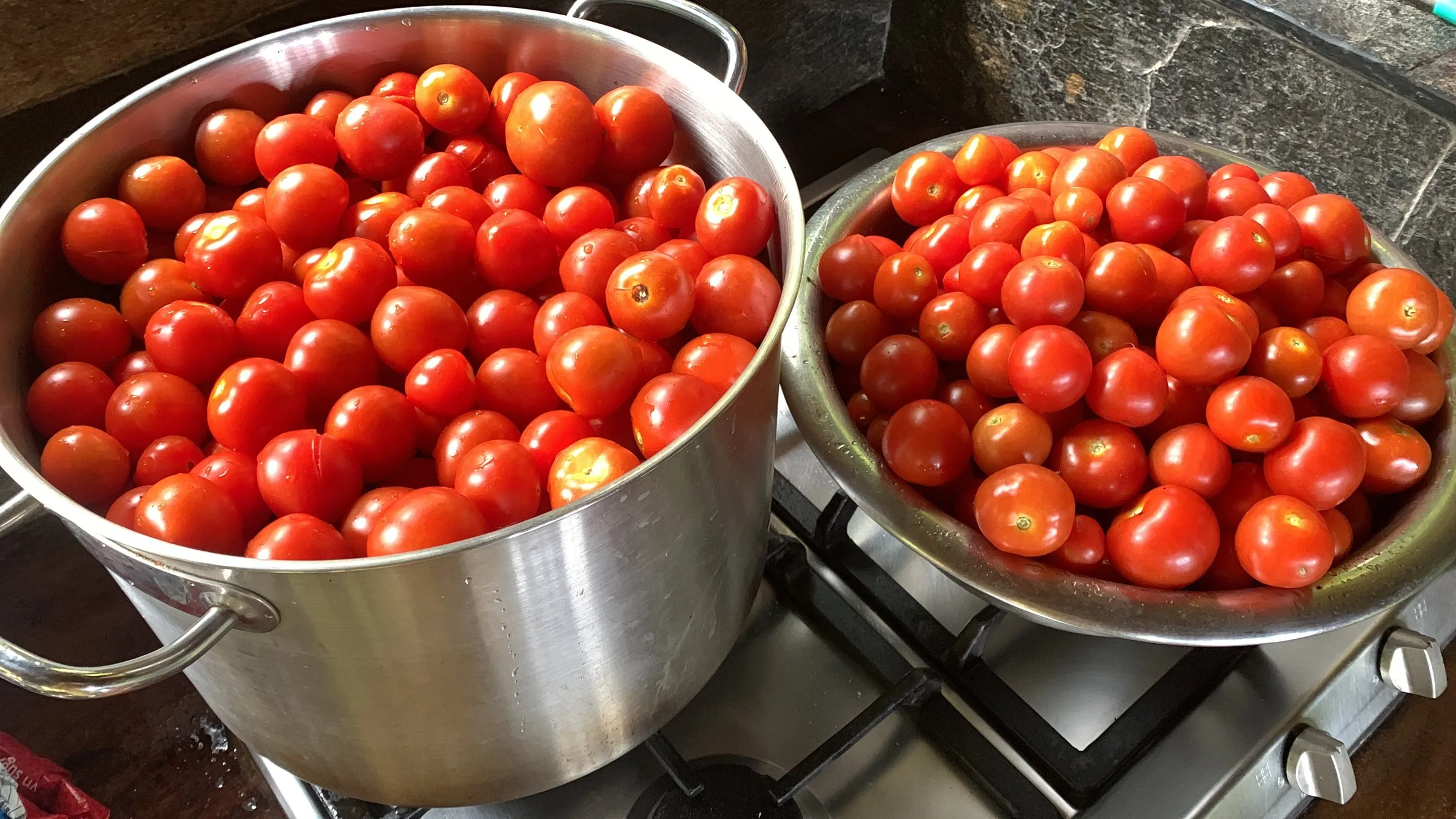
The tomato (Solanum lycopersicum) owes its nutritional reputation above all to lycopene, a carotenoid pigment responsible for its red color, which has the distinctive feature of being more easily absorbed by the body once the tomato is cooked rather than raw — a notable exception to the usual rule that cooking destroys nutrients. It’s also a good source of vitamin C, vitamin K1, potassium (in amounts comparable to banana, weight for weight), and folate. Its species name, lycopersicum, literally means “wolf peach” in Greek — a name given by European botanists who were long wary of this fruit from the nightshade family, considered dangerous; the word “tomato,” meanwhile, comes from the Nahuatl tomatl, the language of the Aztecs, who were already growing the plant long before Europeans arrived. Finally, it’s a good source of water and fiber for very few calories, which makes it a staple food that’s especially nutrient-dense per calorie.
This information is for educational purposes only and reflects traditional and commonly documented uses of this plant. It is not medical advice and does not replace the guidance of a qualified healthcare professional. Always consult your doctor before using any plant medicinally, especially if pregnant, nursing, or taking medication.
How to Eat It
The tomato lends itself to an almost infinite number of preparations, raw and cooked. Fresh and fully ripe, simply sliced and salted or in a salad with olive oil and basil, it’s at its best just after picking — an experience that supermarket tomatoes, picked green and ripened in cold storage, simply can’t reproduce. Slowly cooked into sauce, it develops a depth of umami flavor very different from its fresh taste, which explains its central place in Italian and Mexican cooking and so many other culinary traditions around the world. It also makes excellent cold gazpacho, sun- or oven-dried tomatoes (which considerably concentrate its sweetness), or tomatoes gently confited in olive oil with garlic and herbs. Less well known but appreciated by gardeners who end up with a big late harvest: green tomatoes, still firm and tart, are very good fried or in jams — a way to waste nothing at the end of the season.
How to Grow It Organically
The tomato is probably the most iconic — and most demanding — crop in the organic vegetable garden: its generosity with fruit matches its need for sun, steady watering, and vigilance against fungal diseases.
- Sow indoors several weeks before planting out, or buy young plants that are already well developed, since tomatoes need a long warm season to produce fruit; planting deep, up to the first leaves, encourages stronger rooting along the buried stem.
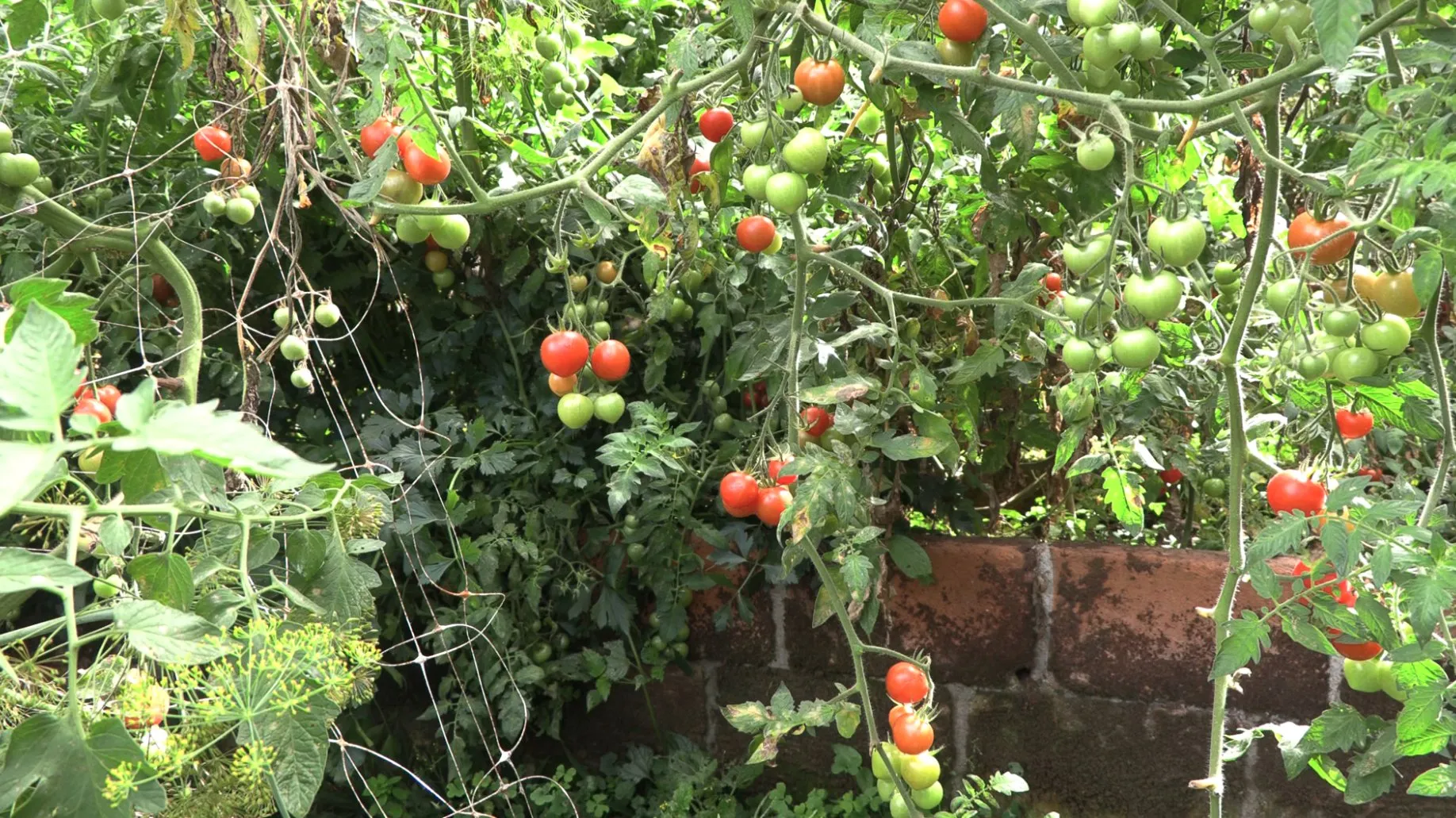
- Staking is practically essential. Indeterminate (continuously growing) varieties easily climb beyond two meters and need a sturdy stake, cage, or trellis; otherwise the fruit touches the ground and rots.
- Deep, regular watering, never on the leaves. Irregular watering — too much, then not enough — causes fruit cracking and blossom-end rot, a calcium-related disorder that’s often triggered by water stress rather than a true soil deficiency.
- Good air circulation, essential against blight. It’s the tomato’s most dreaded disease in humid climates; generous spacing between plants, pruning the lower leaves, and if necessary a shelter (tunnel or light greenhouse) considerably limit the risk.
- Pinching out suckers — the shoots that appear in the leaf axils of indeterminate varieties — concentrates the plant’s energy on fewer main stems and therefore on bigger fruit; it’s optional, but it clearly improves yield in a small space.
- A progressive harvest, at full color. Ripe fruit comes away from the plant easily; at the end of the season, still-green tomatoes can be picked and ripened indoors, away from the night chill.
Tomatoes in Our Garden
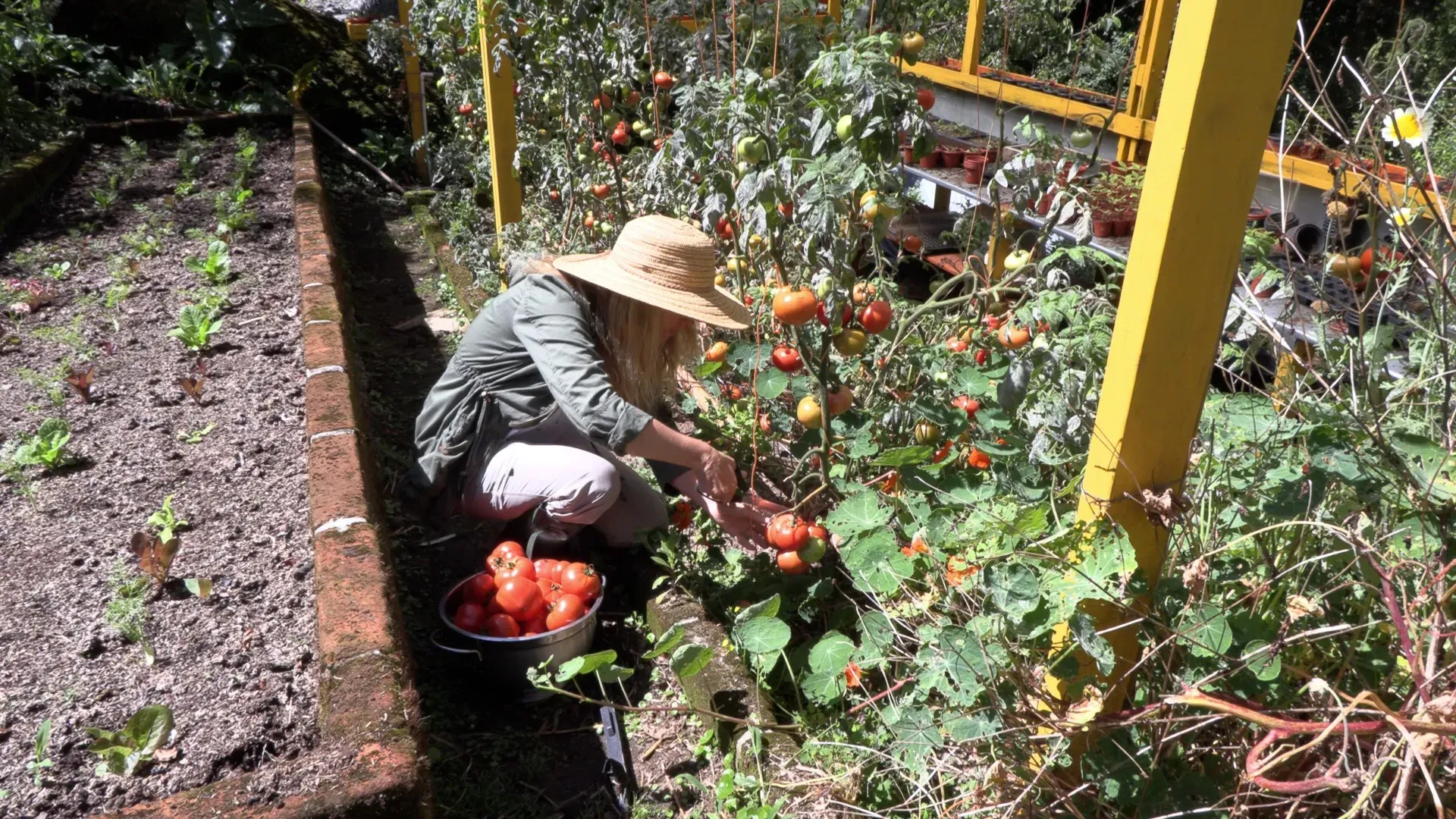
The tomato loves sun and heat, and on that point the Horqueta cloud forest imposes a real compromise compared with the tropical lowlands — but one that actually works in its favor. The Boquete area and nearby Cerro Punta are in fact recognized as one of Panama’s main vegetable-growing regions, with tomatoes leading the way, precisely thanks to this cool mountain climate: cool nights slow ripening and concentrate sugars and aromas, while the intense solar radiation of high altitude more than makes up for temperatures that are more moderate than in the lowlands. Rich, well-drained volcanic soils complete this very favorable picture. The main challenge remains the ambient humidity of the cloud forest, which creates ideal conditions for blight — which is why many growers in the Chiriquí highlands grow their tomatoes under a tunnel or light greenhouse, a practice worth considering whenever space allows.
Good Companions
- Basil. The most famous pairing in the vegetable garden: basil is said to repel certain tomato pests, and many gardeners report that it improves the flavor of nearby fruit — an effect that’s hard to measure scientifically, but a firmly rooted gardening tradition.
- French marigolds (tagetes). Their roots are thought to release compounds that limit certain soil nematodes, a common problem that’s hard to treat any other way in organic growing.
- Carrot. A good classic companion: deep-rooted carrots don’t compete with the tomato’s shallower roots, and they enjoy the light shade of its foliage.
- Borage. It attracts pollinators and certain beneficial insects that prey on the caterpillars that attack tomato foliage, notably the tomato fruitworm.
- Parsley. Planted along the edge, it doesn’t compete with tomatoes and is thought to attract useful beneficial insects, while itself enjoying the partial shade of the neighboring foliage.
Plants to Avoid
- Potato, a close cousin in the nightshade family, which shares the same fungal diseases with tomato (including blight) — growing them close together seriously increases the risk of spread from one plant to the other.
- Cabbage and other brassicas, whose vigorous growth competes with tomatoes for nutrients while, according to some gardeners, creating a modest allelopathic effect — evidence remains limited, though, and most of the problem is probably simple competition.
- Corn, which shares a common pest with tomato — the same caterpillar is called corn earworm or tomato fruitworm depending on the crop it attacks — so planting them side by side makes it easier for the pest to move from one crop to the other.
Good to Know
- The tomato was long considered poisonous in Europe. Introduced in the 16th century, it belongs to the nightshade family, several members of which are indeed toxic; it’s also suspected that eating it off pewter plates (rich in lead, which the tomato’s acidity dissolves) caused real poisonings among the European aristocracy, reinforcing its bad reputation.
- It’s legally a vegetable in the United States, but botanically a fruit. The US Supreme Court settled the question in 1893 (Nix v. Hedden), for purely customs-related reasons, without changing anything about its scientific classification as a berry.
- There are several thousand heirloom varieties, with extremely varied shapes, colors, and flavors — a striking contrast with the handful of standardized commercial varieties usually found in supermarkets.
- Its origins lie in the Andes, not Mexico. The wild tomato is thought to come from the Andean regions of South America, but it was in Mexico, among the Aztecs, that it was domesticated into a form close to the one we grow today.
This article is © Wild on the Farm, Boquete Cloud Forest Lodge. All rights reserved — it may not be reproduced, republished, or redistributed without prior written permission. Read our full legal notice →