Nutritional Properties & Benefits
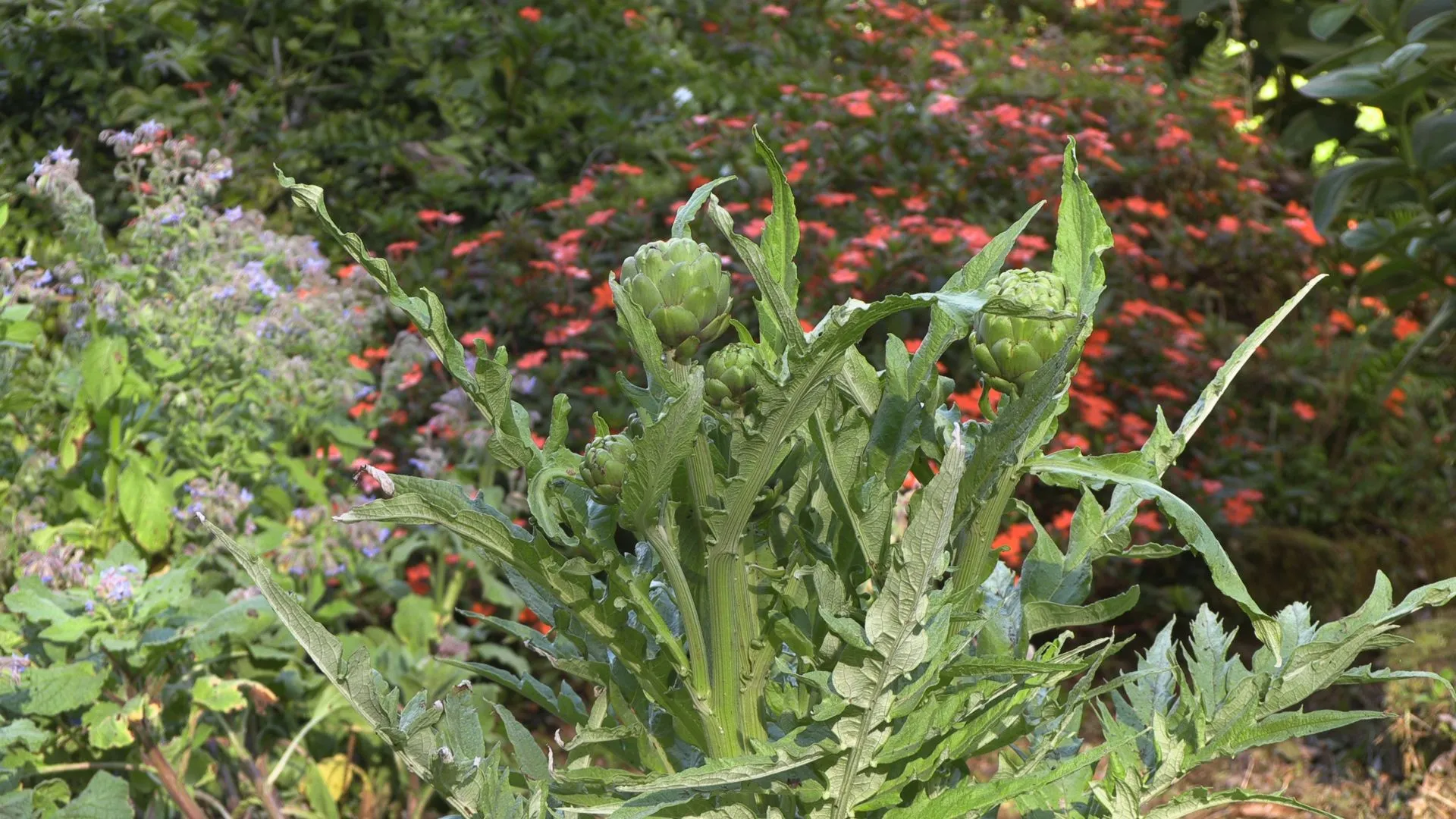
The artichoke (Cynara cardunculus var. scolymus) is one of the vegetables richest in fiber there is, with a large share of inulin, a prebiotic fiber that feeds the good bacteria of the gut. It also provides magnesium, potassium, folate, and vitamin K, and regularly ranks among the vegetables richest in antioxidants, notably thanks to phenolic compounds such as chlorogenic acid and cynarin. It’s to the latter that tradition attributes the artichoke’s virtues for digestion and the liver — artichoke leaf extract has been a popular remedy in Europe for centuries, and a few studies suggest an effect on the digestion of fats, though the evidence isn’t yet enough to make it a treatment. What we eat is in fact a flower bud: the “leaves” are bracts, and the “choke” at the center is the future flower, which would open into a magnificent purple thistle if we let it. A curiosity well known to enthusiasts: cynarin temporarily alters the perception of taste, and water or wine drunk straight afterwards seems strangely sweet.
This information is for educational purposes only and reflects traditional and commonly documented uses of this plant. It is not medical advice and does not replace the guidance of a qualified healthcare professional. Always consult your doctor before using any plant medicinally, especially if pregnant, nursing, or taking medication.
How to Eat It
The artichoke is almost always eaten cooked. The simplest way remains the great classic: boiled or steamed whole, then taken apart by hand, each bract dipped in vinaigrette before you scrape off the tender flesh with your teeth, all the way to the heart — the fleshiest and finest part. Small purple artichokes, which are more tender, are prepared differently: stripped of their tough bracts, they’re eaten raw in thin slivers with lemon and Parmesan, or cooked as a Provençal barigoule, braised with carrots, onions, and white wine. In Italy, carciofi alla romana are simmered with garlic and mint, while Rome’s carciofi alla giudia are fried whole until they open like a crisp flower. One useful habit in the kitchen: artichokes oxidize and blacken very quickly once cut — rub them with lemon or drop them into lemon water as you go.
How to Grow It Organically
The artichoke is a perennial that can produce for four to six years in the same spot — an investment in space, but a remarkably undemanding crop once established.
- Plant from offsets or from seed. The most reliable method remains dividing the suckers (offsets) taken from the base of a mature plant, which reproduce the variety faithfully; sowing is possible but gives more variable plants.
- Plenty of room. A mature plant easily takes up a square meter, with silvery leaves that reach a meter long — a meter between plants is a minimum.
- Rich, deep, well-drained soil. A heavy feeder, the artichoke appreciates a generous helping of compost every year, but dreads standing water at the collar, which rots the crown.
- A need for coolness to flower well. Many varieties need a cooler period to trigger bud formation; some modern varieties, known as “annual” types, produce in their first year without it.
- Harvest before it opens. Cut the head with about ten centimeters of stem when it’s good and tight; as soon as the bracts start to spread, it turns tough.
- Aphids and slugs as the main troubles, with an eye out for gray mold in a very humid climate — good air circulation between plants limits the problem considerably.
Artichokes in Our Garden
The artichoke is a Mediterranean plant that likes mild winters and summers that aren’t too scorching — a profile that, in the tropics, is only found at altitude. The big artichoke-growing regions of Latin America, such as certain Andean valleys of Peru, are in fact set high up, for precisely that reason. In Horqueta, the constant coolness of the cloud forest offers it temperatures close to its preferences all year round, and the deep volcanic soils suit its long roots. The real point of vigilance remains humidity: in the height of the rainy season, we have to make sure water never stands at the base, and space the plants generously so that air moves between their big leaves. A mound or a well-drained terrace makes all the difference.
Good Companions
- Border flowers and herbs (marigold, nasturtium). They attract the beneficial insects that keep aphids in check and act as trap plants without competing with this big perennial.
- Lettuces and radishes at its foot, in the first year. Until the artichoke reaches its full size, the open ground between plants can take quick crops.
- Legumes as the previous crop. Beans and peas enrich the soil with nitrogen before this hungry plant moves in.
Plants to Avoid
- Low, shade-sensitive crops close to a mature plant. The artichoke’s huge leaves cut off the light from everything growing beneath.
- Other hungry plants too close by (squash, cabbages), which compete for nutrients with a perennial that stays put for several years.
- Fennel, for its general allelopathic effect on many neighboring vegetables.
Good to Know
- It’s a domesticated thistle. The artichoke descends from the wild cardoon of the Mediterranean basin, and the cultivated cardoon — of which we eat the stalks rather than the buds — belongs to the same species.
- Left to flower, it becomes a spectacular bloom. A big flower head of electric purple, much prized by bees and even sold as a cut flower.
- It confuses the taste of what you drink next. Cynarin temporarily blocks certain taste receptors; when they switch back on, water seems sweet — a headache well known to sommeliers trying to pair a wine with artichoke.
- Catherine de’ Medici is said to have made it fashionable in France. Arriving from Italy in the 16th century, she was so fond of it that her excesses of artichokes at table caused a scandal at court.
This article is © Wild on the Farm, Boquete Cloud Forest Lodge. All rights reserved — it may not be reproduced, republished, or redistributed without prior written permission. Read our full legal notice →