A First Failed Attempt, on the Wrong Coast
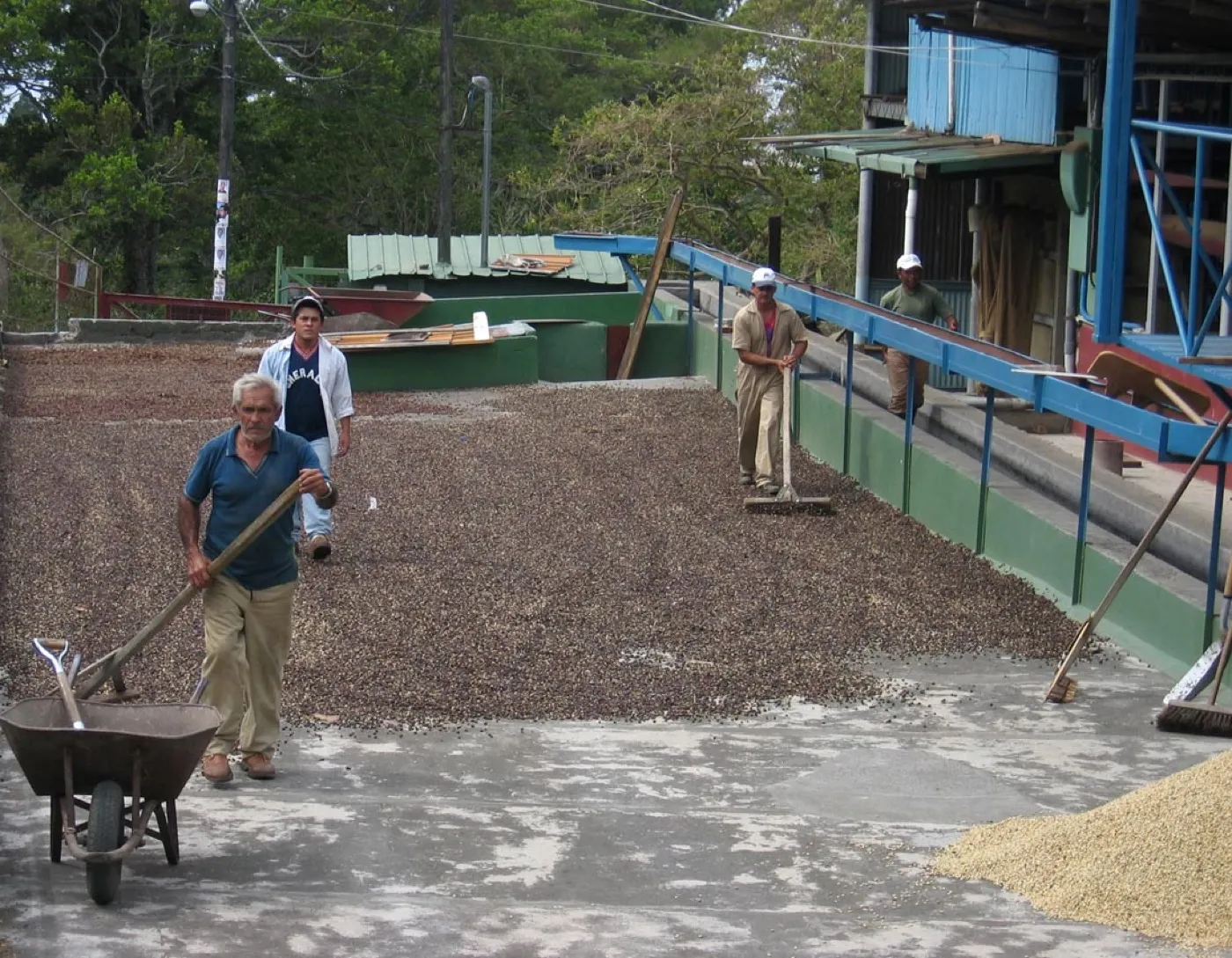
Coffee is said to have first reached Panama as early as 1742, brought by a ship from the French Antilles. But the first genuinely documented plantation dates to the 1780s–90s, and it was in the wrong place: on the low Caribbean coast, around Portobelo — a choice that turned out to be a complete agronomic mistake, plagued by pests and disease. It wasn’t until the 1820s that cultivation moved to the western highlands, where the cool climate finally suited arabica. Another version, reported by the Smithsonian, credits the introduction of coffee to a British naval captain who brought plants back in the early 19th century after marrying a Panamanian woman. By most accounts, coffee genuinely reached Chiriquí in the mid-1850s, where settler families took advantage of the altitude, a climate comparable to Colombia’s and Costa Rica’s — and, above all, the famous bajareque, the fine, constant mist-rain that hydrates the plants without excess and regulates temperature.
The Valley’s Pioneers
Settlement of the Boquete valley proper intensified in the second half of the 19th century. The first arrivals came from neighboring districts — Bugaba, Gualaca, David, Dolega — soon joined by a smaller but lastingly influential wave of European immigration: French, German, and Swiss families, along with North Americans, who took up coffee growing alongside cattle ranching. The district of Boquete was officially founded on April 11, 1911.
Several of the great farms that shaped the region’s coffee reputation date to this period or shortly after:
- Finca Don Pachi — founded in 1873 by Blasina Samudio on the slopes of Barú, with a land title issued under Gran Colombia, before the Republic of Panama even existed. This is the same farm where Geisha coffee would enter Panama, ninety years later (see below).
- Don Pepe Estate — operating since 1898, considered one of the region’s oldest coffee farms, now in its fifth family generation.
- Café Ruiz / Casa Ruiz — the Ruiz family has grown coffee since the late 19th century using traditional shade-grown methods; the business was formally established in 1979. In 2001, Casa Ruiz won the title of “best coffee in the world,” a first for a Panamanian producer.
- Finca Lérida — founded by Norwegian engineer Tollef Bache Mönniche, one of the designers of the Panama Canal’s emergency spillway locks, who retired in 1924 and settled in Boquete with his wife Julia on a 365-hectare estate. In 1929, his harvest was largely exported to Germany — the very first export of Panamanian coffee to Europe, sold at three times the going price. Mönniche also invented a coffee cherry sorter, the “Sifón,” and documented more than 500 bird species in the region. The estate, now run by the Chiari family, won the “Best Coffee in the World” title at the Boston competition in 2003.
- Kotowa Coffee — one of the oldest farms still operating, founded in 1913 (one source puts the date at 1918) by a North American immigrant, described in different sources as either Scottish or Canadian — a point the sources don’t allow us to settle with certainty. The name is said to come from a local word meaning “mountain.”
Boom, Crisis, and the Birth of Specialty Coffee
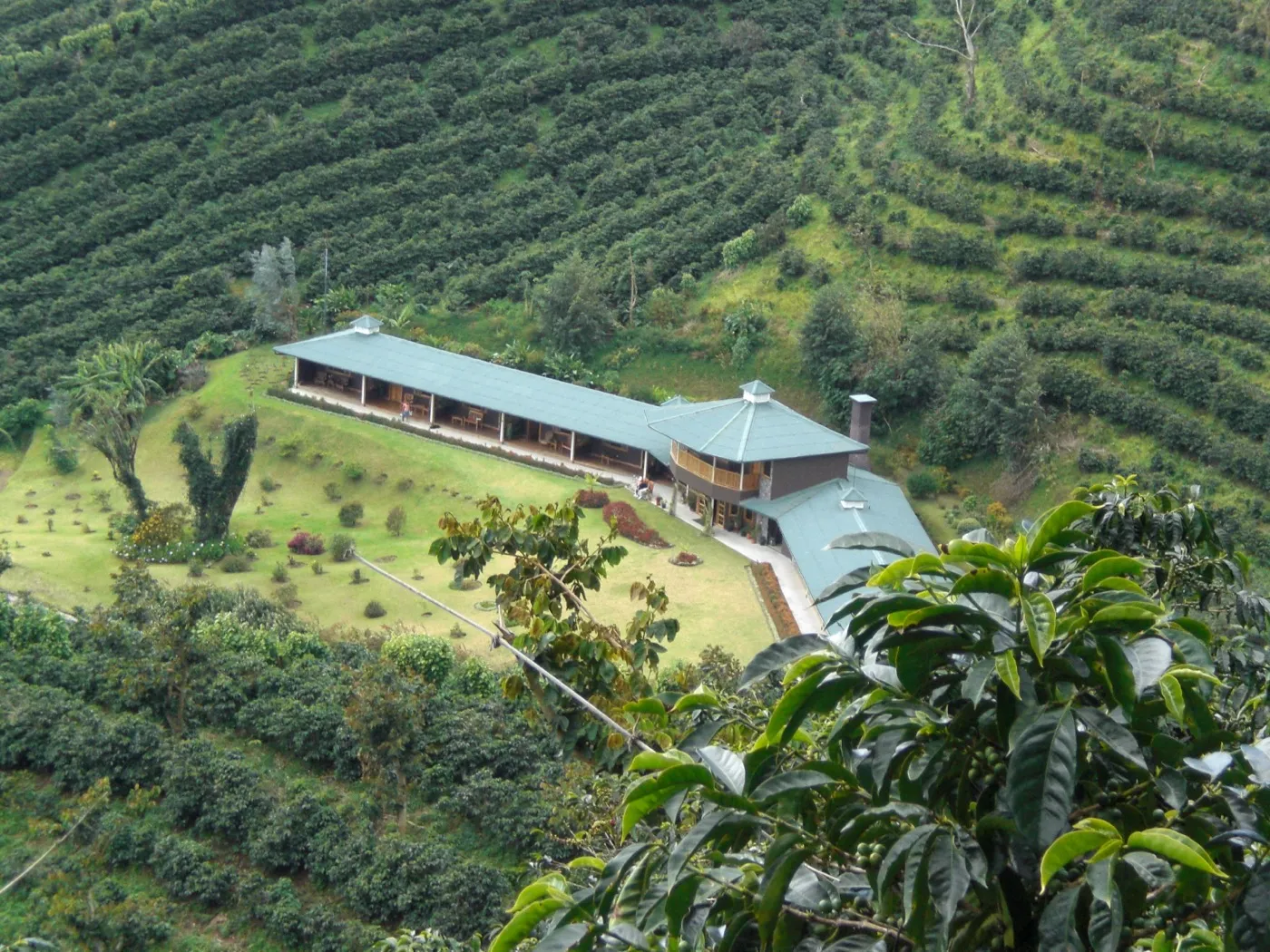
National production climbed from 402 tonnes in 1961 to a peak of 1,422 tonnes in 1985. Then, in 1989, the collapse of the International Coffee Agreement sent the world price falling from $1.20 to just $0.74 a pound — a severe crisis for Panamanian producers that pushed several Boquete families to reorient their farms toward specialty coffee rather than commodity coffee.
A group of producers then founded the Specialty Coffee Association of Panama (SCAP), around 1990–1996, bringing together figures including Ricardo Koyner, Price Peterson, Jaime Tedman, Hans Collins, Josué Ruiz, Wilford Lamastus, and Francisco Serracín. In 1996, they launched the Best of Panama competition — a world first, entirely organized by producers themselves to reposition Panamanian coffee in the specialty market. In 2002, an award-winning lot from Elida Estate (Lamastus family) sold for $2.37/lb, roughly five times the world market price at the time — an early sign of what was to come.
Geisha: A Variety Scorned for Forty Years
Geisha (or Gesha) was first identified in the 1930s in the mountains around the Gesha region of southwestern Ethiopia. In 1936, a British captain serving as consul for the region collected around ten pounds of seeds there. They passed through research stations in Tanzania, then, in 1953, through CATIE in Costa Rica, which became the distribution point for all of Central America.
According to Finca Don Pachi, it was in 1963 that coffee grower Don Pachi Serracín introduced the first Geisha beans to Boquete, via CATIE. But for more than forty years, no one was interested in it for its taste: Geisha is a tall, unwieldy tree, difficult to work with, and low-yielding — it was planted only for its disease resistance, particularly to coffee leaf rust. Most of the initial plantings were abandoned.
In 1967, Swedish-American banker Rudolph Peterson, then president of Bank of America, bought the estate that would become Hacienda La Esmeralda — originally just a cattle project. The family turned to coffee in the 1980s, then in 1997 bought the high-altitude Jaramillo estate on the slopes of Barú, which had just been devastated by rust. His son Daniel Peterson then noticed that the old Geisha plants left there by the previous owners had resisted the disease far better than other varieties — and decided to expand its cultivation, including above 1,650 meters, unheard of for this variety.
“It was like a fruity tea” — Price Peterson, tasting the very first lot of 100% Geisha ever separated from the rest of the harvest in 2004, at first thought there had been a mistake: the floral, fruity aromatic profile bore no resemblance to anything Central America had produced before — it was closer to an Ethiopian coffee.
That lot won Best of Panama 2004 and, in doing so, set the record for the highest price ever paid for coffee at auction at the time: $21.00/lb. The trajectory hasn’t let up since.
Prices, Climbing Edition After Edition
| Year | Record price | Detail |
|---|---|---|
| 2004 | $21/lb | Hacienda La Esmeralda, first-ever isolated 100% Geisha lot |
| 2017 | $601/lb | Hacienda La Esmeralda (natural) |
| 2018 | $803/lb | Lamastus Family Estates (natural), bought by Black Gold Coffee, Taiwan |
| 2019 | $1,029/lb | “Elida Natural Geisha 1029,” Lamastus Family Estates |
| 2022 | > $2,000/lb | Several micro-lots; one private sale reached roughly $6,000/lb |
| 2024 | $4,542/lb | Lamastus Family Estates (natural), bought by a consortium led by Saza Coffee (Tokyo) — auction average: $627/lb across 50 lots, more than $1.38 million total |
| 2025 | $13,705/lb | Hacienda La Esmeralda, washed Geisha, 98 points — current record. A 20 kg lot sold for roughly $605,000, bought by Julith Coffee (Dubai) |
That’s a jump of more than 650 times in two decades — a trajectory with almost no equivalent in the history of agricultural commodities, for a variety that, until 2004, no one wanted for its taste.
Beyond La Esmeralda: The Other Great Names
Elida Estate (Lamastus Family Estates), Panama’s highest farm at Alto Quiel, has won Best of Panama seven times and holds several world records. Alongside it, Finca Lérida, Café Ruiz, and Kotowa remain benchmark names, alongside newer estates such as Carmen Estate, La Torcaza Estate (organic), Café Eleta — known for its eco-friendly processing facilities — and Finca Deborah, in the Volcán-Boquete region.
A detail rarely mentioned: roughly 90% of the region’s harvest labor comes from Ngäbe-Buglé indigenous communities, who practice selective hand-picking, cherry by cherry — a skill essential to the quality of award-winning lots. After the 2004 success, Price Peterson put in place a redistribution policy for his pickers: tripling the average picking wage, along with annual bonuses, childcare, and scholarships.
The Future: An Industry at Two Speeds, Facing Climate Change
The paradox is striking: while exceptional Geisha soars to unprecedented heights, Panamanian coffee production as a whole is collapsing. In a decade, it has fallen from roughly 400,000 to just 120,000–140,000 quintals a year, and the number of producers from 10,000 to around 6,000 — many simply having abandoned coffee for more predictable crops.
Ricardo Koyner, president of SCAP, attributes this to disrupted flowering and fruiting cycles, and to the growing prevalence of disease, favored by excess humidity or prolonged drought. On the ground in Renacimiento, grower Doris Shanto puts it simply: “We were always told coffee needs sun, but with climate change we no longer know when it’s summer and when it’s winter.”
This isn’t the first time Panamanian coffee has had to change altitude: that’s already the story of its arrival, when the low plantations of the Caribbean coast had to be abandoned in favor of the Chiriquí highlands. A global study (PLOS One, 21 climate models) projects that by 2050, the altitude range suited to arabica in Central America could shift from 1,200 m today to 1,600 m — and Panama, thanks to volcanoes rising above 3,000 meters, could fare better than neighbors like Nicaragua or El Salvador, which lack high massifs. This is exactly the altitude shift that, between 1997 and 2004, led the Peterson family to plant Geisha ever higher on the slopes of Barú — pushed there by rust, they discovered, almost by accident, the most expensive coffee in the world.
Between 2008 and 2013, a severe coffee leaf rust epidemic hit several Latin American countries, including Panama, forcing eleven countries to declare a state of emergency. Weather anomalies linked to climate change — notably a narrowing gap between minimum and maximum temperatures — are identified among the main causes. In response, some producers are adapting their practices: shade-grown cultivation (agroforestry), more resistant varieties such as Obata, Tupi Marsellesa, or Catuai SH3, and training programs pairing Panamanian scientific research with local growers.
Panama’s luxury coffee is largely insulated from swings in the world price — but not from climate change. That’s the near-literal headline of a 2025 Panamanian news article: even the ultra-luxury Geisha segment, whose buyers accept the asking price without negotiating, remains exposed to droughts, out-of-season rains, and mounting disease pressure.
Main sources: Hacienda La Esmeralda, Wikipedia (Geisha coffee, Coffee production in Panama), Perfect Daily Grind, Daily Coffee News, Sprudge, Smithsonian Magazine, The Visitor Panama, Excelencias Panamá, Panamá América, Latin American Post, Crítica, SCAP, Café Ruiz.
This article is © Wild on the Farm, Boquete Cloud Forest Lodge. All rights reserved — it may not be reproduced, republished, or redistributed without prior written permission. Read our full legal notice →