Nutritional Properties & Benefits
Dill (Anethum graveolens) belongs to the carrot family, along with parsley, fennel, and celery. Its fresh leaves contain vitamin C, provitamin A, folate, and manganese — but we eat so little of it at a time that dill matters above all for its fragrance. Its seeds are rich in essential oil, dominated by carvone and limonene, which give it its flavor somewhere between anise and caraway. Tradition has used them since antiquity to ease digestion and to calm bloating and colic: dill is the historic ingredient of the “gripe water” given to infants, and its name in the northern languages is said to come from a word meaning “to soothe.” These uses rest more on tradition than on solid clinical trials. The cautions are few: people allergic to celery or carrot may react to dill, and the essential oil and concentrated seed preparations are not recommended during pregnancy — culinary use poses no problem.
This information is for educational purposes only and reflects traditional and commonly documented uses of this plant. It is not medical advice and does not replace the guidance of a qualified healthcare professional. Always consult your doctor before using any plant medicinally, especially if pregnant, nursing, or taking medication.
How to Eat It
Dill is the herb of fish: it’s indispensable to Scandinavian gravlax, salmon cured with salt, sugar, and dill, and it goes just as well with grilled fish as with ceviche. It loves new potatoes, eggs, cucumber, and yogurt — it’s what scents some versions of tzatziki, the cucumber salads of Central Europe, and borscht. The leaves are fragile: snip them at the last moment and add them at the end of cooking, since heat dulls their fragrance. The flower heads and the seeds, which are stronger, are used to flavor pickles and vinegared vegetables, bread, and sauerkraut. The yellow flowers are edible and very pretty on a plate. Dill dries poorly: to keep it, better to freeze it, chopped, or preserve it in vinegar.
How to Grow It Organically
Dill is a fast, easy annual, provided you sow it where it is to grow.
- Sow directly in place. Its taproot doesn’t take well to transplanting; sow in a row, barely covered, and it comes up in one to two weeks.
- Full sun and well-drained soil. Light earth is enough; too much fertilizer gives abundant foliage with less fragrance.
- Sheltered from wind. Its hollow stems, which reach a meter or more, flop easily.
- Sow little, but often. Dill runs to flower quickly; a new sowing every three or four weeks keeps fresh leaves coming.
- Harvest the leaves before flowering, when they’re most fragrant, and the seeds when the flower heads turn brown.
- Let a few plants flower. The umbels attract a crowd of useful insects, and the plant reseeds itself.
- Aphids sometimes on the flower heads, which ladybugs and hoverflies, drawn by the flowers, usually keep in check by themselves.
Dill in Our Garden
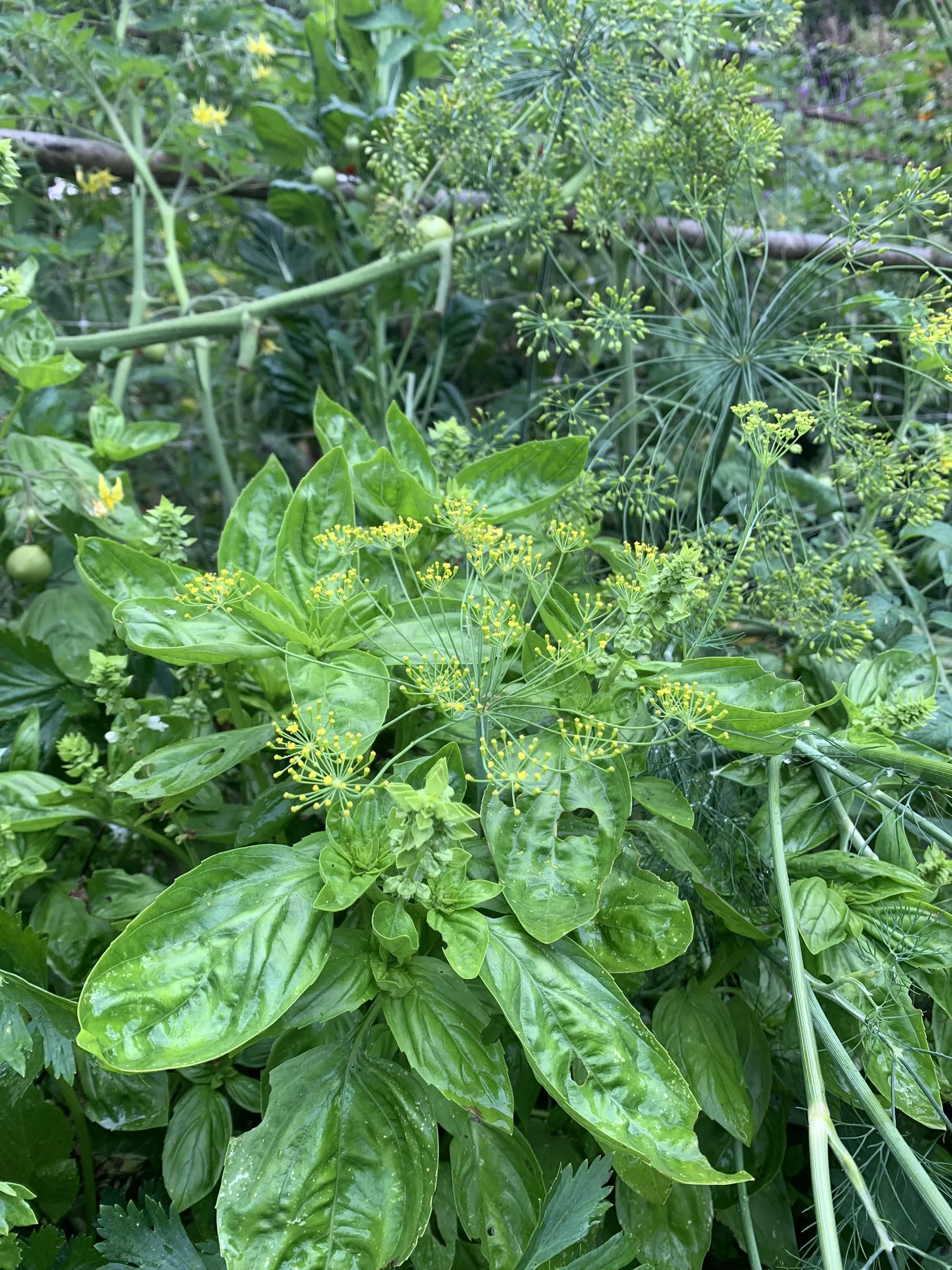
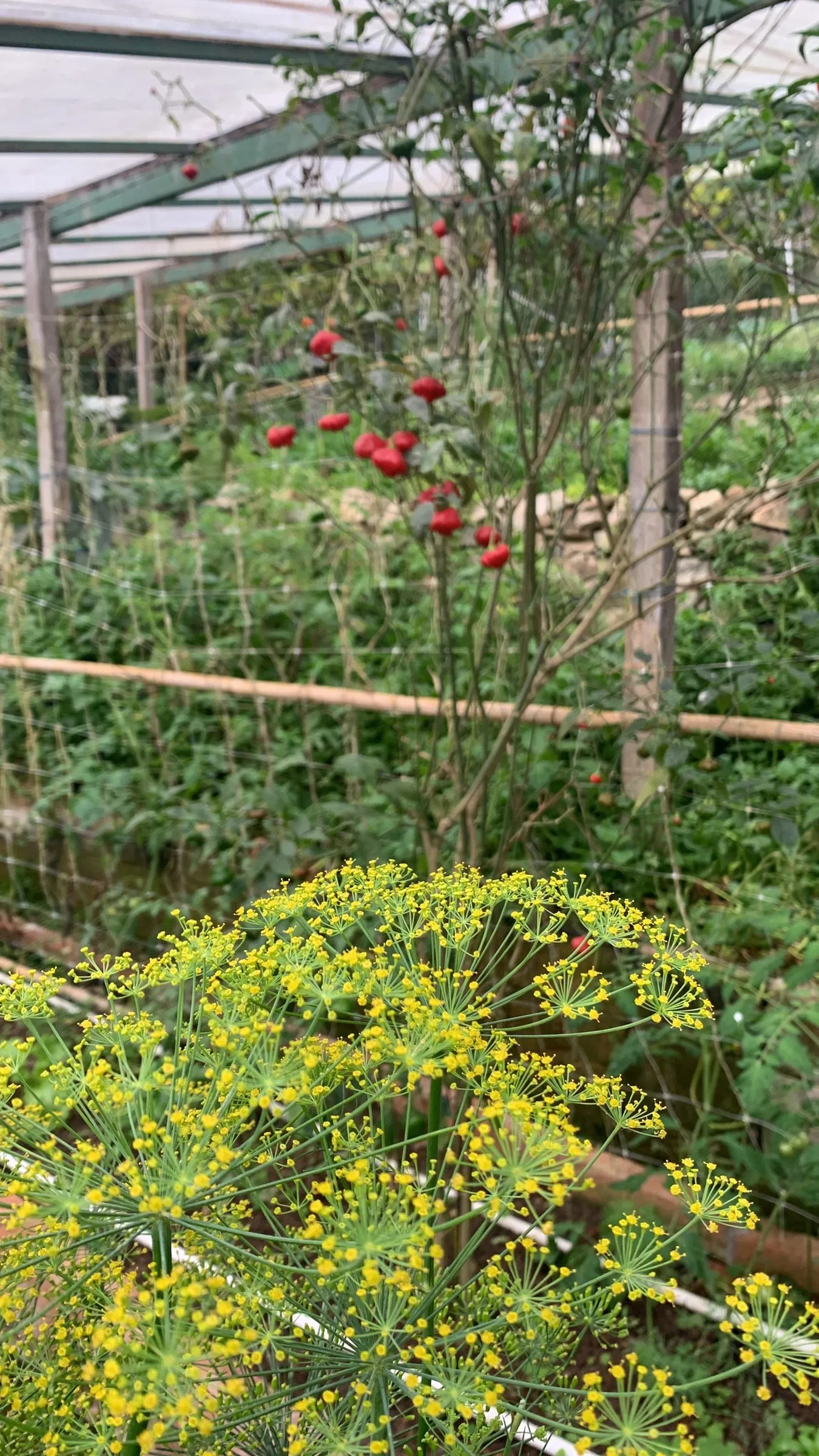
Here, dill grows in among the other crops: in the photo you can see it in full yellow bloom, mingled with the basil, and its umbels open beside the tomatoes too. We let it flower on purpose. Its big flat umbels are one of the best tables in the garden for beneficial insects — hoverflies, ladybugs, small parasitic wasps — whose larvae feed on aphids and caterpillars: in a garden with no treatments at all, they’re the ones doing the work. The coolness of Horqueta, at 1,800 meters, suits it well; it’s the rainy season that wears it out, when downpours flatten its stems and the damp sets in. It then reseeds itself, and young plants reappear here and there between the beds.
Good Companions
- Cabbages. Dill in flower attracts the parasitic wasps that attack cabbage white caterpillars.
- Cucumber and zucchini. It draws pollinators and aphid predators — and meets them again later in the pickle jar.
- Lettuce and onion. Good neighbors in general.
- Basil. The two grow together here, as the photo shows.
Plants to Avoid
- Carrots. From the same family, they attract the same pests, and dill is said to hold back their growth.
- Fennel. The two plants can cross and give seed of uncertain flavor.
- Tomatoes, once the dill is mature. Garden tradition says young dill does them good but hinders them once it has run to flower: avoid letting it grow tall right against the plants.
Good to Know
- Its name suggests calm. The English word dill and its Scandinavian cousins are said to come from an old Norse verb meaning “to lull, to soothe.”
- One plant, two spices. The leaves and the seeds don’t taste the same: grassy and fresh for the first, warm and close to caraway for the second.
- It has been grown since antiquity. The Egyptians and the Romans already used it, as a seasoning and as a remedy.
- It gets confused with fennel. The foliage is similar, but dill is a smaller annual, with a single hollow stem and no bulb.
- Its flowers are edible. They have the scent of the plant, only milder.
This article is © Wild on the Farm, Boquete Cloud Forest Lodge. All rights reserved — it may not be reproduced, republished, or redistributed without prior written permission. Read our full legal notice →