Nutritional Properties & Benefits
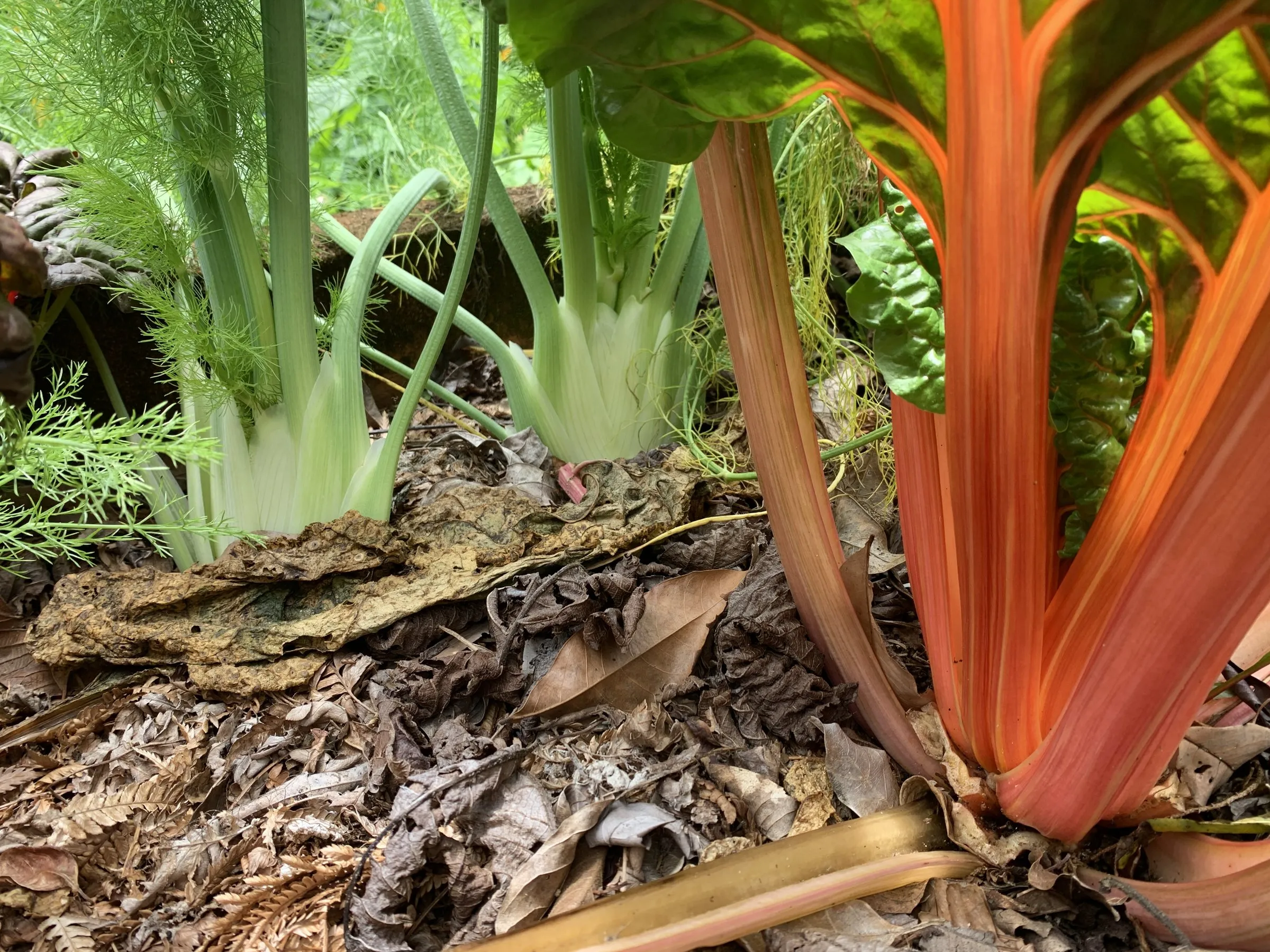
Bulb fennel (Foeniculum vulgare var. azoricum), also called Florence fennel, is a light vegetable, more than 90% water, yet it provides a worthwhile amount of fiber, potassium, and vitamin C, along with small amounts of folate and manganese. Its unmistakable aniseed scent comes from anethole, the main aromatic compound in its essential oil — the same one found in aniseed and star anise. Since antiquity, popular tradition has credited it with digestive virtues: fennel seeds chewed after a meal are still part of the habits of many cuisines, from India (mukhwas) to the Mediterranean, and an infusion of the seeds remains a classic family remedy for bloating — a well-rooted traditional use, even if the clinical evidence remains limited. Its name comes from the Latin feniculum, “little hay,” after its fine, feathery foliage. One useful note: since anethole has weak estrogen-like activity, concentrated preparations (essential oils, infusions in large quantity) are traditionally not recommended for pregnant women and young children — a caution that doesn’t apply to eating the vegetable normally.
This information is for educational purposes only and reflects traditional and commonly documented uses of this plant. It is not medical advice and does not replace the guidance of a qualified healthcare professional. Always consult your doctor before using any plant medicinally, especially if pregnant, nursing, or taking medication.
How to Eat It
Fennel changes character completely depending on whether it’s raw or cooked. Raw, shaved very thin on a mandoline, it brings a fresh crunch and a bright aniseed note to salads — the pairing with orange, black olives, and a drizzle of olive oil is a great Sicilian classic. Cooked, gently braised in butter or roasted in the oven, it loses its crunch and much of its anise to become melting, slightly sweet, almost caramelized at the edges. It goes remarkably well with fish — it’s one of the traditional aromatics of bouillabaisse — and pairs with lemon, Parmesan, and citrus in general. Nothing is wasted: the more fibrous stalks flavor stocks, and the green fronds are used as a fresh herb, in the manner of dill. The seeds, finally, lift breads, Italian sausages, and curries.
How to Grow It Organically
Bulb fennel isn’t hard to grow, but it’s demanding on one precise point: getting a fine bulb rather than a plant that runs straight to flower.
- Direct sowing is best. Fennel has a taproot that doesn’t take well to transplanting; sowing in place, or in deep pots transplanted very young, limits the stress that triggers bolting.
- Bolting, enemy number one. Under stress — drought, heat, late transplanting, or lengthening days — fennel skips the bulb stage and goes straight to flower. Steady growth, without a check, is the key to a plump bulb.
- Rich, cool soil and constant watering. It’s a thirsty plant while the bulb is forming; a mulch helps keep moisture steady.
- Earthing up the bulb. Drawing a little soil around the base as the bulb starts to swell keeps it white and tender, rather as with leeks.
- Harvest at the right moment. Cut the bulb at soil level when it’s between the size of a tennis ball and a fist; left too long, it turns fibrous. Left in the ground, the stump often regrows small secondary bulbs.
- Few serious pests — mainly aphids and slugs on young plants. Its flowering umbels, on the other hand, attract a host of beneficial insects, hoverflies and small parasitic wasps first among them.
Fennel in Our Garden
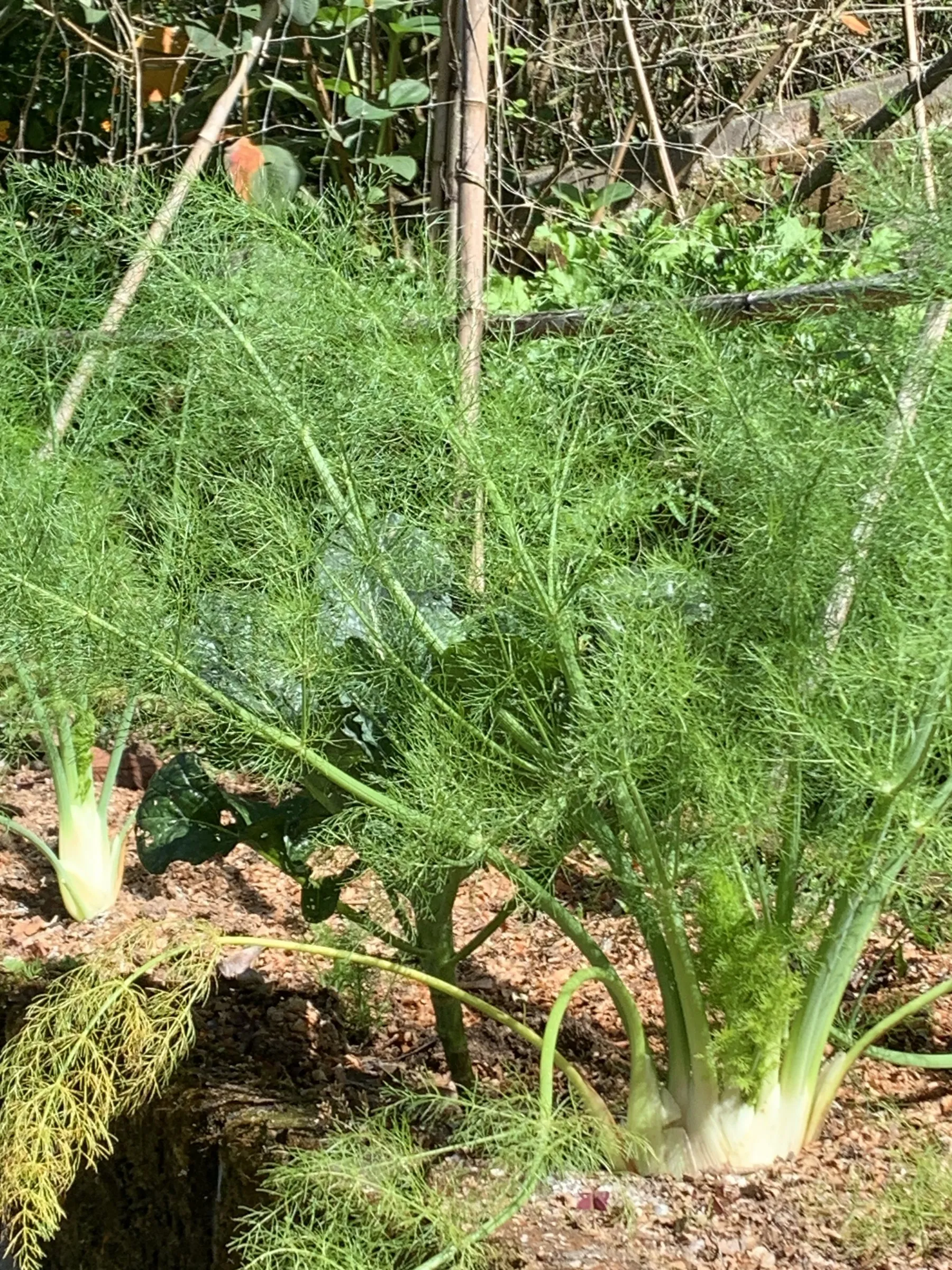
The climate of Horqueta’s cloud forest gives fennel an often underrated advantage: stability. In temperate latitudes, fennel bolts as soon as the days lengthen in summer; here, near the equator, day length varies very little through the year, and the altitude keeps temperatures moderate almost permanently — two conditions that markedly limit premature bolting. The volcanic soils rich in organic matter suit its hungry appetite, provided we watch the watering in the dry season, since it’s precisely a dry spell that pushes it to flower. There remains its peculiarity as a bad neighbor: in the garden we give it a corner of its own, at the edge of a bed, where its flowers will delight the useful insects without bothering the other crops.
Good Companions
Fennel is one of the few plants in the vegetable garden that frankly prefers solitude. Its real “friends” are therefore mostly neighbors at a good distance:
- Nectar-rich flowers along the edge (marigold, borage). They share with flowering fennel the role of attracting pollinators and beneficial insects, without suffering from its proximity.
- Fennel itself, away from other crops. Planted in a dedicated strip, it becomes a true “reservoir” of beneficial insects for the whole garden when a few plants are left to flower.
- Lettuces, at a good distance. Some gardeners report it getting along reasonably with short-cycle salads, though fennel’s allelopathic effect is a reason to stay cautious.
Plants to Avoid
- Almost the whole vegetable garden right next to it. Fennel releases allelopathic compounds through its roots that slow the growth of many neighboring plants — tomatoes, beans, cabbages, basil, and carrots first among them.
- Dill and cilantro. From the same carrot family, dill can cross with fennel if they flower together, giving seeds of uncertain flavor; better to keep them apart.
- Carrot and celery, cousins from the same family, with which it shares pests and diseases.
Good to Know
- Bulb fennel and wild fennel are the same species. Common fennel, which grows wild along Mediterranean roadsides, forms no bulb; it’s an Italian selection, the variety azoricum, that gave us the vegetable we know.
- The marathon owes it its name. The Battle of Marathon (490 BC) is said to have been fought in a field of fennel — marathon meaning precisely “fennel” in ancient Greek.
- Prometheus is said to have stolen fire in a stalk of giant fennel. According to Greek mythology, the divine ember was carried hidden in the hollow stalk of a related plant, the giant fennel (Ferula).
- Its seeds are fruits. What we call fennel “seeds” are botanically double achenes, dry fruits — which explains their concentrated fragrance.
This article is © Wild on the Farm, Boquete Cloud Forest Lodge. All rights reserved — it may not be reproduced, republished, or redistributed without prior written permission. Read our full legal notice →