Nutritional Properties & Benefits
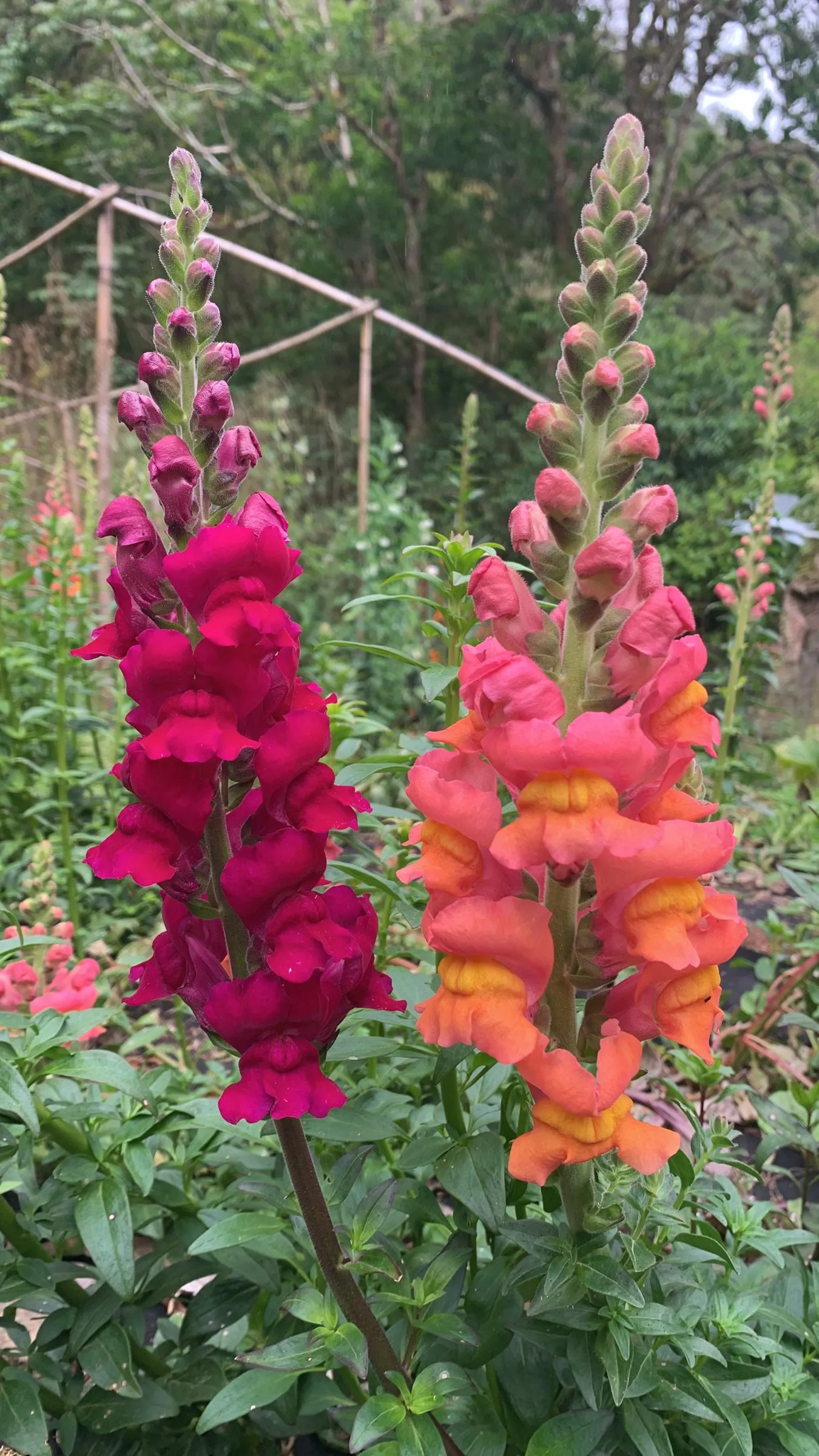
The snapdragon (Antirrhinum majus) — muflier or gueule-de-loup, “wolf’s mouth,” in French — is a flower of the rocky hillsides of the Mediterranean, in the plantain family. Its flowers are edible, but let’s be honest: we eat them for their beauty far more than for their nutritional value. We eat a few grams at a time, which mostly brings color — that of anthocyanins for the pinks and reds, and of a particular yellow pigment, aureusidin, for the yellows and oranges, compounds of the flavonoid family with antioxidant properties. Mediterranean folk medicine once used the plant as a poultice, a use that has now fallen away. Three cautions really matter: eat only flowers grown without any treatment — never those from a florist or garden center, produced for ornament — eat them only in small amounts, and abstain if you have a known allergy to flowers or pollen.
This information is for educational purposes only and reflects traditional and commonly documented uses of this plant. It is not medical advice and does not replace the guidance of a qualified healthcare professional. Always consult your doctor before using any plant medicinally, especially if pregnant, nursing, or taking medication.
How to Eat It
The snapdragon’s flavor is discreet, slightly green, with a touch of bitterness reminiscent of endive; it is above all a decorative flower. Pick the flowers in the morning, fully open, shake them gently to let any insects out, and detach the corolla from its green base, where the bitterness is concentrated. Lay them at the last moment on a salad, a cheese plate, raw fish, or a dessert, where their bright colors do all the work. They also dress up cocktails and cold drinks, slip into ice cubes, and can be crystallized with egg white and sugar to decorate cakes. Their slight bitterness goes well with citrus, fresh cheese, and mild vinaigrettes. The flowers keep for a day or two in the refrigerator, laid flat between two sheets of damp paper.
How to Grow It Organically
The snapdragon is a cool-climate flower, easy and generous, that blooms for months if you keep cutting it.
- Sow on the surface. The seeds, fine as dust, need light to germinate: set them on the compost without covering them, and they come up in one to two weeks.
- Pinch the young plants. Cutting the tip when the plant reaches about ten centimeters makes it branch: you get several spikes instead of one.
- Sun and well-drained soil. Ordinary earth with a little compost is enough; what it dreads most is standing water.
- Twenty-five to thirty centimeters between plants, so that air can move.
- Stake tall varieties. The spikes can exceed a meter and flop in the rain.
- Cut to keep it flowering. The more you pick the spikes, for the table or for bouquets, the more the plant produces; remove faded flowers to prolong the display.
- Water at the base. Rust, which marks the undersides of the leaves with brown pustules, is the main disease in a humid climate; dry foliage and well-spaced plants keep it in check.
- It reseeds itself. A few spikes left to go to seed give volunteer plants the following season.
Snapdragons in Our Garden
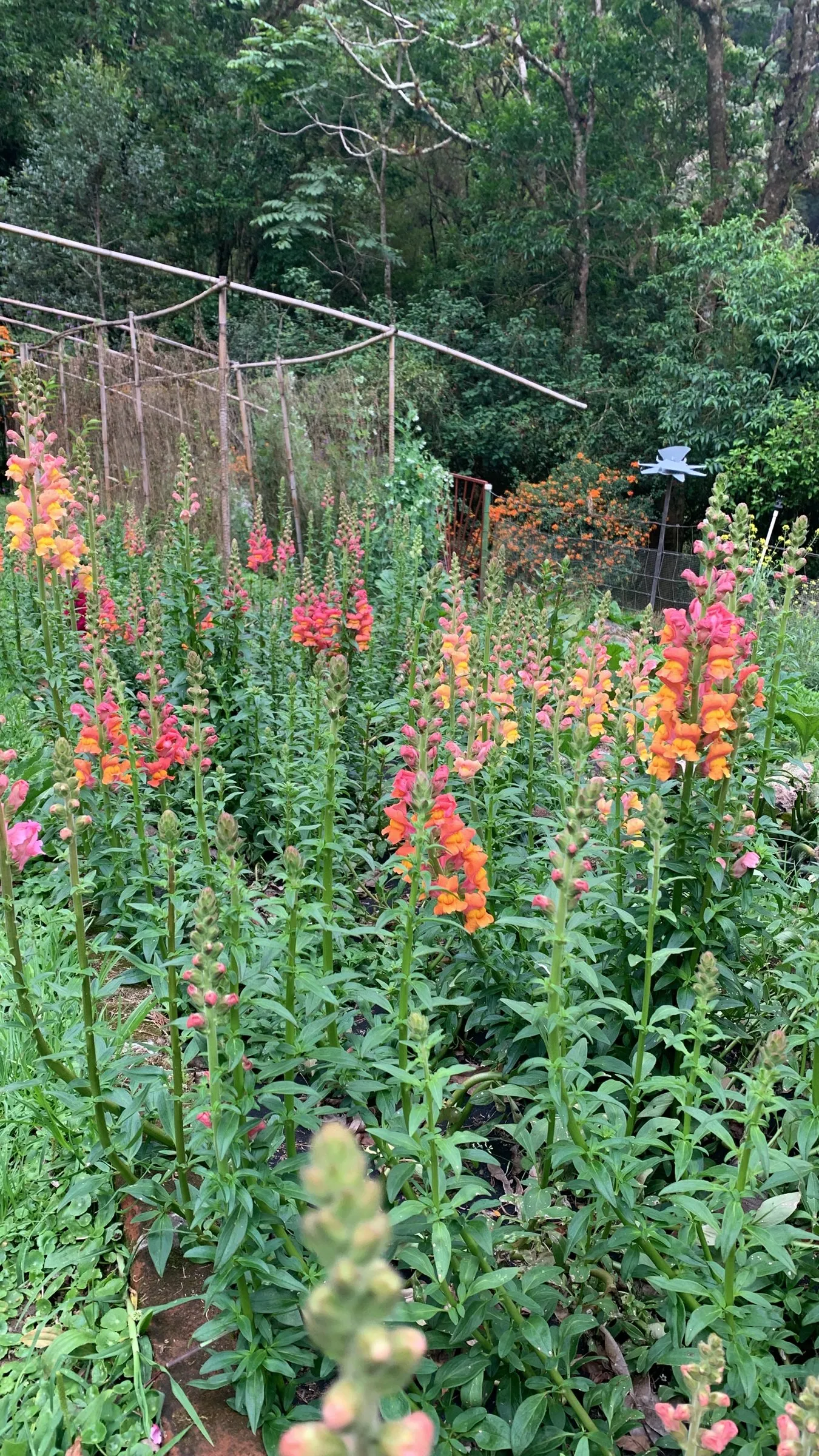
Snapdragons grow remarkably well on the farm. It’s a flower that loves coolness: in temperate countries it blooms in spring and runs out of steam as soon as the summer heat arrives. In Horqueta, at 1,800 meters, that heat never comes, and the snapdragons go on flowering for months on end. The photo shows one of our beds, at the forest’s edge: dozens of pink, orange, and raspberry spikes rising to waist height. We grow them in the middle of the vegetable garden, with no treatments at all — which is exactly what makes it possible to put them on the plate — for the kitchen, for bouquets, and for the bumblebees. In the rainy season we watch for rust and cut regularly to open up the clumps.
Good Companions
- Tomatoes, zucchini, and beans. Snapdragons attract bumblebees, which then pollinate the vegetables nearby.
- Zinnias, cosmos, and marigolds. Together they form a flowering strip that feeds pollinators and beneficial insects all year.
- Lettuce and young salad greens. They enjoy the light shade of the tall spikes.
- Cabbages. A flowering border close by draws the insects that keep aphids and caterpillars in check.
Plants to Avoid
- Invasive plants such as mint. They smother its shallow roots.
- Tall crops that shade it. It needs sun to flower well.
- Waterlogged corners. It rots there, whatever the company.
Good to Know
- Its “jaws” open when you pinch them. Squeeze the sides of the flower and it yawns like a little dragon — a children’s game in every country.
- Only bumblebees know how to get in. It takes the weight of a large insect to part the flower’s two lips; lighter bees are often left at the door.
- Its seed pods look like tiny skulls. Once dry, they show three holes that make two eyes and a mouth.
- It has advanced genetics. Snapdragons have been studied since the 19th century to understand how colors are inherited and how flowers form.
- It changes name in every language. Wolf’s mouth in French, little lion’s mouth in German, “little rabbit” in Spanish, and “goldfish plant” in Japanese.
- Its Latin name is about a snout. Antirrhinum comes from the Greek and means “like a nose.”
This article is © Wild on the Farm, Boquete Cloud Forest Lodge. All rights reserved — it may not be reproduced, republished, or redistributed without prior written permission. Read our full legal notice →