Nutritional Properties & Benefits
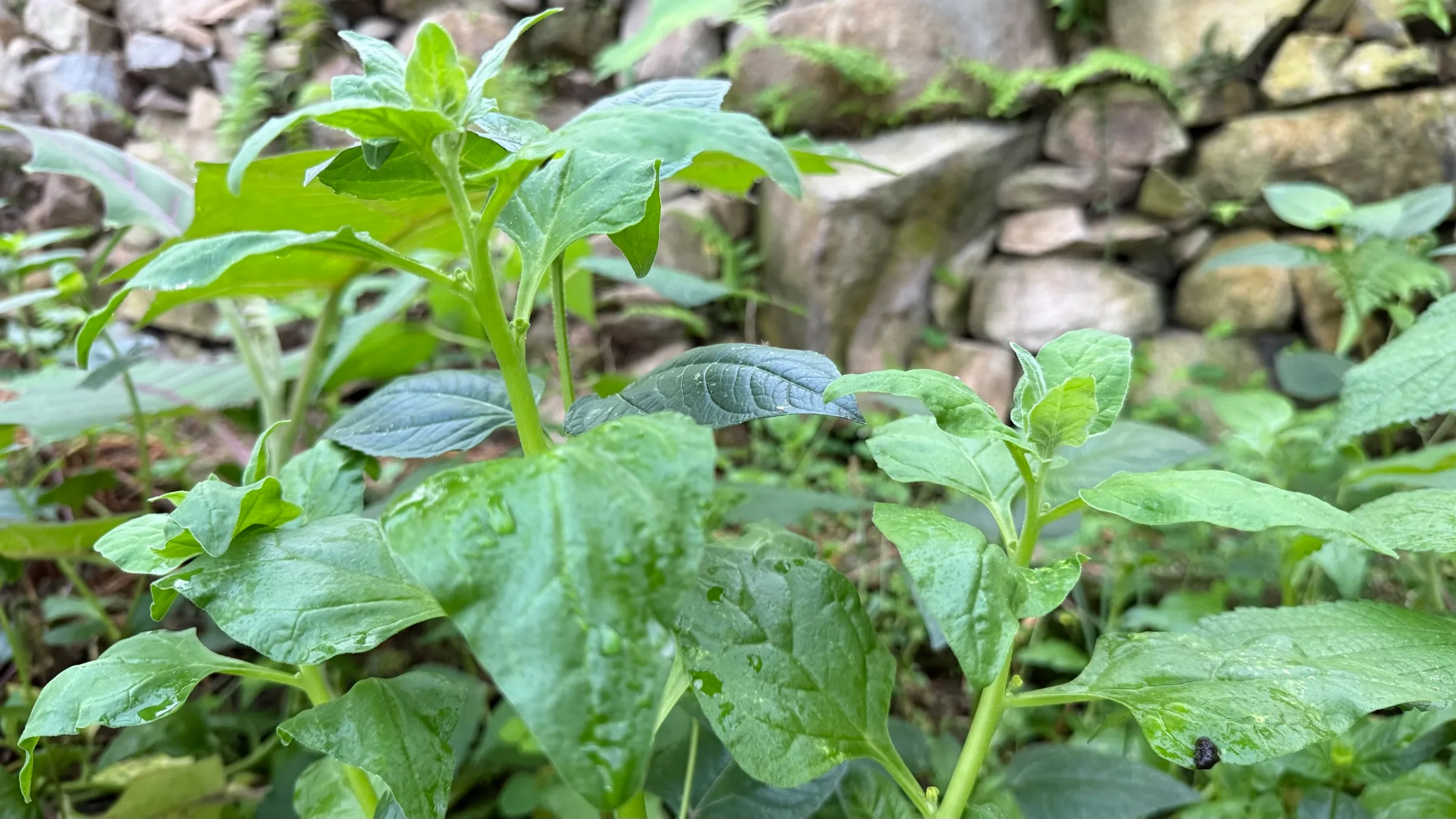
New Zealand spinach (Tetragonia tetragonioides), also known as tetragonia, is in fact no relation of spinach at all: it belongs to the Aizoaceae, the family of succulents such as ice plants. Its thick, slightly fleshy leaves provide vitamin C, vitamin A in the form of beta-carotene, vitamin K, as well as iron, calcium, and magnesium, for very few calories. Like spinach, it contains oxalates — in notable amounts, in fact — which is why it’s almost always eaten cooked, ideally blanched for a few moments in boiling water that is then thrown away: this simple step removes a good part of the soluble oxalates, a useful point for people prone to kidney stones. Its genus name comes from the Greek tetra, “four,” and gonia, “angle,” after its very recognizable angular, four-horned seeds. Captain James Cook is said to have had it gathered and cooked for his crews when he called at New Zealand in 1770, as a fresh green vegetable against scurvy — it’s one of the world’s few vegetables of Oceanian origin.
This information is for educational purposes only and reflects traditional and commonly documented uses of this plant. It is not medical advice and does not replace the guidance of a qualified healthcare professional. Always consult your doctor before using any plant medicinally, especially if pregnant, nursing, or taking medication.
How to Eat It
New Zealand spinach is cooked exactly like spinach, whose slightly mineral mildness it shares, with a somewhat firmer, fleshier texture that holds up well to cooking. The habit to adopt: blanch it for one to two minutes in boiling water, drain it, then sauté it in a pan with garlic, butter, or olive oil. After that it goes anywhere you’d use spinach: in a gratin, a quiche, a tart, an omelet, alongside fish, or blended into a green soup. The tender young shoots, picked from the tips of the stems, can be eaten raw in small quantities in a mixed salad, but cooking remains preferable for regular eating. Its great advantage in everyday cooking: where spinach melts down to almost nothing in the pan, New Zealand spinach keeps more of its volume.
How to Grow It Organically
New Zealand spinach is a disarmingly simple crop, almost maintenance-free once it gets going — its only fault is slightly temperamental germination.
- Soak the seeds before sowing. Their hard, angular coat delays germination; soaking for 12 to 24 hours in lukewarm water speeds up emergence considerably, which can otherwise take three weeks.
- Sow in place or in pots, two or three seeds per station, leaving plenty of room: a single plant can cover a square meter with its creeping growth.
- It practically never bolts in the heat. That’s its great difference from spinach, which flowers and turns bitter as soon as days lengthen or temperatures climb: New Zealand spinach goes on producing tender leaves without interruption.
- A continuous harvest by pinching. Cut the last ten centimeters or so of the stems; the plant branches and produces even more. Regular picking, every week, keeps the shoots tender.
- Undemanding about soil and tolerant of drought, thanks to its fleshy, water-storing leaves, though regular watering gives more tender and more abundant leaves.
- Almost no pests. Only slugs sometimes take an interest in very young plants; mature plants are remarkably resistant.
New Zealand Spinach in Our Garden
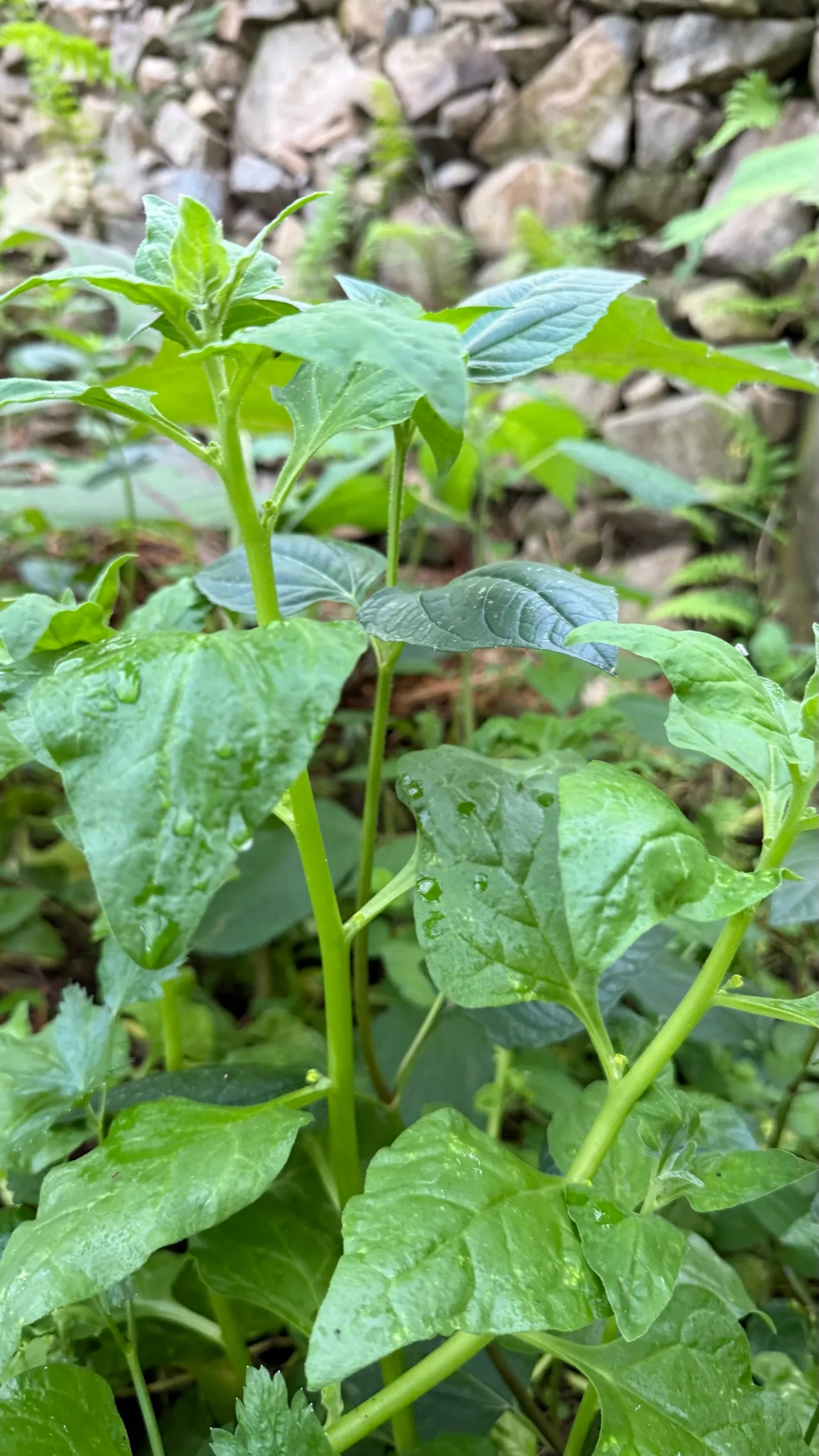
In the cloud forest of Horqueta, New Zealand spinach has an asset few leafy vegetables can claim: it shrugs off coolness and warmer spells alike, and the absence of frost in Boquete lets it behave as a true perennial, producing year after year in the same spot. It’s the leafy green of consistency, the one that keeps delivering when spinach and lettuce are going through a difficult patch. Its creeping habit also makes it an excellent living groundcover, ideal for keeping the soil cool and holding back weeds along the edge of a terrace. One caution: it readily reseeds itself, and its hard seeds can stay in the ground for a long time before germinating — an advantage if you want perpetual production, a drawback if you’d like the space back for something else.
Good Companions
- Corn and tall upright crops. New Zealand spinach creeps at their feet like a living mulch, keeping the soil cool and shaded without competing with them for height.
- Squash and other cucurbits. Two ground-covering crops that share the space well, each enjoying the shade and moisture the other holds.
- Strawberries. Good companions along a border, both liking cool, covered soil.
- Alliums (onion, garlic). Good neighbors in general, with a repellent effect on certain insects.
Plants to Avoid
- Low crops that are slow to start (carrots, onions from seed). The vigorous creeping growth of New Zealand spinach can smother them before they establish.
- Small, closely sown salad greens right next to it, for the same reason — crowding rather than incompatibility.
- Fennel, for its general allelopathic effect on many neighboring plants.
Good to Know
- It travelled with Captain Cook. Brought back to England by the botanist Joseph Banks after the 1770 expedition, it was one of the very first Oceanian vegetables grown in Europe.
- It isn’t a spinach but a succulent. Its family, the Aizoaceae, includes many shore and desert plants, which explains its fleshy leaves and its tolerance of salt and drought.
- It grows naturally on beaches. In the wild it’s found on the dunes and shores of New Zealand, Australia, Japan, and South America, often a few meters from the sea.
- Each “seed” contains several. The angular fruit holds several seeds, hence the clustered seedlings that sometimes need thinning.
This article is © Wild on the Farm, Boquete Cloud Forest Lodge. All rights reserved — it may not be reproduced, republished, or redistributed without prior written permission. Read our full legal notice →