Nutritional Properties & Benefits
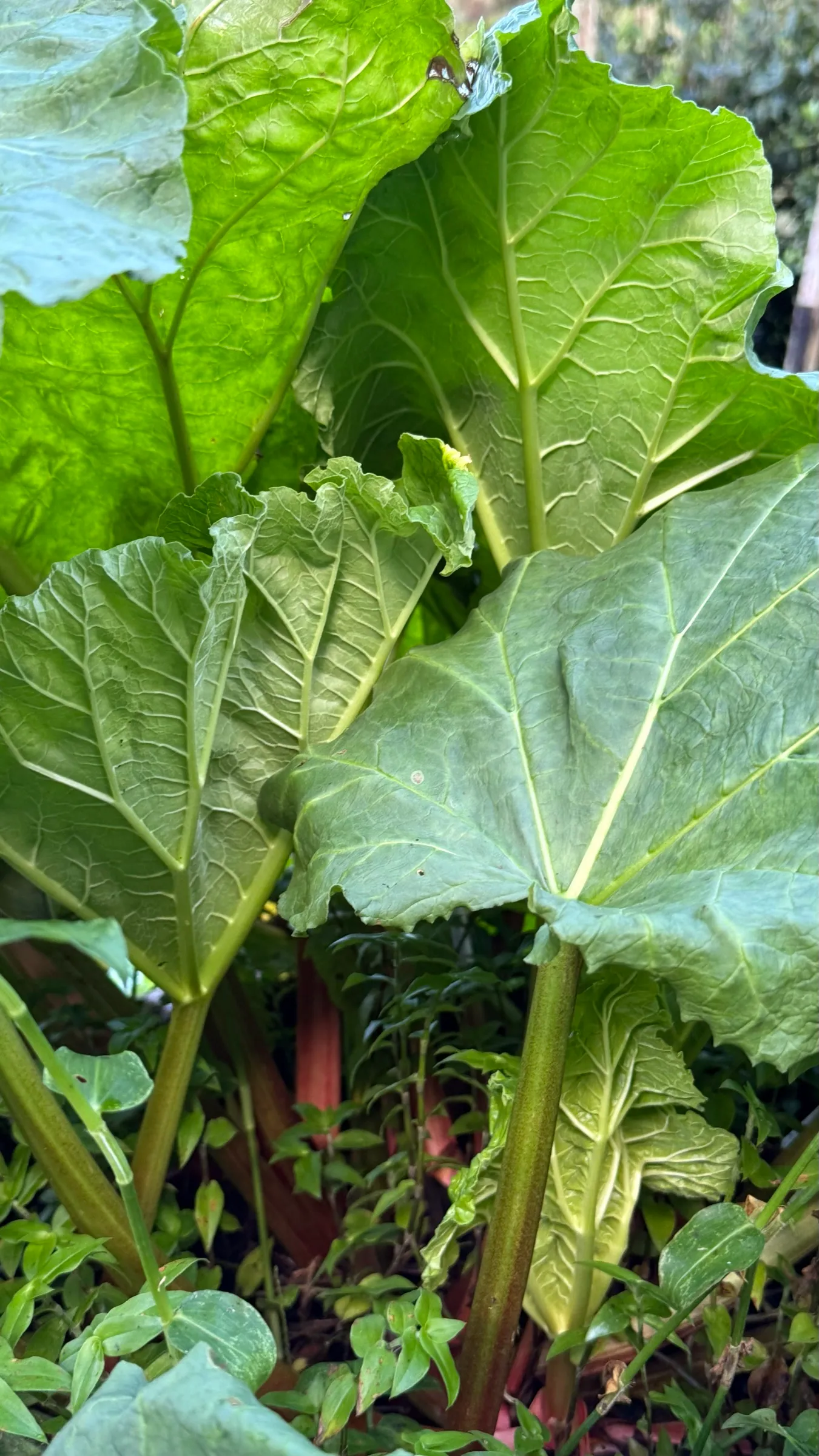
Rhubarb (Rheum rhabarbarum) belongs to the knotweed family, along with sorrel and buckwheat. Only one part of it is eaten: the leaf stalk, the long fleshy stem that carries the leaf. Very low in calories, it’s rich in fiber and vitamin K, and provides potassium, manganese, and a little vitamin C; red stalks also contain anthocyanins, the antioxidant pigments of red berries. Its tartness comes from malic and oxalic acids. The essential caution concerns the leaves, which are toxic: they concentrate oxalic acid and must never be eaten. The stalks contain far less, but enough that people prone to kidney stones should limit how much they eat; rhubarb’s calcium, bound to those oxalates, is in any case poorly absorbed. The root of related rhubarbs is a traditional laxative in Chinese medicine — a medicinal use unrelated to the stalk we cook.
This information is for educational purposes only and reflects traditional and commonly documented uses of this plant. It is not medical advice and does not replace the guidance of a qualified healthcare professional. Always consult your doctor before using any plant medicinally, especially if pregnant, nursing, or taking medication.
How to Eat It
Botanically a vegetable, rhubarb is almost always cooked like a fruit. Too tart to eat as it is, it needs sugar and heat: as a compote, in a pie or tart, in a crumble, as jam. It gets along wonderfully with strawberry — the classic pairing — but also with ginger, vanilla, orange and, here, tropical fruit. Cut the stalks into pieces without peeling them if they’re young; letting them sit for an hour with the sugar before cooking means you can use less of it. On the savory side, its tart compote goes very well with rich meats, pork, duck, and oily fish, in the manner of a chutney. It also makes syrups and refreshing drinks. The stalks keep for a week in the refrigerator and freeze very well, cut into pieces.
How to Grow It Organically
Rhubarb is a long-lived perennial: you plant it once, and it produces for ten years or more.
- Plant from divisions. Split a mature crown into pieces, each with a bud; it’s faster and truer to type than sowing.
- Deep, rich, cool soil. It’s a hungry plant: plenty of compost at planting, then a generous helping every year.
- Room. At least a meter in every direction: a mature clump is monumental.
- A thick mulch to keep the soil cool and feed the crown.
- Patience in the first year. Harvest nothing until the plant is well established.
- Pull, don’t cut. Grasp the stalk at the base and detach it with a twisting motion; never take more than a third of the stalks at once, and put the leaves on the compost.
- Remove flower stalks as soon as they appear, so the plant keeps its strength for foliage.
- Divide about every five years, when the heart of the clump wears out.
Rhubarb in Our Garden
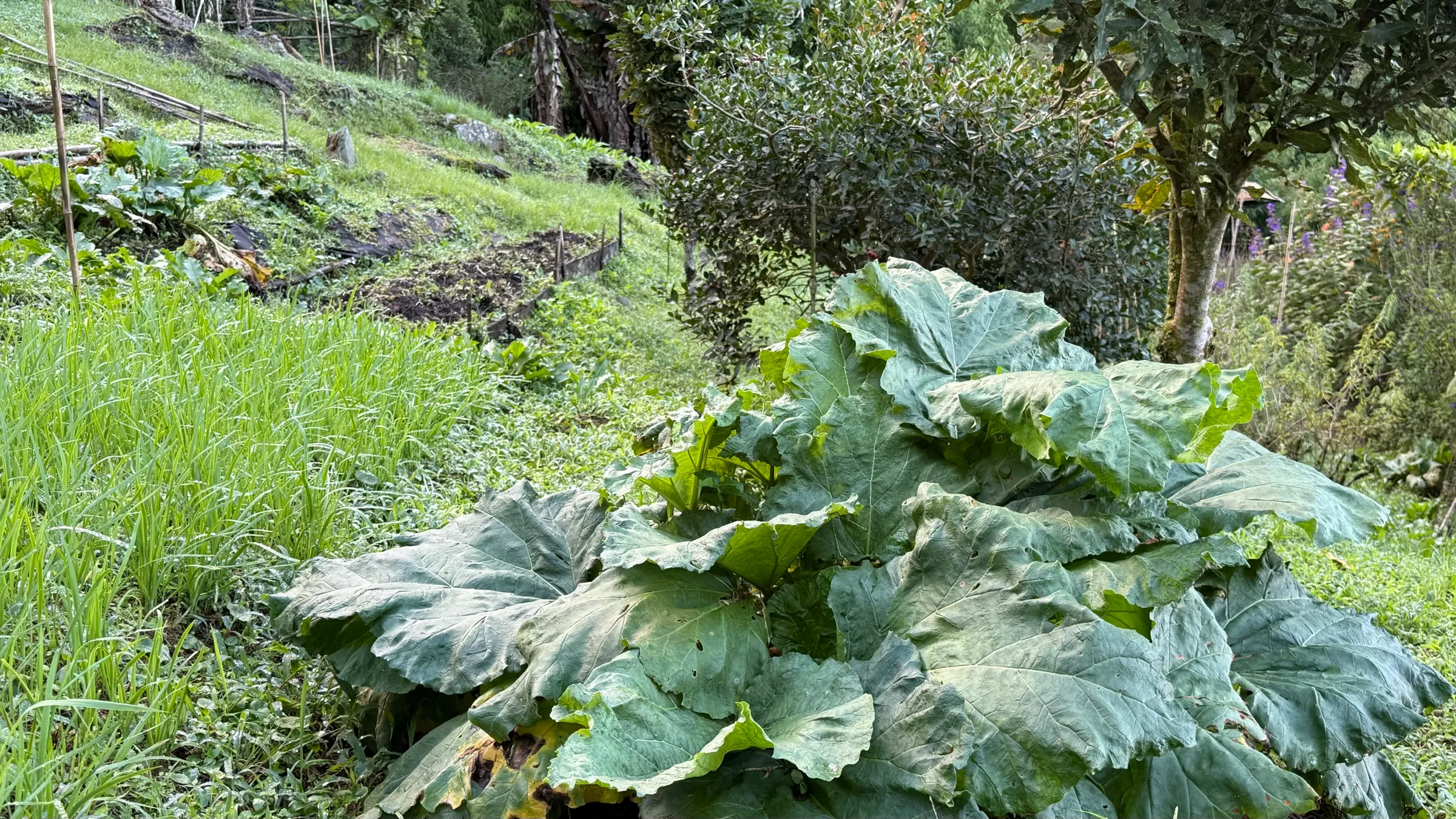
Rhubarb comes from the cold regions of Asia, and it doesn’t tolerate the heat of the lowland tropics. It’s altitude that makes it possible here: at 1,800 meters, Horqueta’s cool nights suit it, and the plant in the photo, settled on a garden terrace, forms a clump with leaves as wide as umbrellas. The difference from Europe is the absence of winter: with no rest period, the plant grows all year, which allows a spread-out harvest but can tire it sooner — so we harvest moderately and feed it generously. Our stalks often stay more green than red: the color depends on the variety and on cold, and makes no difference to the taste.
Good Companions
- Strawberries. Neighbors in the garden as in the pie; strawberry plants cover the soil at its foot.
- Garlic, onion, and chives. Their scent is said to keep certain pests away.
- Cabbages. A traditional pairing: rhubarb is reputed to protect brassicas from some insects.
- Beans and peas, which add nitrogen to a soil that rhubarb draws on heavily.
Plants to Avoid
- Sorrel and wild docks. From the same family, they host the same pests.
- Low crops that need full sun. Rhubarb’s huge leaves would shade them.
- Crops you dig often. The crown dislikes being disturbed: better to give it a permanent corner.
Good to Know
- The leaves are never eaten. Only the stalk is edible.
- It was a medicine before it was a dessert. Chinese rhubarb root travelled the Silk Roads for centuries; the stalk only entered the kitchen in the 18th century, when sugar became affordable in Europe.
- In the United States, it’s officially a fruit. A customs court ruled so in 1947, since that’s how it’s cooked.
- It can be “forced” in the dark. In Yorkshire, England, winter rhubarb grows in dark sheds and is harvested by candlelight, for tender, bright pink stalks.
- Its leaves are useful in the garden. Steeped in water, they make a traditional preparation against aphids.
This article is © Wild on the Farm, Boquete Cloud Forest Lodge. All rights reserved — it may not be reproduced, republished, or redistributed without prior written permission. Read our full legal notice →